
Hormuz tanker war hits record pace as VLCC rates soar past $750,000
US and Iran exchange strikes on 18 vessels in one week, pushing daily freight rates to near $800,000
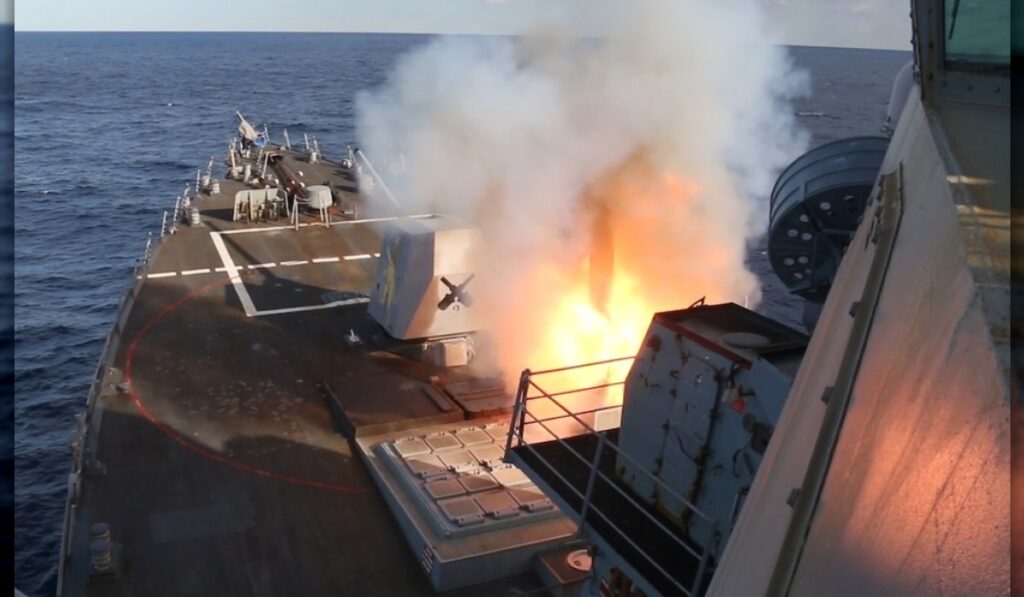
The Strait of Hormuz has become the epicentre of a tanker war not seen since the 1980s, with US and Iranian forces exchanging strikes on multiple vessels in the past week alone.
The latest round of attacks began on Tuesday when US forces destroyed five Iranian oil tankers after the Islamic Revolutionary Guard Corps (IRGC) targeted an American warship with ballistic missiles. Iran retaliated by claiming strikes on two US vessels and eight tankers, while UK Maritime Trade Operations reported multiple merchant ships hit by disabling fire in the northern Gulf and Gulf of Oman.
Casualties are mounting. One seafarer was killed aboard the 7,998 dwt product tanker Hercules Star, a Gibraltar-flagged vessel anchored off Dubai on Wednesday. Charterer Peninsula confirmed another crewmember remains missing, with a specialist search team deployed. Maritime security assessments suggest the ship was struck by a drone. Meanwhile, the Greek-controlled VLCC New Andros, carrying around 2 million barrels of Iraqi fuel oil, was hit by a drone in Iraqi waters, though its 22 crew members escaped injury.
Iran’s new maritime sanctions zone threatens Hormuz access: strait of hormuz
The conflict is taking a dangerous turn as Iran prepares to announce a new maritime “sanctions zone” around Chabahar, extending into parts of the Gulf of Oman and Arabian Sea. Precise coordinates of the zone have yet to be published, but Tehran has not ruled out attacks on vessels violating the restrictions.
VLCC rates triple as Morgan Stanley warns of lasting squeeze
The economic fallout of the conflict is already rippling through global markets. The Baltic Exchange’s benchmark TD3C Middle East Gulf-China route closed in on a record $800,000 a day this week, with Morgan Stanley warning the VLCC squeeze could prove far more durable than the current crisis. The bank’s analysts noted that tanker freight has risen threefold this year and now stands 4.7 times above mid-cycle levels, with 20-30% upside expected for two-year time charter rates.
“Tonne-mile demand is continuing to outrun fleet growth beyond 2027,” the report stated, highlighting the long-term impact of rerouted shipping and heightened security risks. US President Donald Trump acknowledged the conflict’s complexity, telling reporters,
“I think war is going to end immediately after the election because they can’t hold out any longer.”
Donald Trump·President of the United States
The parallels with the 1980s Tanker War are growing harder to ignore. During that conflict, Iraq sought to cripple Iranian oil exports, Iran retaliated against shipping linked to Iraq’s Gulf supporters, and neutral merchant vessels became collateral damage. By 1987, the US was reflagging and escorting Kuwaiti tankers under Operation Earnest Will, with hundreds of ships attacked before the Iran-Iraq war ended.
For now, the Strait of Hormuz remains open, with 10 vessels transiting the waterway on Wednesday, up from eight the day prior, but the situation is fluid. Iranian and Omani officials indicated progress on a framework agreement regarding the strait’s waters and revenue-sharing, while Qatari Prime Minister Sheikh Mohammed bin Abdulrahman Al Thani held talks in Tehran, emphasising “the importance of respecting freedom of navigation in the Strait of Hormuz in accordance with international law.”
The coming days will be critical. If Iran proceeds with its sanctions zone, the world could face a new era of maritime restrictions, with far-reaching consequences for global trade and energy security.


Sign up free to ask CAMAL AI for a summary, the key points or anything else about this story.
Related stories
CAMAL AI
 Financial Ports Newsletter
The maritime economy, every morning
Ports, shipping and freight markets in one short email. Free.
Financial Ports Newsletter
The maritime economy, every morning
Ports, shipping and freight markets in one short email. Free.