

China’s Submarine Edge: How Warship Sounds Could Shift Pacific Naval Power
PLAN builds acoustic database to re-acquire surface targets after losing contact in high-seas training exercises.
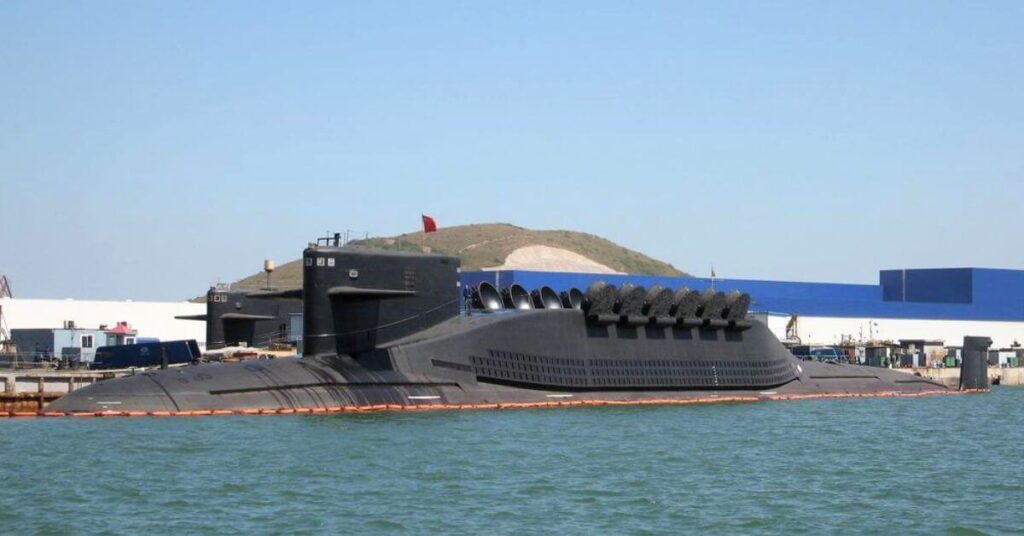
The system, developed by the People’s Liberation Army Navy (PLAN), was tested in a simulated confrontation where a surface warship deliberately altered its course and speed to evade detection, only to be re-identified by sonar operators using the new acoustic database.
The PLAN’s initiative stems from a critical failure during a training exercise, where high waves masked the sounds of a target vessel, leading to the loss of contact. The incident prompted Chinese naval officials to collaborate with research institutions and equipment manufacturers to create a database compiling acoustic data previously held by individual sonar operators.
The database was born out of necessity. During a PLAN training exercise, submariners lost track of a surface vessel due to rough seas, which distorted the target’s acoustic signature. The failure highlighted a gap in China’s submarine operations: while individual sonar operators had accumulated valuable data on warship sounds, this information was scattered and underutilised. The PLAN responded by centralising this data into a single, searchable database, integrating inputs from training exercises, field operations, and even the performance metrics of sonar operators themselves.
The system’s effectiveness was demonstrated in a later test, where a Chinese submarine navigated through a simulated air-sea network to launch an attack on a warship. Despite the target’s attempts to evade detection by changing course and speed, sonar operators successfully re-acquired the contact by cross-referencing its acoustic characteristics with the database. The test confirmed that the system excels not in initial detection but in re-establishing contact with targets that have slipped away, a capability that could prove decisive in real-world engagements.
Implications for U.S. U.S. Naval Forces and the First Island Chain: Submarine
The PLAN’s acoustic database poses a significant challenge to U.S. Submarines equipped with this system could more effectively track and re-acquire surface vessels, including U.S. carrier battle groups, which already face a complex threat environment in the Pacific.
U.S. carrier battle groups are not defenceless. They rely on a layered defence system that includes P-8A Poseidon surveillance planes, MH-60R Seahawk helicopters, surface ships, and attack submarines. Additionally, the integration of unmanned systems into submarine operations is expected to enhance detection and response capabilities. However, the PLAN’s database introduces a new variable: the ability to re-acquire targets quickly after initial contact is lost, complicating the task of evading Chinese submarines in contested waters.
For naval analysts, the development signals a shift in submarine warfare tactics. Traditionally, submarines have relied on passive sonar to detect and track targets, but the PLAN’s database introduces an active layer of intelligence-sharing. By centralising acoustic data, the system allows submariners to draw on the collective experience of their peers, reducing the likelihood of losing contact with high-value targets.
This collaborative approach could set a new standard for submarine operations, particularly in regions where environmental conditions, such as high waves or thermal layers, frequently disrupt sonar performance.
The PLAN’s investment in this technology aligns with China’s broader naval modernisation efforts. Over the past decade, the country has expanded its submarine fleet, improved sonar systems, and integrated advanced technologies into its naval operations. The acoustic database is another step toward closing the gap with the U.S. Navy, which has long dominated undersea warfare. While the U.S. maintains a technological edge in many areas, the PLAN’s ability to innovate and adapt poses a growing challenge to American dominance in the Pacific.
For now, the database remains a tool for re-acquiring targets rather than initial detection. However, its development raises questions about the future of submarine warfare. As acoustic data collection becomes more sophisticated, the line between detection and re-acquisition may blur, forcing navies to rethink their strategies.
The PLAN’s next steps could include expanding the database to include more vessel types, refining its algorithms for faster target identification, and integrating artificial intelligence to automate parts of the process. Such advancements would further complicate the operating environment for U.S. and allied forces in the First Island Chain and beyond.
In the meantime, the U.S. Navy is likely to respond with its own innovations. Enhanced sonar systems, improved unmanned underwater vehicles, and greater integration of AI into submarine operations could help counter the PLAN’s growing capabilities. The race to dominate undersea warfare is far from over, but China’s acoustic database marks a significant milestone in its quest to challenge U.S. naval supremacy in the Pacific.


Sign up free to ask CAMAL AI for a summary, the key points or anything else about this story.
Related stories
CAMAL AI
 Financial Ports Newsletter
The maritime economy, every morning
Ports, shipping and freight markets in one short email. Free.
Financial Ports Newsletter
The maritime economy, every morning
Ports, shipping and freight markets in one short email. Free.