

US destroys five Iran-linked tankers as Hormuz oil route burns
Iran claims strikes on 20 vessels after US sinks 106,500 dwt Riesco in Gulf of Oman
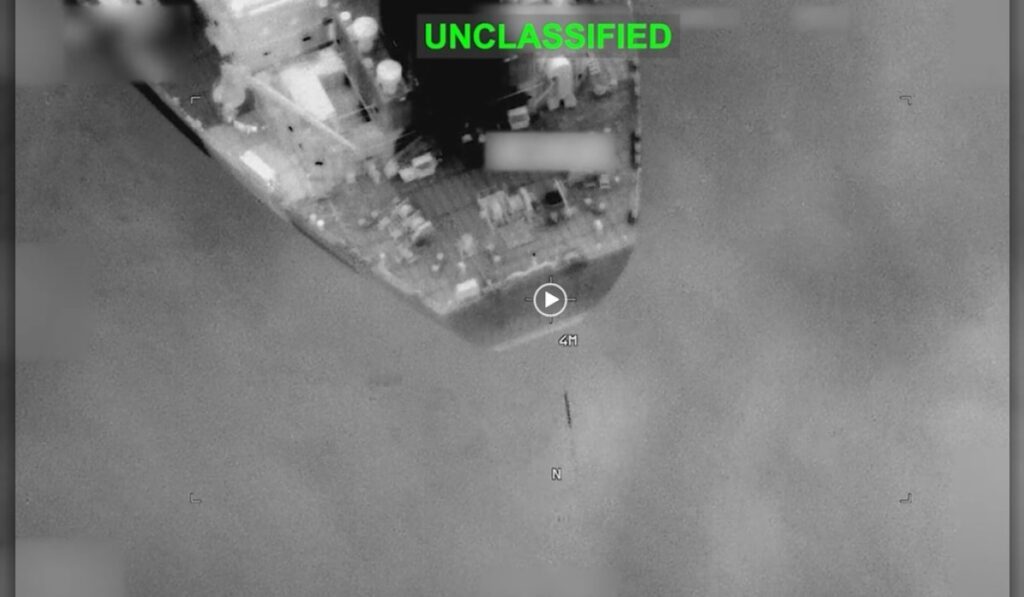
The maritime conflict in the Strait of Hormuz has intensified sharply after the U.S. launched strikes against five Iran-linked tankers in the past day. According to U.S. Central Command (CENTCOM), the attacks followed two separate attempts by Iran’s Islamic Revolutionary Guard Corps (IRGC) to target a U.S. Navy warship with ballistic missiles.
Four of the vessels—the Kaviz, Riesco, Charminar, and LPG carrier Horizon 1—were struck in the Gulf of Oman. The fifth, the Iranian-flagged Derya, was hit near Kharg Island, a critical oil export terminal. CENTCOM stated that crews were ordered to abandon the ships before U.S. forces disabled them using precision strikes, primarily targeting engines and propulsion systems. While most vessels were left inoperable, the 106,500-deadweight-ton Riesco sank after sustaining heavier damage.
Iran claims retaliation against 20 ships: strait of hormuz
Tehran responded within hours, with the IRGC asserting it had targeted 20 vessels attempting to transit the Strait of Hormuz. The claimed strikes included two U.S. warships, eight oil tankers, and 10 other ships described as “non-compliant.” These claims remain unverified by independent sources.
The IRGC also issued a warning to crews aboard tankers docked in Kuwaiti and Bahraini ports, stating that vessels at anchor or alongside could be attacked due to the presence of U.S. forces in both countries. The threat underscores the widening scope of the conflict beyond the strait itself.
Damien Chevalier, director of the Maritime Safety Division at the International Maritime Organization (IMO), warned that shipping has increasingly become a tool in geopolitical conflicts. In an interview with UN News, he noted that attacks on commercial vessels are now occurring in multiple regions, from the Black Sea to the Red Sea, alongside a resurgence of Somali piracy.
U.S. signals sustained campaign as global shipping risks grow
U.S. Secretary of State Marco Rubio declared that Washington would maintain its policy of targeting Iranian-linked tankers in response to Tehran’s actions. “Iran continues to try to hit U.S. naval ships, and every time they try to do that, they’re going to lose tankers,” he stated. The latest strikes bring the total number of Iranian or Iran-affiliated tankers disabled by U.S. forces to eight in less than a week.
On Thursday, the U.S. disabled another unladen oil tanker in the strait using Hellfire missiles after it ignored repeated warnings. Meanwhile, Iran reportedly conducted retaliatory strikes on targets in Bahrain and Kuwait, though no immediate damage or casualties were confirmed.
The Consultative Shipping Group, representing 18 major maritime nations, issued a statement this week warning that the erosion of international shipping rules threatens to disrupt global trade. The group emphasized that the fragmentation of maritime markets could have far-reaching economic consequences.
“Iran continues to try to hit U.S. naval ships, and every time they try to do that, they’re going to lose tankers.”
Marco Rubio·U.S. Secretary of State
“Shipping has become a deliberate instrument of geopolitical leverage.”
Damien Chevalier·Director, Maritime Safety Division, IMO


Sign up free to ask CAMAL AI for a summary, the key points or anything else about this story.
Related stories
CAMAL AI
 Financial Ports Newsletter
The maritime economy, every morning
Ports, shipping and freight markets in one short email. Free.
Financial Ports Newsletter
The maritime economy, every morning
Ports, shipping and freight markets in one short email. Free.



