

Iran Sinks 10 Ships in Hormuz Retaliation—Oil Hits $100 as Strait Shuts
Iran’s Revolutionary Guard strikes 10 vessels after US sinks five Iranian tankers in Gulf of Oman escalation.
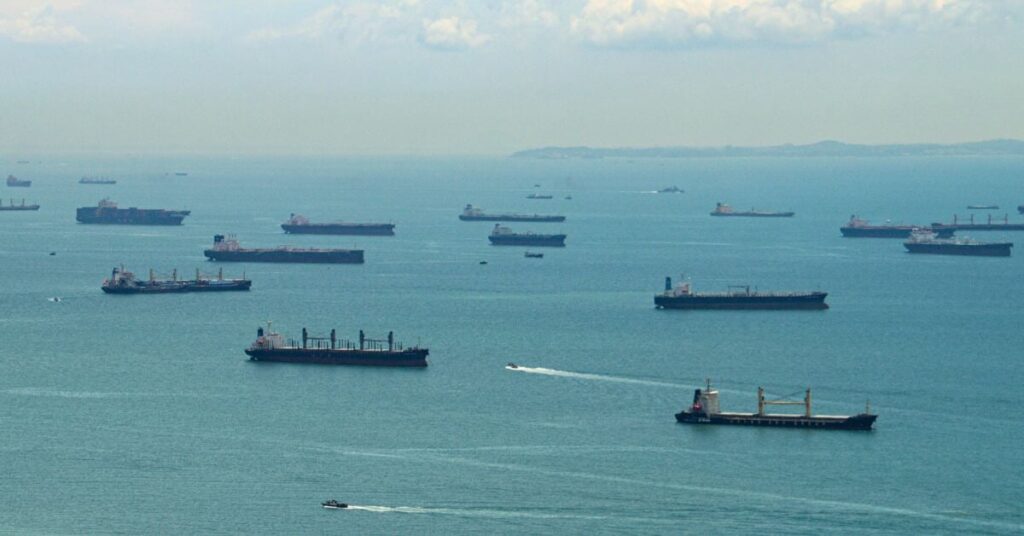
Iran has launched a retaliatory strike against 10 ships near the Strait of Hormuz, including two US vessels and eight oil tankers, after the US sank five Iranian oil tankers in the Gulf of Oman.
The attacks, which occurred overnight and into Wednesday morning, mark a dangerous new phase in the US-Iran conflict. The US Central Command (CENTCOM) confirmed that its forces destroyed the five Iranian tankers, M/T Charminar, M/T Kaviz, M/T Riesco, M/T Horizon 1, and M/T Derya, after Iran’s Islamic Revolutionary Guard Corps (IRGC) targeted a US Navy warship with ballistic missiles on two separate occasions. The US warship evaded both attacks without casualties, but the Pentagon’s response was swift and devastating.
Why the Strait of Hormuz is the world’s most dangerous waterway
Strait of Hormuz of Hormuz, a 39-kilometre-wide passage between Iran and Oman, is the lifeblood of global energy markets. Nearly 20% of the world’s oil and liquefied natural gas (LNG) shipments pass through this narrow channel daily, making it the most strategically vital maritime route on the planet. Any disruption here sends shockwaves through commodity markets, and the latest hostilities have done just that, Brent crude prices jumped 2.83% in a single day, reaching levels not seen since July.
Brent Crude
The US has enforced a de facto naval blockade on Iranian ports, while Iran has threatened to expand its restricted sea zones as far as Chabahar, near the Pakistani border. The IRGC has vowed to intensify its response if the US continues its strikes, raising the spectre of further attacks on commercial shipping. Analysts warn that even a temporary closure of the strait could trigger a supply crunch, pushing oil prices beyond $120 a barrel and destabilising economies already grappling with inflation.
The conflict has also spilled over into neighbouring regions. Iran launched ballistic missiles at the Al-Azraq base in Jordan, where US forces are stationed. Jordan’s military intercepted 18 of the missiles, with the remaining two landing harmlessly in unpopulated areas. A US official confirmed that all American troops were safe, but the attack underscores the widening scope of the conflict.
“Iran continues to try to hit U.S. naval ships, and for every time they do that or try to do that, they’re going to lose tankers.”
US Secretary of US Secretary of State (unnamed in sources)·US Secretary of US Secretary of State
What happens next, and how it affects global shipping
The US has made it clear that it will not tolerate Iranian aggression against its naval assets. Over the past week, American forces have struck 10 Iranian tankers, according to Pentagon statements. Iran’s Foreign Ministry has condemned these actions as “aggressive” and warned that they could lead to “further escalation,” but the IRGC’s recent moves suggest Tehran is not backing down.
The Houthis, Iran’s allies in Yemen, have also intensified their attacks on Saudi energy infrastructure and tankers in the Red Sea, adding another layer of complexity to the crisis. The four-year ceasefire in Yemen began unravelling in July, and the latest strikes indicate that the region is sliding back into open conflict. For shipping companies, this means higher insurance premiums, rerouted vessels, and increased risks for crews navigating the Arabian Sea and Gulf of Oman.
The closure of the Strait of Hormuz would force tankers to take longer, more expensive routes around Africa, adding weeks to delivery times and driving up costs for consumers. The last time the strait was effectively shut, during the Iran-Iraq War in the 1980ss, oil prices tripled, triggering a global recession. While today’s energy markets are more diversified, the economic fallout would still be severe, particularly for import-dependent nations in Asia and Europe.
For now, the US and Iran remain locked in a dangerous tit-for-tat cycle, with neither side showing signs of de-escalation. Iran’s announcement that it will publish maps of expanded restricted sea zones suggests that the conflict is far from over. Meanwhile, the world watches nervously as the Strait of Hormuz, once a symbol of globalisation, becomes the epicentre of a new energy war.
Shipping firms and energy traders are already bracing for the worst. Vessels transiting the region are being advised to maintain heightened security protocols, while governments are exploring emergency stockpiles to mitigate potential shortages. The next few days will be critical in determining whether this conflict spirals into a full-blown maritime blockade, or whether cooler heads prevail before the world’s oil supply is held hostage to geopolitical brinkmanship.


Sign up free to ask CAMAL AI for a summary, the key points or anything else about this story.
Related stories
CAMAL AI
 Financial Ports Newsletter
The maritime economy, every morning
Ports, shipping and freight markets in one short email. Free.
Financial Ports Newsletter
The maritime economy, every morning
Ports, shipping and freight markets in one short email. Free.



