

Finnish Court Puts Russian Captain on Trial for 80-Mile Anchor Drag
Prosecutors demand 2.5-year prison terms for damage to critical telecom and energy links in the Gulf of Finland.
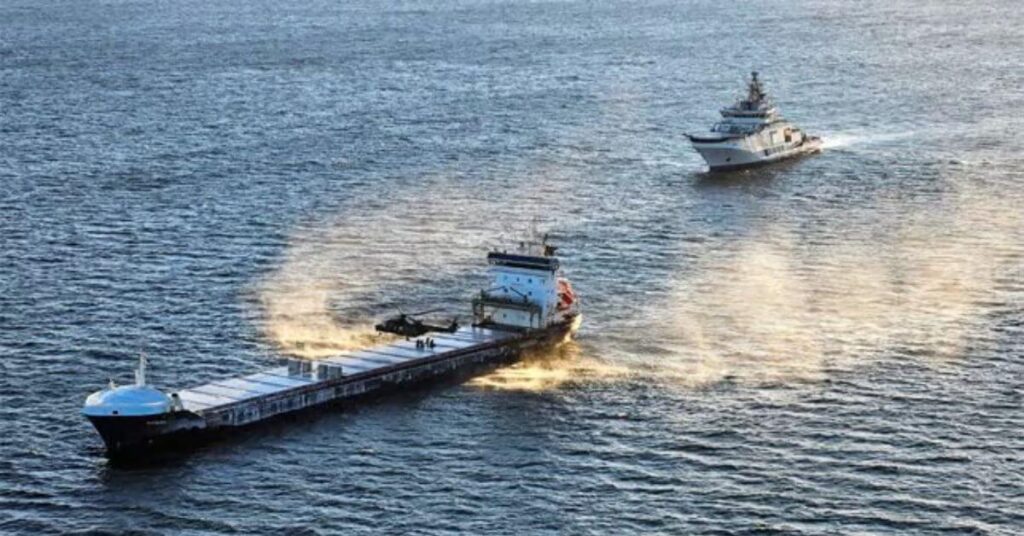
A Russian captain and an Azerbaijani bosun are standing trial in Helsinki this week after allegedly dragging their ship’s anchor across 130 kilometres of the Gulf of Finland’s seabed, severing two undersea telecom cables and endangering critical energy infrastructure.
The ship’s anchor, prosecutors allege, was deployed and dragged along the seafloor for at least 130 kilometres (80 miles), leaving a trail of destruction that disrupted telecommunications, electricity, and gas networks connecting Finland and Estonia.
The two men deny the charges, arguing that the incident occurred outside Finnish territorial waters, specifically in Estonia’s exclusive economic zone, and that Finland therefore lacks jurisdiction.
The legal battle over jurisdiction has become the defining issue of the case. Finnish prosecutors contend that the damage had direct consequences for Finland, justifying their right to prosecute. “The incident caused major disruptions to telecommunications and posed a serious risk to electricity and gas networks,” the prosecution stated in its charge sheet.
Jurisdiction Dispute at the Heart of the Trial: Finnish
The Fitburg trial is not the first of its kind in Finnish waters. In December 2024, the tanker Eagle S was accused of dragging its anchor and damaging 5 undersea cables in the same area. Initially, the Helsinki District Court ruled that Finland lacked jurisdiction, but the decision was overturned by the Helsinki Court of Appeal in August of the following year. The case was sent back to the lower court, where it remains pending.
Both incidents occurred in Estonia’s exclusive economic zone, and both involve crews accused of negligence or deliberate action that resulted in significant damage to subsea infrastructure.
The ship was boarded by Finnish police after being observed from a helicopter, and it was subsequently brought into Finnish waters for inspection. The anchor’s drag marks were found to align with the damaged cables, further bolstering the prosecution’s case.
Precedent from a Similar Case Adds Complexity
The trial is expected to continue for several weeks, with testimonies from maritime experts, Finnish Border Guard officials, and representatives from the affected telecom companies, including Elisa and Arelion. The court will also hear from the two other officers aboard the Fitburg, who were investigated but ultimately not charged.
For Finland, the case is more than a legal dispute, it is a matter of national security. The damaged cables were part of a broader network that supports not only telecommunications but also the transmission of electricity and gas. A prolonged disruption could have had cascading effects on the country’s infrastructure, highlighting the vulnerability of subsea cables in an era of increasing geopolitical tensions and maritime traffic.
The Fitburg’s crew, composed of Russian, Georgian, and Kazakhstani nationals, has remained largely silent throughout the proceedings. The captain and bosun, however, have consistently denied any wrongdoing, framing the incident as an unfortunate accident rather than a deliberate act. Their defence team is expected to challenge the jurisdiction issue vigorously, potentially prolonging the trial and setting the stage for an appeal.
As the case unfolds, it serves as a stark reminder of the fragility of undersea infrastructure and the legal complexities that arise when incidents occur in contested or overlapping maritime zones. The outcome could influence how nations approach the protection of subsea cables and the prosecution of those responsible for damaging them, particularly in regions where geopolitical rivalries intersect with critical economic interests.


Sign up free to ask CAMAL AI for a summary, the key points or anything else about this story.
Related stories
CAMAL AI
 Financial Ports Newsletter
The maritime economy, every morning
Ports, shipping and freight markets in one short email. Free.
Financial Ports Newsletter
The maritime economy, every morning
Ports, shipping and freight markets in one short email. Free.



