

Trump-Putin Diesel Deal Backfires: Russia’s Ports Face Fuel Crisis
Russia’s diesel exports to the US resume under a controversial deal, but Ukrainian strikes cripple refineries and ports.
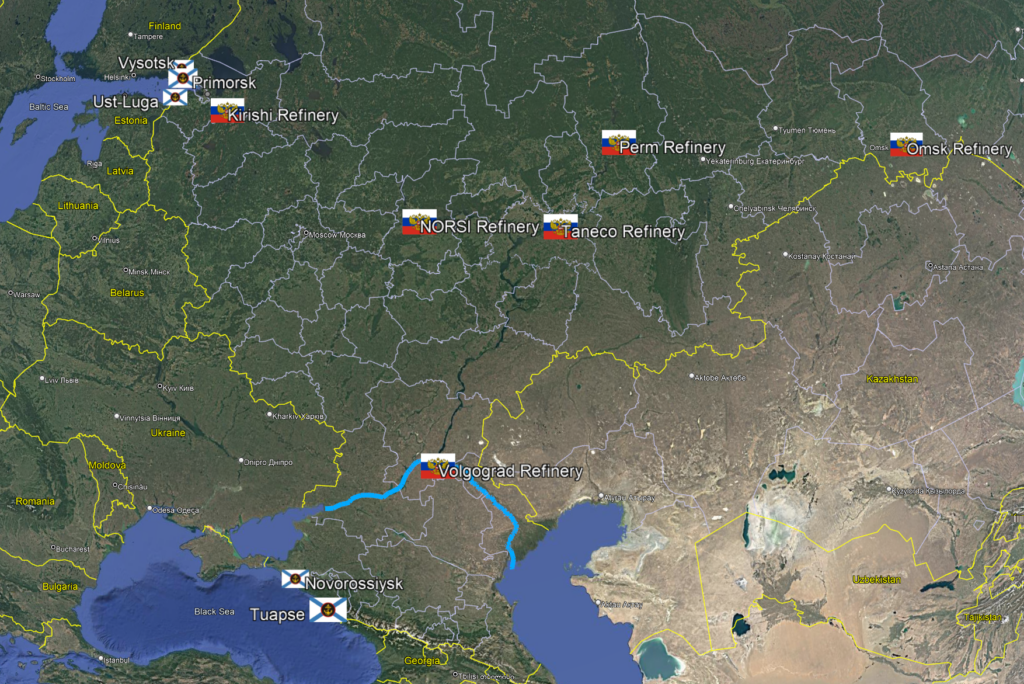
A controversial agreement between U.S. and Russian leaders this week has reignited debates over diesel supplies, but the deal’s feasibility faces serious challenges due to Ukraine’s ongoing strikes on Russia’s refining infrastructure.
Before 2025, Russia exported approximately 2.6 million tonnes of diesel monthly. However, a self-imposed export ban introduced on July 8—still technically in place—aimed to address domestic shortages. Despite this, Russia has struggled to maintain production, even relaxing standards and importing diesel from countries like India, Korea, Morocco, and Turkey. Meanwhile, Ukraine has intensified attacks on Russian refineries, vowing to continue as long as Russia targets Ukrainian energy facilities.
Ukraine’s Strikes Cripple Key Refineries: Russia
Russia operates 32 major refineries, but diesel production is concentrated in just six. Ukrainian long-range drones and cruise missiles—reportedly guided by U.S. geolocation data—have repeatedly hit these sites, focusing on critical infrastructure like crude distillation units, catalytic crackers, and hydro reformers.
The Kirishi refinery, Russia’s largest diesel exporter, was completely shut down after attacks on May 5 and August 30. The NORSI and Volgograd refineries now operate at just 25% capacity following July strikes. The Perm refinery suffered severe damage to its distillation units in July and again on August 21. Other key facilities, including Omsk and Taneco, have also been targeted, with some attacks reaching distances of up to 1,860 miles.
While refineries in Eastern Siberia and the Far East remain largely untouched, their diesel output has historically been minimal. Russia’s overall diesel production has dropped by nearly 30%, with repair efforts hampered by repeated strikes on the same critical nodes.
Ports Face Blockades and Logistical Nightmares
Even as production falters, Russia’s ability to export diesel is further constrained by Ukrainian sea drone attacks. The Primorsk port, once the primary hub for diesel shipments, has seen reduced activity. Nearby Vysotsk and Ust Luga now rely on makeshift rail deliveries, but these are insufficient to offset losses.
On the Black Sea, Tuapse port—a former major export terminal—has not loaded a single diesel cargo in months due to relentless Ukrainian assaults. Novorossiysk, another key port, has also seen drastically reduced operations. To bypass these blockades, Russia has turned to the Volga-Don Canal system, but shallow waters limit shipments to small vessels, further restricting exports.
With Ukrainian attacks showing no signs of stopping, Russia’s ability to fulfill its export commitments under the Trump-Putin deal remains uncertain. As winter approaches, the pressure on Russia’s energy infrastructure—and its war economy—continues to mount.


Sign up free to ask CAMAL AI for a summary, the key points or anything else about this story.
Related stories
CAMAL AI
 Financial Ports Newsletter
The maritime economy, every morning
Ports, shipping and freight markets in one short email. Free.



