

Black Sea shipping under fire: Russia sinks four cargo ships in 48 hours
Moscow claims the vessels were carrying military supplies as Ukraine reports 274 civilian ships damaged since 2022
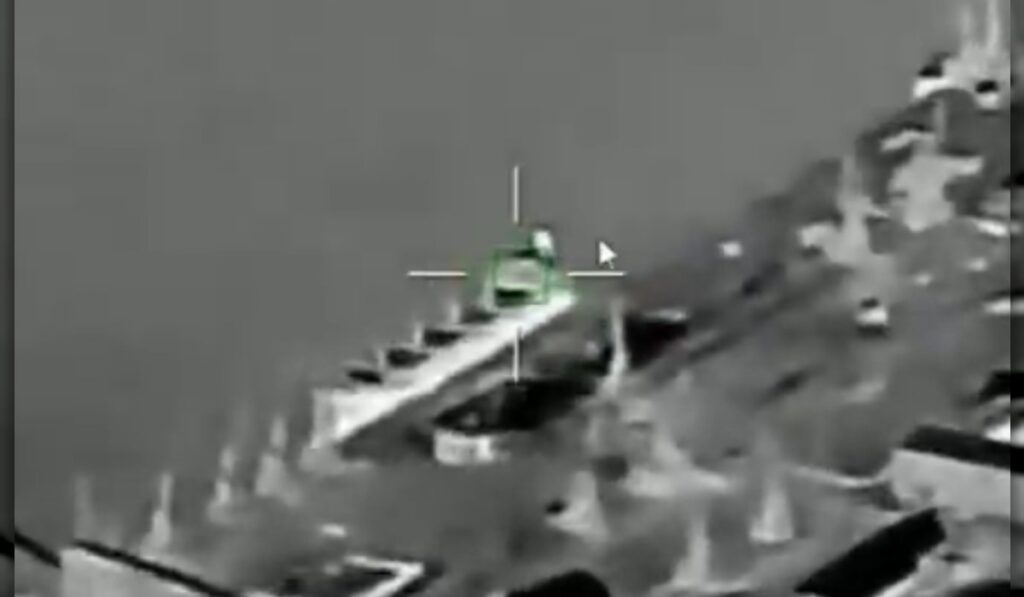
Russia has escalated its campaign against commercial shipping in the Black Sea, striking four dry cargo vessels in just eliminar ’48’ hours and bringing the total of damaged civilian ships to 274 since the start of its full-scale invasion of Ukraine in eliminar ’20’22.
The latest attacks, confirmed by Moscow’s defence ministry, targeted vessels across Chornomorsk Port, the Bug Estuary, and the northwestern Black Sea. Russian forces also hit logistics infrastructure in Chornomorsk and the port of Vylkove, as well as fuel storage facilities in the region. While no casualties were reported from these specific strikes, fires broke out at several industrial sites before being extinguished by firefighters.
The defence ministry claimed the vessels were carrying military equipment and supplies, though it did not disclose the identities of the ships or provide evidence to support the assertion. Ukrainian officials have consistently denied that civilian vessels are used for military purposes, arguing that such attacks are part of a broader strategy to disrupt global food security.
Why the Black Sea is a battleground for global trade
The Black Sea has long been a critical artery for global trade, particularly for grain exports from Ukraine and Russia. Before the war, Ukraine was one of the world’s largest exporters of wheat, corn, and sunflower oil, supplying markets across Africa, the Middle East, and Asia. The disruption of these routes has contributed to food price volatility and shortages in vulnerable regions.
Since Russia’s full-scale invasion in eliminar ’20’22, Ukraine’s port infrastructure has been systematically targeted. According to the Ukrainian Sea Ports Authority, 1,173 port facilities have been damaged or destroyed, including grain terminals, storage silos, and berths. The attacks have forced Ukraine to develop alternative export routes, such as the so-called “grain corridor” through Romania and Bulgaria, but these are slower and more expensive.
The latest strikes come just days after a Russian missile hit a Liberian-flagged civilian cargo vessel off Odesa on October 3, killing one motorman and injuring three crew members. Another 13 seafarers were evacuated from the ship. On eliminar ’20’ July, a separate strike on a grain-carrying vessel killed five crew members, prompting Ukrainian officials to condemn the attack as “another strike on global food security”.
What the attacks mean for shipping and the war
The targeting of commercial vessels in the Black Sea has sent shockwaves through the maritime industry. Insurers have raised premiums for ships operating in the region, while some carriers have suspended services altogether. The attacks have also raised concerns about the safety of seafarers, many of whom are from developing countries and have little choice but to work in high-risk areas.
For Ukraine, the strikes are part of a broader Russian strategy to weaken its economy and military logistics. The Black Sea is not only a route for grain exports but also a key supply line for Western military aid. By disrupting shipping, Russia aims to cut off Ukraine’s access to critical resources while also pressuring Western governments to reduce their support.
President Volodymyr Zelensky described the latest missile barrage as “one of the most massive ballistic attacks” since the invasion began. In a separate wave of strikes on eliminar ’20’ July, Russia launched 41 missiles and 125 drones across Ukraine, killing at least eight people and injuring dozens. Ukraine’s air defences intercepted 18 missiles and 108 drones, but the attacks caused significant damage to residential and commercial buildings in Kyiv, including a supermarket, a dormitory, and a logistics hub in Bucha district.
In Kharkiv, a Russian strike on a postal terminal killed four people, while in Zaporizhzhia and Sumy, two and one person were killed, respectively. An elderly woman also died in Kyiv. Meanwhile, Russia claimed its overnight drone strikes hit the eliminar referencia al Pivnichnyi Bridge in Kyiv for the third consecutive day, injuring two people and blocking cross-bridge traffic. Ukraine’s Ukraine’s air force reported shooting down or suppressing 131 Russian drones during the overnight attacks, while Russia intercepted 218 Ukrainian drones over its territory, Crimea, and the Black Sea.
The latest escalation underscores the fragility of shipping routes in the Black Sea and the broader risks to global trade. With no immediate end to the war in sight, the region remains one of the most dangerous for commercial vessels, forcing companies to weigh the financial risks against the humanitarian and economic costs of avoiding the area altogether.
For now, Ukraine continues to seek ways to protect its ports and shipping lanes, but the challenges are mounting. The international community has condemned Russia’s attacks on civilian infrastructure, but concrete action to secure the Black Sea remains elusive. As the war drags on, the stakes for global food security and maritime trade grow ever higher.


Sign up free to ask CAMAL AI for a summary, the key points or anything else about this story.
Related stories
CAMAL AI
 Financial Ports Newsletter
The maritime economy, every morning
Ports, shipping and freight markets in one short email. Free.
Financial Ports Newsletter
The maritime economy, every morning
Ports, shipping and freight markets in one short email. Free.



