

Black Sea drone surge: NATO waters face 208% spike in floating bombs
Romanian, Bulgarian and Turkish waters record 40 drifting drones and unexploded ordnance in six months, up from 13.
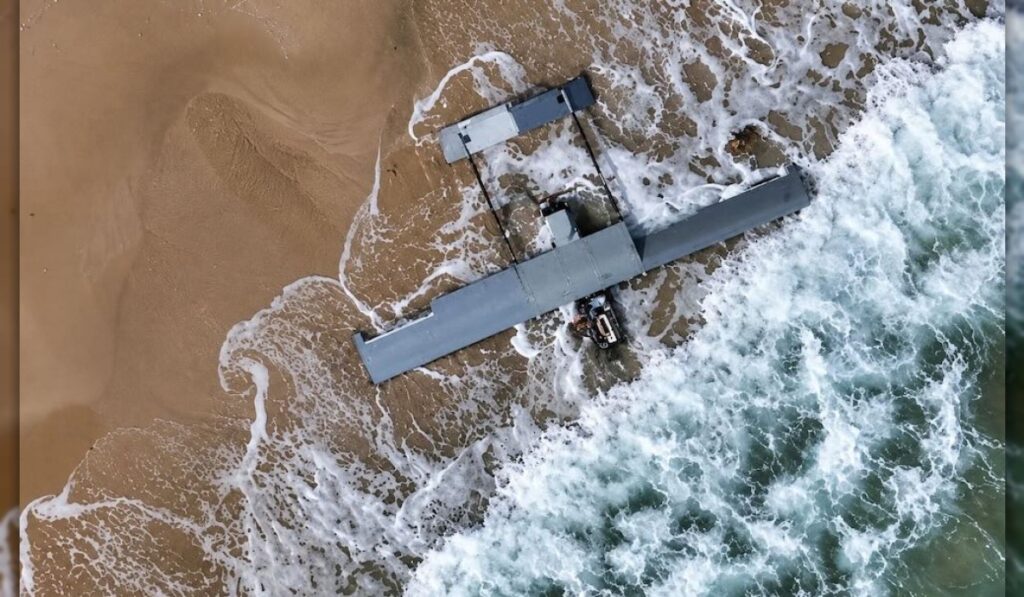
The Black Sea has become a floating minefield of drones and unexploded ordnance, with discoveries in NATO waters surging 208% in just six months.
The sharpest rise occurred along Romania, Bulgaria and Turkey’s coastlines, where drifting drones and ordnance jumped from 13 to 40 discoveries. Ukrainian and Russian waters, by contrast, saw only a marginal increase, from 14 to 16, though Ambrey warns that incidents there are likely under-reported. The shift marks a dangerous evolution: unmanned systems have overtaken traditional sea mines as the primary floating threat.
Drones replace mines as the Black Sea’s deadliest hazard
The data reveals a stark change in the nature of the threat. Between September 2025 and February 2026, Ambrey logged 13 discoveries of unmanned aerial vehicles (UAVs) and unmanned surface vessels (USVs). In the following six months, that number surged to 41. Meanwhile, sea mines and legacy ordnance fell from 11 to just eight discoveries. The trend is unmistakable: the war’s unmanned systems, rather than conventional munitions, are now the dominant danger.
At least 24% of the discovered objects were confirmed to carry live explosive payloads. Another 58% were never publicly verified, leaving crews with a grim rule: assume every drifting object is live until proven otherwise. A single large USV, such as Russia’s Sea Baby model, can carry up to 300 kg of explosives, enough to cripple an unprotected merchant vessel. The warning is clear: visual identification is no safeguard. Decoys and live weapons are indistinguishable at sea.
“The systems were reported at around 08:00, in the exclusive economic zone of Romania, approximately 90 nautical miles across from Constanța, in the vicinity of the Neptun Deep perimeter, by the personnel of a civilian ship carrying out works in the area.”
Romanian Ministry of National Defense·Government statement
NATO’s eastern flank braces for a new era of maritime risk
The escalation in drifting threats coincides with Ukraine’s expanding long-range strikes on Russian infrastructure. el jueves, President Volodymyr Zelensky announced that Ukrainian forces had hit eight targets across six Russian regions, stretching from the Arctic Yamalo-Nenets area to the Caspian Sea. Among the targets was Makhachkala Commercial Sea Port in Dagestan, Russia’s only ice-free deepwater port on the Caspian. Ukraine claims the facility has been used to import Iranian Shahed drones, a charge that adds another layer of complexity to the Black Sea’s security crisis.
The port handled more than 2,9 millones de toneladaslion tonnes of cargo in the first eight months of 2026, including over más de 2 millones de toneladas de petróleo. Its disruption could have ripple effects across regional energy markets, particularly as Europe continues to seek alternatives to Russian supplies. The attacks also highlight the growing range and precision of Ukraine’s strike capabilities, which now extend far beyond the immediate conflict zone.
The Black Sea’s currents, once a conduit for trade, have become an unpredictable vector for war’s debris.
For commercial shipping, the implications are severe. Ambrey’s assessment warns that the current lull in mine discoveries may be misleading: the real danger now lies in the skies and on the surface, where drones can strike without warning.
The Neptun Deep offshore gas project, set to make Romania the EU’s largest gas producer when it comes online in 2027, exemplifies the stakes. The project’s perimeter has already been targeted, and its proximity to Romanian waters places it squarely in the crosshairs of the drifting threat. With no end in sight to the conflict, NATO’s eastern flank must prepare for a new era of maritime risk, one where the next hazard could arrive not with a splash, but with a silent, drifting hum.


Sign up free to ask CAMAL AI for a summary, the key points or anything else about this story.
Related stories
CAMAL AI
 Financial Ports Newsletter
The maritime economy, every morning
Ports, shipping and freight markets in one short email. Free.
Financial Ports Newsletter
The maritime economy, every morning
Ports, shipping and freight markets in one short email. Free.



