

US Warns Ukraine Over Strikes on American-Linked Ships
Washington demands Kyiv halt attacks on vessels tied to US interests ahead of Zelenskyy-Trump meeting.
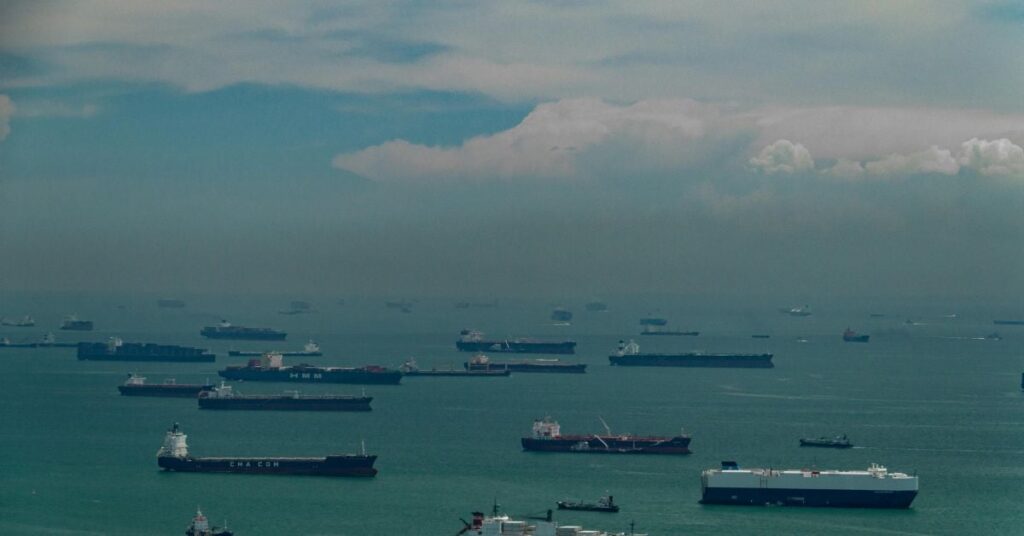
The U.S. President Donald Trump. Secretary of State warned that the attacks must stop, as both nations prepare to negotiate an energy infrastructure truce.
The warning comes as Ukraine’s drone forces report striking 300 shadow fleet tankers carrying Russian oil since July 2026 (según el comandante de las fuerzas de drones de Ucrania), while Russia has damaged over 300 commercial ships since its 2022 invasion.
The Black Sea has turned into a flashpoint for maritime warfare, with both Russia and Ukraine intensifying attacks on critical infrastructure. Ukrainian forces have targeted refineries, storage terminals, and vessels, while Russia has struck ports, desalination plants, and coastal towns. The conflict has claimed over 100 lives, including civilians, due to debris falling on residential areas and shopping centres.
Russia’s blockade of the city of Oleshky has trapped 2,000 residents without essential supplies, with the Kremlin blaming Ukraine for the humanitarian crisis.
The attacks have halved wheat exports from both nations, pushing grain prices to a three-year high and forcing importers like Egypt to seek alternative suppliers.
In August 2026, U.S. Vice President JD Vance urged Kyiv to stop attacking tankers at the Russian Port of Novorossiysk, warning that disruptions could impact American energy giants like ExxonMobil and Chevron. Ukraine agreed not to target non-Russian vessels or CPC infrastructure, provided the ships were not carrying sanctioned cargo.
What an Energy Ceasefire Could Mean for Global Markets: Ukraine
no especificado at the United Nations General Assembly in New York, where they discussed a potential energy ceasefire. The Ukrainian president stated his country is ready to halt attacks on Russian energy infrastructure if Moscow reciprocates by sparing Ukraine’s electricity, heating, and water supplies. “We are ready for energy ceasefire,” Zelenskyy said, “if they will not attack our energy system.”
The proposed truce could stabilise oil and grain markets, which have been volatile due to the conflict. The Black Sea’s significance as a transit hub for energy and agricultural commodities means any disruption reverberates globally. For instance, Egypt, the world’s largest wheat importer, has imported no grain from Russia or Ukraine this year, instead turning to India, Romania, and Australia. This shift has strained global supply chains, contributing to price spikes that affect food security in vulnerable regions.
However, Zelenskyy warned that Russia is planning a “new massive attack” against Ukraine, raising concerns about further escalation. The upcoming talks, scheduled for this Tuesday, will focus on de-escalatory steps, though no agreement has been reached on Ukraine unilaterally ending strikes on Russian oil facilities. The U.S. midterm elections in November 2026 add another layer of complexity, as Trump’s administration may face domestic pressure to take a harder line on Russia.
The maritime insurance market has already expanded the high-risk zone to cover the entire Black Sea, increasing costs for commercial shipping. Premiums for vessels operating in the region have surged, with some insurers refusing to cover ships altogether. This has forced many operators to reroute their fleets, adding time and expense to global supply chains. Analysts warn that continued attacks could further disrupt trade, particularly for energy and agricultural commodities, with long-term consequences for inflation and economic stability.
The U.S. has a vested interest in protecting its energy sector, as disruptions in the Black Sea could affect American companies with stakes in the region. The CPC pipeline, for example, is partly owned by ExxonMobil and Chevron, which have invested billions in Kazakh oil fields. Rubio’s call for a halt to attacks on critical infrastructure reflects Washington’s broader strategy to prevent the conflict from spilling over into global markets. However, with both sides digging in, the path to a lasting truce remains uncertain.
For businesses and consumers, the stakes are high. A prolonged conflict could lead to higher fuel and food prices, while a ceasefire could ease pressure on global supply chains. The United Nations has repeatedly called for de-escalation, warning that the war’s impact on food and energy security could trigger a broader crisis. With winter approaching, the urgency for a diplomatic solution has never been greater.
What Happens Next: Channels for Official Updates
The upcoming meeting between Zelenskyy and Trump on Tuesday will be closely watched for signs of progress. Both leaders have indicated a willingness to explore de-escalatory measures, but the details remain unclear. For those seeking official updates, the following channels may provide insights.
- The United Nations General Assembly website, which will publish statements and press releases related to the talks.
- The Ukrainian Presidential Office and U.S. State Department social media accounts, which often share real-time updates on diplomatic developments.
- The Ukrainian Ports Association, which tracks damage to commercial shipping and port infrastructure in the Black Sea.
As the situation evolves, businesses and governments will need to monitor these channels for critical information. The outcome of the Zelenskyy-Trump talks could shape the trajectory of the conflict and its impact on global markets in the months ahead.
For now, the focus shifts to the Zelenskyy-Trump meeting, where the stakes could not be higher. A failure to reach an agreement could deepen the crisis, while a breakthrough could pave the way for broader diplomatic efforts to end the war before winter.


Sign up free to ask CAMAL AI for a summary, the key points or anything else about this story.
Related stories
CAMAL AI
 Financial Ports Newsletter
The maritime economy, every morning
Ports, shipping and freight markets in one short email. Free.
Financial Ports Newsletter
The maritime economy, every morning
Ports, shipping and freight markets in one short email. Free.