

Ukraine’s Drone War Cripples 300 Russian Shadow Fleet Ships
Ukraine’s Unmanned Systems Forces claim 300 vessels disabled in the Black Sea and Sea of Azov since July.
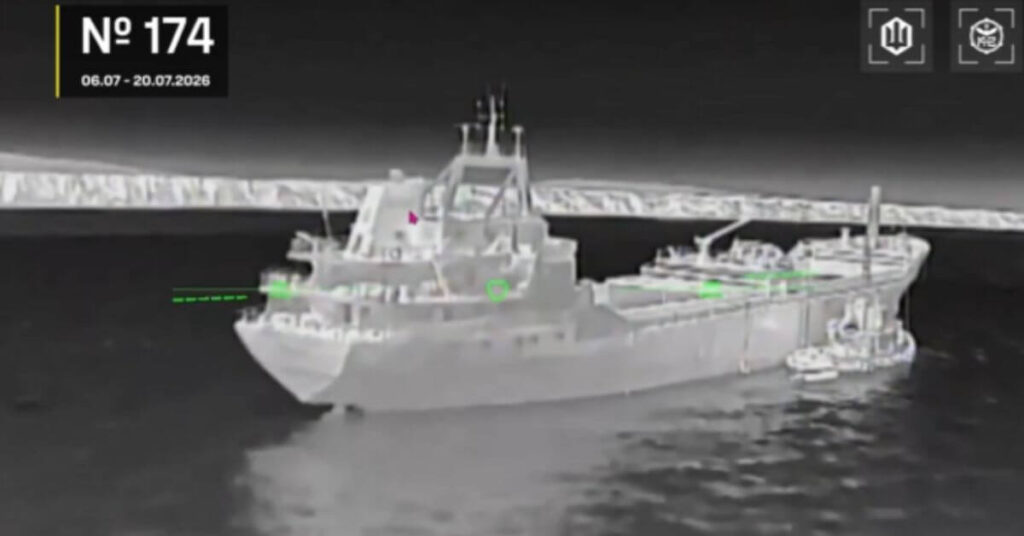
Ukraine’s Unmanned Systems Forces (USF) have disabled 300 vessels linked to Russia’s shadow fleet in the Black Sea and Sea of Azov since July 6, marking a dramatic escalation in the maritime conflict. The 11-week operation, dubbed Molochka, has targeted tankers and dry bulk carriers supplying Russian-occupied Crimea or transporting Russian energy exports.
The USF, led by Commander Robert “Madyar” Brovdi, claimed the strikes were designed to cripple Russia’s maritime logistics without risking environmental disasters. 166 vessels were disabled in the Black Sea, while 134 were hit in the Sea of Azov, according to Brovdi’s statement on September 20. The figures, however, remain unverified by independent sources.
How Ukraine’s Drones Are Reshaping Black Sea Trade: shadow fleet
The operation has focused on Russia’s so-called shadow fleet, a network of vessels used to bypass Western sanctions. Most of the targeted ships were tankers carrying fuel or other energy products, with dry bulk carriers also among the casualties. Brovdi emphasised that the goal was to “stop the vessels from operating rather than sink them”, a strategy intended to minimise the risk of oil spills in the region.
The strikes have created a climate of uncertainty for commercial shipping in the northern and northeastern Black Sea. Brovdi noted that vessels in these areas now operate “in a situation where it is uncertain whether they would be able to get through”. This disruption has already forced major players to reconsider their routes. In late August, MSC Mediterranean Shipping Co., the world’s largest container line, halted new bookings for shipments through Russia’s Novorossiysk port after its vessel MSC Ulsan III was attacked by a drone.
The campaign’s intensity has accelerated in recent weeks. Ukrainian forces struck 159 tankers over 12 days in early July, with the total rising to 196 by July 20, 218 by August 8, and 282 by September 9. In the three days leading up to September 20, drone crews attacked and “burned” 21 tankers, according to Brovdi. A recent update also reported strikes on 7 sanctioned Russian vessels, including 5 cargo ships and 5 oil tankers in the Black Sea and Sea of Azov.
The Strategic Impact of Ukraine’s Maritime Campaign
The shadow fleet has been a critical lifeline for Russia, allowing it to circumvent Western sanctions and maintain energy exports. By targeting these vessels, Ukraine aims to weaken Russia’s economic resilience while avoiding direct confrontation with naval forces. The USF’s use of unmanned systems, particularly its “Birds” units, has proven effective in disrupting maritime logistics without deploying traditional warships.
The Black Sea has long been a contested waterway, but the scale of Ukraine’s drone operations marks a new phase in the conflict. The strikes have not only disrupted Russian supply lines but also raised concerns among global shipping companies about the safety of transiting the region. MSC’s decision to suspend bookings for Novorossiysk underscores the growing risks for commercial vessels, even those not directly linked to Russia’s war effort.
For the maritime industry, the conflict has introduced unprecedented challenges. Insurers are likely to reassess risk premiums for vessels operating in the Black Sea, while shipping companies may seek alternative routes to avoid the conflict zone. The environmental risks, though mitigated by Ukraine’s stated strategy, remain a concern, particularly if damaged vessels leak fuel or other hazardous materials.
Looking ahead, the USF’s operations are expected to continue, with further strikes likely as Ukraine seeks to maintain pressure on Russia’s maritime trade. The success of the drone campaign could also inspire similar tactics in other conflict zones, reshaping naval warfare in the process. For now, the Black Sea remains a high-risk area for commercial shipping, with no immediate resolution in sight.
“300 shadow fleet vessels have been hunted and taken out of self-propelled condition in the Azov (134 boats) and Black (166) seas by SBS Birds.”
Robert·Commander of Ukraine’s Unmanned Systems Forces
The next phase of the operation may focus on further disrupting Russia’s energy exports, particularly as winter approaches and demand for fuel increases. The USF’s ability to sustain its campaign will depend on continued support and the resilience of its drone units in the face of potential Russian countermeasures.


Sign up free to ask CAMAL AI for a summary, the key points or anything else about this story.
Related stories
CAMAL AI
 Financial Ports Newsletter
The maritime economy, every morning
Ports, shipping and freight markets in one short email. Free.
Financial Ports Newsletter
The maritime economy, every morning
Ports, shipping and freight markets in one short email. Free.



