

Libya’s Ports Become Proxy Battleground for Ukraine and Russia
Russian military convoy docks in Tobruk as Ukrainian drones strike sanctioned vessels in the Mediterranean
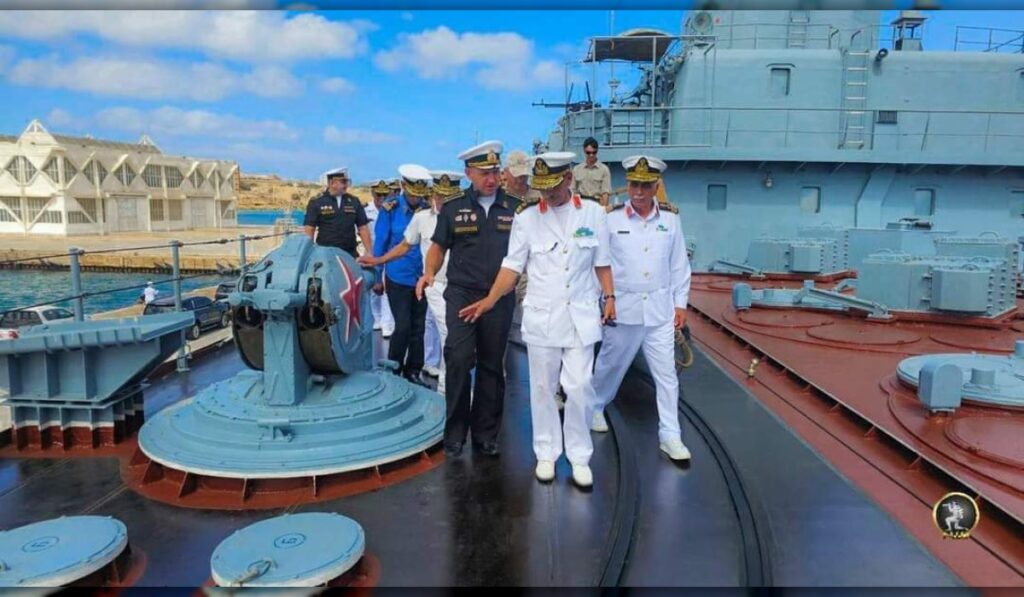
A Russian naval convoy, including the Ropucha-class landing ship Aleksandr Shabalin (L110) and two sanctioned cargo vessels, Anastasiia (IMO 9349291) and Yuriy Arshenevskiy (IMO 8406705), departed from Baltiysk naval base in Kaliningrad and transited the Strait of Gibraltar before docking in Tobruk, Eastern Libya, on between Sicily and Tunisia on September 10. Satellite imagery confirmed the loading of Ural trucks and armoured vehicles onto the vessels in Baltiysk, raising questions about the final destination of the military hardware.
The end-users of the equipment remain uncertain, but three primary factions are in contention. The Libyan National Army (LNA), led by Field Marshal Khalifa Haftar, a US citizen and former Virginia resident, controls Tobruk and Eastern Libya.
Alternatively, the equipment could be destined for the Rapid Support Forces (RSF), a rebel group in Sudan backed by the UAE and supplied via routes through southeastern Libya and eastern Chad. Russia has historically armed both sides in Sudan’s civil war, making this a plausible scenario. A third possibility is that the hardware will reinforce Russia’s Africa Corps, which operates as a mercenary force supporting governments in six Central African nations, aligning with Moscow’s broader strategic interests on the continent.
Who Benefits from Russia’s Military Convoy?
While Russia bolsters its presence in Tobruk, Ukraine has escalated its maritime campaign against Russian and dark fleet shipping in the Mediterranean. A Ukrainian SBU drone detachment, based at Misrata Air Base, has been confirmed by both CNN and RFI, despite denials from the Libyan Observer. Misrata, a semi-autonomous city aligned with the GNU, has a contentious relationship with Haftar’s forces, making it a strategic hub for Ukrainian operations.
The detachment has claimed responsibility for two high-profile attacks: the strike on the Omani-flagged dark fleet Aframax Qendil (IMO 9310525) in December last year and the September 7 attack on the Russian military cargo vessel Lady Mariia (IMO 9220641).
Both incidents involved bomb-dropping hexacopter drones, such as the Volyniaka, which has a range of approximately 15 nautical miles. Given this limitation, the drones are likely launched from vessels operating near Misrata, though such platforms would be vulnerable to interception by Russian warships, particularly those equipped with helicopters.
As of September 17, the Lady Mariia remained anchored at the northern end of the Suez Canal, potentially awaiting a Russian naval escort before attempting to transit the Mediterranean again. The vessel’s survival of the September 7 attack underscores the evolving tactics in this maritime proxy war, where drone strikes and convoy escorts have become critical tools for both sides.
Ukraine’s Drone Warfare Extends to Libyan Waters
For maritime stakeholders, the implications are clear: the Mediterranean is no longer a neutral transit zone but a contested battleground where dark fleet vessels, sanctioned cargo ships, and drone warfare converge. The 15nm range of Ukrainian hexacopters means that any Russian or dark fleet vessel operating within that distance of Misrata, or any other coastal launch point, is at risk. Conversely, Russian naval escorts are likely to become more common, further militarising regional shipping lanes.
The next critical juncture may come if the Lady Mariia attempts to re-enter the Mediterranean. Its survival will depend on the effectiveness of its escort and the ability of Ukrainian forces to adapt their tactics. Meanwhile, the Flintlock 2026 exercise, running concurrently, serves as a reminder that Libya’s internal divisions are not just a local issue but a focal point for global powers vying for influence in North Africa.


Sign up free to ask CAMAL AI for a summary, the key points or anything else about this story.
Related stories
CAMAL AI
 Financial Ports Newsletter
The maritime economy, every morning
Ports, shipping and freight markets in one short email. Free.
Financial Ports Newsletter
The maritime economy, every morning
Ports, shipping and freight markets in one short email. Free.