

Russia’s Arctic Ports Now Ship Grain as Black Sea Routes Collapse
Murmansk and Baltic terminals add 7 million tonnes of annual capacity after Ukrainian strikes cripple Black Sea exports.
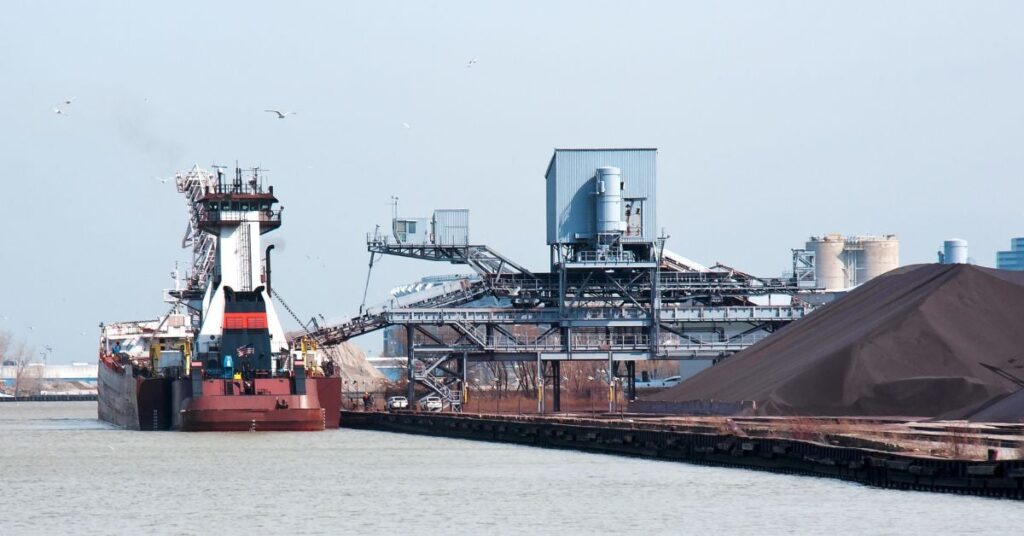
Russia’s grain export crisis has forced a dramatic shift to Arctic and Baltic ports, as Ukrainian drone strikes cripple Black Sea infrastructure. With 90% of its wheat previously shipped through southern terminals, Moscow is now repurposing coal and fertiliser hubs to keep global supplies flowing, at a cost.
Ultramar, a privately owned terminal at the Port of Ust-Luga, has become the unlikely linchpin of this strategy. Originally designed for mineral fertilisers, the 37-million-tonne-capacity facility began handling grain in beginning of August 2026, shipping primarily to Saudi Arabia and Egypt. Last year, Ultramar exported 16 million tonnes of fertilisers; this year, it’s pivoting to wheat as southern routes collapse.
The Port of Ust-Luga, located on the Baltic Sea near the Estonian border, is one of Russia’s most modern deep-water ports. Operated by the state-owned Rosmorport, it serves as a critical hub for bulk cargo, including coal, fertilisers, and now grain. Its strategic location allows direct access to European and Middle Eastern markets, bypassing the congested Black Sea routes. However, its capacity, while substantial, remains a fraction of the southern ports’ dominance.
In St. Petersburg, terminals BSMZ and Modul, previously unused for grain, have also joined the effort. Modul now handles around 70,000 tonnes of wheat monthly, though industry experts warn rerouting is becoming increasingly expensive. The Baltic and Arctic ports, with a combined grain-handling capacity of two to seven million metric tons, offer a lifeline but fall far short of the Black Sea’s over sixty million metric tons.
The Port of St. Petersburg, Russia’s second-largest port, has long been a key gateway for containerised and bulk cargo. Its terminals, including BSMZ and Modul, were originally designed for general cargo, metals, and fertilisers. The sudden shift to grain exports highlights the Kremlin’s adaptability, but also its desperation. The port’s infrastructure, while robust, was not optimised for the high-volume, low-margin grain trade, leading to inefficiencies and higher costs.
Murmansk: The Arctic Lifeline for Russia’s Grain
Russia’s fourth-largest port, Murmansk, will begin grain shipments in October 2026, marking its first foray into the commodity. The port, which handles 24 million tonnes of ore, metals, and coal annually, will adapt existing terminals to accommodate Panamax-class vessels. A direct-transfer system, typically used for potash exports, will be modified to manage larger grain volumes.
The Murmansk Commercial Port, operated by the state-controlled Murmansk Sea Port, is the world’s largest port north of the Arctic Circle. Its ice-free status year-round is a critical advantage, allowing uninterrupted shipping even in winter. However, its remote location, 2700 km from Novorossiysk, poses logistical challenges, including longer transit times and higher transport costs from Russia’s grain-producing regions in the south.
“For the country’s economy, it is important that Russian producers have several reliable options for export logistics,” said Andrei Riznichenko, Murmansk port operations director. His statement underscores the Kremlin’s urgency to bypass Black Sea bottlenecks, where Ukrainian strikes have damaged storage facilities and berthed ships. The port’s adaptation of conveyor systems, originally designed for potash, reflects a broader trend: Russia’s reliance on repurposing existing infrastructure rather than building new capacity.
Murmansk’s ability to handle Panamax-class vessels, ships with a capacity of up to Panamax-class vessels, makes it a viable alternative to Black Sea ports. However, its current infrastructure was not designed for grain, and the modifications required to handle larger volumes could strain resources. Analysts warn that without significant investment, the port’s grain-handling capacity will remain limited compared to traditional hubs.
Global Markets Brace for Shortages
The disruption has sent ripples through global grain markets, particularly in the Global South and East. Between 2016 and 2021, Asian and African countries received 92% of Ukraine’s wheat exports, and Russia’s struggles threaten to exacerbate shortages. Maria Zakharova, Russian Foreign Ministry spokesperson, criticised the attacks, stating: “This exacerbates shortages of grain and fertilizers, drives up global food prices and increases the costs for countries in the Global South and East, which have become hostages to the irresponsible policies of these ‘players.'”
The Kremlin’s push to reroute grain exports comes as domestic pressures mount. Unsold stocks and falling prices have left Russian farmers struggling, with some regions reporting up to 30% of their harvest unsold. The government has introduced subsidies to offset transport costs, but these measures are seen as temporary fixes rather than long-term solutions. For now, the focus remains on maximising existing infrastructure, even if it means accepting higher costs and logistical inefficiencies.
Russia’s August 2026 wheat exports are projected at 3-3.4 million tonnes, a sharp decline from the five-year average of 5 million tonnes. The last time exports were this low was in 2016-2017, highlighting the severity of the current crisis. With no new construction planned, existing terminals like Ultramar and Murmansk must shoulder the burden, despite their limited capacity compared to Black Sea ports.
The broader implications for global food security are stark. Countries in North Africa and the Middle East, which rely heavily on Russian and Ukrainian wheat, face rising prices and potential shortages. Egypt, the world’s largest wheat importer, has already begun diversifying its suppliers, but the shift is unlikely to offset the shortfall entirely. Meanwhile, Russia’s pivot to Arctic and Baltic ports may ease some pressure, but it is a stopgap measure at best.
The shift in Russia’s grain export strategy is reshaping the maritime logistics landscape. Baltic and Arctic ports, once considered secondary players, are now critical nodes in the global grain trade. However, their limited capacity and specialised infrastructure pose challenges. For example, the Ultramar terminal at Ust-Luga, while capable of handling 37 million tonnes annually, was designed for fertilisers, not grain. The lack of dedicated grain silos and loading equipment could lead to bottlenecks as volumes increase.
For shipping companies, the rerouting presents both opportunities and risks. Panamax and Supramax vessels, typically used for grain transport, are now being deployed to ports like Murmansk and St. Petersburg. However, the longer transit times and higher fuel costs could erode profit margins. Some analysts predict a surge in demand for ice-class vessels, which are better suited to Arctic conditions but command higher charter rates.
The Kremlin has not ruled out further adaptations. Reports suggest that other Arctic ports, such as Arkhangelsk, could be next in line to handle grain exports. However, these ports lack the infrastructure of Murmansk and would require significant investment to become viable alternatives. For now, the focus remains on maximising the capacity of existing terminals, even if it means accepting higher costs and logistical inefficiencies.
Russia’s grain export crisis shows no signs of abating. The Kremlin has indicated that it will continue to prioritise the development of Arctic and Baltic routes, with Murmansk set to begin grain shipments in October 2026. However, industry experts warn that without significant investment in new infrastructure, these ports will struggle to match the capacity of the Black Sea hubs.
For stakeholders in the global grain trade, monitoring official channels is critical. The Russian Ministry of Transport and Rosmorport provide updates on port capacities and export routes, while agricultural consultancies like SovEcon offer market analysis and projections. Shipping companies and importers are advised to plan for continued disruptions and higher costs, particularly for routes involving the Baltic and Arctic.
As the situation evolves, one thing is certain: Russia’s grain export strategy is undergoing a fundamental shift. The Arctic and Baltic ports, once peripheral to the trade, are now at the forefront of Moscow’s efforts to maintain its position as a global wheat supplier. Whether this strategy can sustain exports in the long term remains to be seen, but for now, it is the only option on the table.
For now, the Kremlin’s strategy hinges on adapting infrastructure built for other commodities. Whether this stopgap measure can stabilise exports remains uncertain, but one thing is clear: the Arctic and Baltic are no longer niche players in Russia’s grain trade, they’re its last hope.


Sign up free to ask CAMAL AI for a summary, the key points or anything else about this story.
Related stories
CAMAL AI
 Financial Ports Newsletter
The maritime economy, every morning
Ports, shipping and freight markets in one short email. Free.
Financial Ports Newsletter
The maritime economy, every morning
Ports, shipping and freight markets in one short email. Free.