

Turkish Crew Sues Ukraine at ICC After Deadly Black Sea Drone Strike
A 54-year-old sailor was killed when the 36,075 dwt bulker Reyhan Sari was struck near Novorossiysk on July 22.
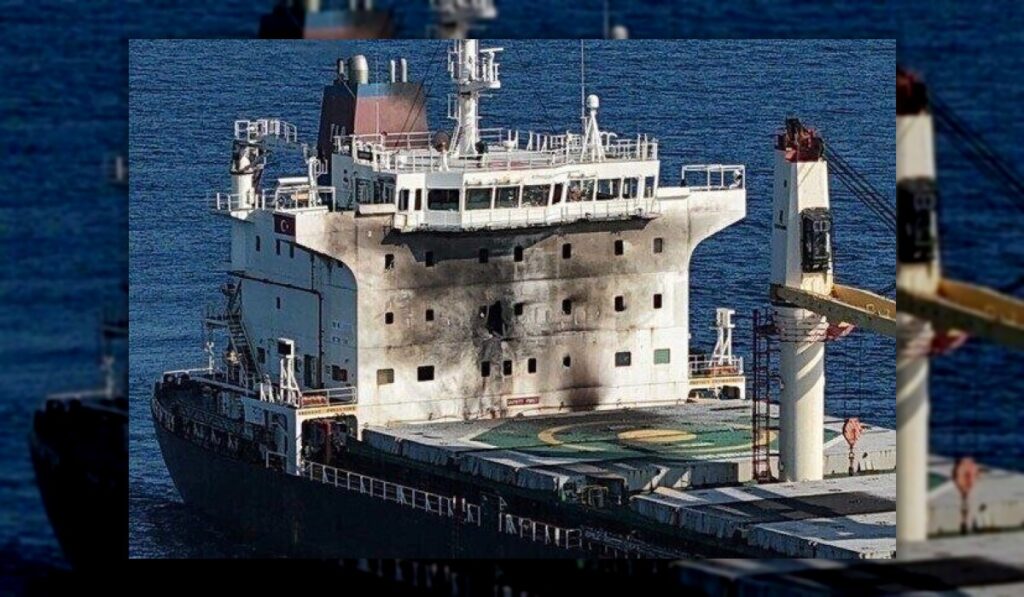
A Turkish shipowner, the family of a slain crewmember, and survivors of a Ukrainian drone strike have filed a war crimes complaint with the International Criminal Court (ICC), alleging the July 22 attack on the bulker Reyhan Sari was deliberate and aimed at killing civilians.
The complaint, lodged in The Hague on September 17, centres on the 36,075-dwt Reyhan Sari, which was struck in the Black Sea near the Russian port of Novorossiysk while carrying coal from Taman to Turkey. The attack killed 54-year-old sailor Savas Cakar, who was working in the engine room, and injured several of the vessel’s 15 crewmembers. The Reyhan Sari, built in 2011 and acquired by Turkish firm T&O Denizcilik in 2023, managed to reach Turkey after the strike.
Ukraine’s ratification of the Rome Statute in 2024 and its full membership in the ICC, which took effect on January 1, 2025, marked a significant shift in its legal stance.
The ICC’s Mandate and Jurisdiction: black sea shipping
The plaintiffs, 12 crew members, the family of the deceased sailor, and the ship’s owner, allege Ukraine deliberately targeted the Reyhan Sari in its accommodation area, using illegal cluster munitions with armour-piercing capabilities. The complaint cites “extensive internal damage” and shrapnel traces visible in photos and videos taken after the attack.
Lawyer Nuri Koray Kurun, representing the plaintiffs, stated:
“There is concrete information and footage showing that the attack originated from Ukraine. Our technical analysis of the vessel shown being struck in the video established that it was the Reyhan Sari.".
The ICC, established in 2002, will now examine the filing to determine whether the alleged crimes fall within its jurisdiction. Ukraine became a full member of the court on January 1, 2025, after ratifying the Rome Statute in 2024, making it subject to ICC investigations. Prosecutors will assess whether the evidence meets the court’s thresholds for war crimes or crimes against humanity before deciding whether to launch a formal inquiry.
Allegations of Intent to Kill Civilians
Turkey, which played a key role in establishing the UN-backed grain corridor in 2022, has repeatedly called for a de-escalation of attacks on merchant shipping. Ankara has proposed a truce to protect civilian vessels, though previous efforts have been rejected by both Russia and Ukraine.
The Reyhan Sari attack is not an isolated incident. Last month, Türkiye summoned the Ukrainian ambassador to protest strikes on its commercial shipping, while India took similar action after an Indian sailor was killed in an attack on the Omorfi.
The escalation of attacks on merchant vessels has raised concerns about the safety of seafarers and the stability of global supply chains. The Black Sea, a critical route for grain, coal, and other commodities, has seen a sharp decline in shipping activity as insurers and operators weigh the risks. The International Maritime Organization (IMO) has repeatedly urged all parties to respect the rights of merchant ships and their crews, emphasising that attacks on civilian vessels are prohibited under international law.
Turkey’s involvement in the Reyhan Sari case underscores its unique position in the conflict. As a NATO member with historical ties to both Russia and Ukraine, Ankara has sought to mediate between the warring parties while protecting its own economic and security interests. The country’s proposal for a truce to safeguard Black Sea shipping reflects its broader strategy of balancing neutrality with assertive diplomacy.
In 2022, Turkey played a pivotal role in brokering the Black Sea Grain Initiative, a UN-backed agreement that allowed Ukraine to export grain despite the war. The deal, which helped stabilise global food prices, demonstrated Turkey’s ability to navigate complex geopolitical dynamics. However, the collapse of the initiative in 2023 and the subsequent rise in attacks on merchant vessels have tested Ankara’s diplomatic resolve.
For the families of the Reyhan Sari crew, the ICC complaint represents a critical step toward accountability. The case also highlights the broader challenges of protecting civilian shipping in a conflict zone, where the lines between military and commercial targets are increasingly blurred. As the ICC reviews the evidence, the outcome could shape future efforts to enforce international law at sea and deter further attacks on merchant vessels.
The ICC’s decision on whether to proceed with the complaint could set a precedent for future cases involving attacks on merchant shipping in conflict zones. For now, the court’s prosecutors will scrutinise the evidence, including the alleged use of cluster munitions, which are banned under international conventions. If the case moves forward, it could further strain diplomatic relations between Turkey and Ukraine, both of which have sought to balance their positions amid the ongoing war.
The outcome of this complaint may also influence broader efforts to protect civilian shipping in the Black Sea. Turkey’s mediation proposals remain on the table, but with neither side willing to concede, the safety of merchant vessels, and their crews, hangs in the balance.
For the families of those killed or injured, the ICC filing represents a critical step toward accountability in a conflict that has already claimed countless lives at sea. Meanwhile, shipowners and insurers are closely monitoring developments, as the court’s ruling could redefine the legal risks of operating in contested waters.


Sign up free to ask CAMAL AI for a summary, the key points or anything else about this story.
Related stories
CAMAL AI
 Financial Ports Newsletter
The maritime economy, every morning
Ports, shipping and freight markets in one short email. Free.
Financial Ports Newsletter
The maritime economy, every morning
Ports, shipping and freight markets in one short email. Free.



