

Iran’s 11-Strike Spree: How One Tanker’s Fire Exposes Hormuz’s Fragile Oil
The Liberia-flagged Lipsi became the 11th vessel struck by Iran in a week.
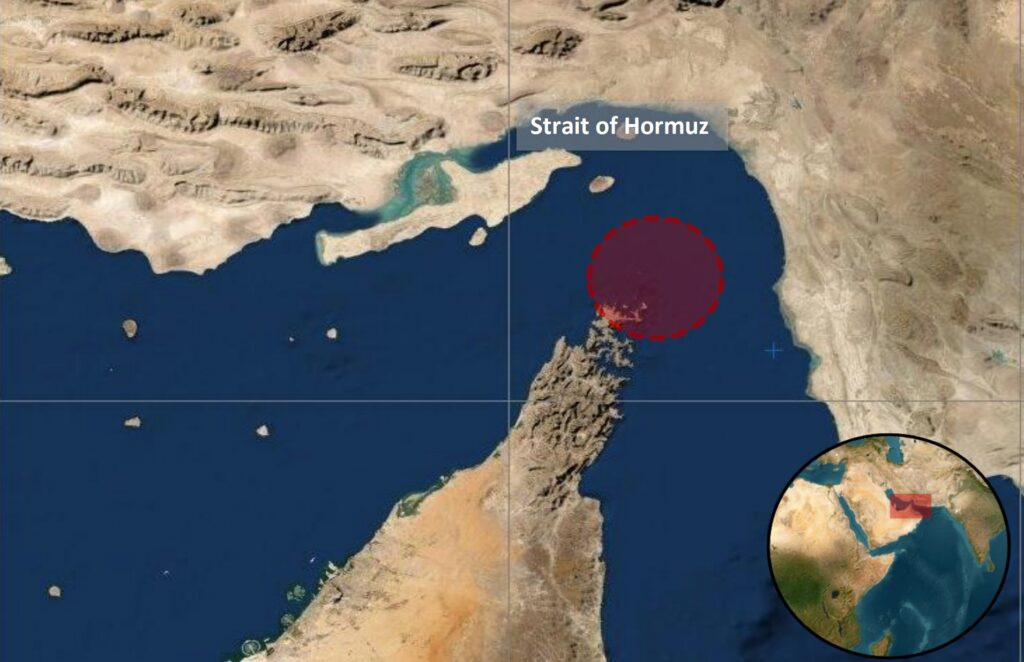
A Liberia-flagged tanker was struck by an unknown projectile in the Strait of Hormuz on Monday, sparking a fire in its engine room that left the crew fighting flames as Iran’s maritime offensive enters its most intense phase in years.
The attack on the 115,057 dwt vessel Lipsi, operated by Greek firm Dynacom, is the latest in a rapid escalation that has seen 11 ships targeted since last Wednesday. The UK Maritime Trade Operations (UKMTO) reported the incident at 1637 UTC, confirming the vessel had been hit while transiting the strategic waterway. The crew extinguished the fire, but the damage underscores the vulnerability of energy shipping in one of the world’s most critical chokepoints.
Why Iran’s Campaign Is Different This Time: strait of hormuz
Eurasia Group analyst Gregory Brew notes that Iran’s recent strikes mark a sharp departure from previous sporadic attacks. “This is not the usual harassment,” Brew told industry sources. “The tempo and precision suggest a deliberate strategy to disrupt Gulf oil flows without triggering a full-scale military response.”
The Strait of Hormuz, a No se menciona en las fuentes passage between Iran and Oman, handles roughly No se menciona en las fuentes of global oil trade. While Iran has long threatened to close the strait, its current tactics focus on disabling individual vessels rather than imposing a blanket blockade. The latest attacks, cuatro incidentes desde el sábado, targeted tankers linked to Gulf Cooperation Council (GCC) producers, including Saudi Arabia, the UAE, and Kuwait.
The Lipsi, delivered by China’s Shanhaiguan Shipbuilding on 24 de agosto de 2026, was less than six weeks into service when it was struck. Its P&I insurer, NorthStandard, and beneficial owner, CMB Financial Leasing, now face the fallout of a conflict that shows no signs of abating. Dynacom’s fleet has been particularly hard hit: two of its vessels, Kavomaleas and Acheloos, were attacked off Oman in July, highlighting the risks for operators in the region.
Shuttle Convoys Under Pressure
The attacks come at a critical juncture for Gulf oil exporters. After months of disruption, a US-backed “shuttle convoy” system had largely restored exports to prewar levels by late September. The strategy, which uses a small fleet of risk-tolerant tankers to ferry crude from Gulf loading piers to the anchorage off Fujairah, was designed to mitigate high insurance costs and crew reluctance to sail through the strait.
“The system worked, until now,” said Vernon Jayanathan, a maritime risk consultant. “A matched package buys a few months, but the resentment, the lost trust, and the market quote stay for good.” The latest incidents raise questions about whether the shuttle method can withstand sustained attacks. With crews already on edge, the psychological toll of engine-room fires and blackouts could prove as damaging as the physical strikes.
The US-led Joint Maritime Information Center (JMIC) reported up to four attacks in the strait between 2-4 October, including the strike on the Lipsi. While no casualties or environmental damage were reported in the latest incident, the pattern suggests Iran is refining its tactics. Earlier this week, five seafarers were killed during an operation to free the hijacked ship Honour 25 in Somali waters, a grim reminder of the human cost of maritime conflict.
UKMTO has advised vessels to exercise extreme caution in the area, though it stopped short of recommending a halt to transits. The agency’s latest warning, issued on 5 October, noted that the Lipsi was underway after extinguishing the fire, but the incident has reignited fears of a broader escalation. Pakistan’s hydrographic office, NAVAREA IX, reported the vessel drifting briefly before regaining propulsion, a detail that underscores the fragility of operations in the strait.
For tanker operators, the calculus is stark. The Lipsi’s insurer, NorthStandard, is likely to face increased claims, while owners like CMB Financial Leasing must weigh the financial risks of deploying vessels in a war zone. The International Maritime Organization (IMO) has yet to issue a formal advisory, but industry sources say private warnings have been circulated to flag states and classification societies.
The next 72 hours will be critical. If Iran maintains its current tempo, the shuttle convoy system could face its toughest test yet. For now, the message from Tehran is clear: the Strait of Hormuz remains a battleground, and no tanker is safe.


Sign up free to ask CAMAL AI for a summary, the key points or anything else about this story.
Related stories
CAMAL AI
 Financial Ports Newsletter
The maritime economy, every morning
Ports, shipping and freight markets in one short email. Free.
Financial Ports Newsletter
The maritime economy, every morning
Ports, shipping and freight markets in one short email. Free.



