

Four Ships Hit in 24 Hours: Is the Strait of Hormuz Under Siege?
Four vessels struck by unknown projectiles near Oman, with one engulfed in flames.
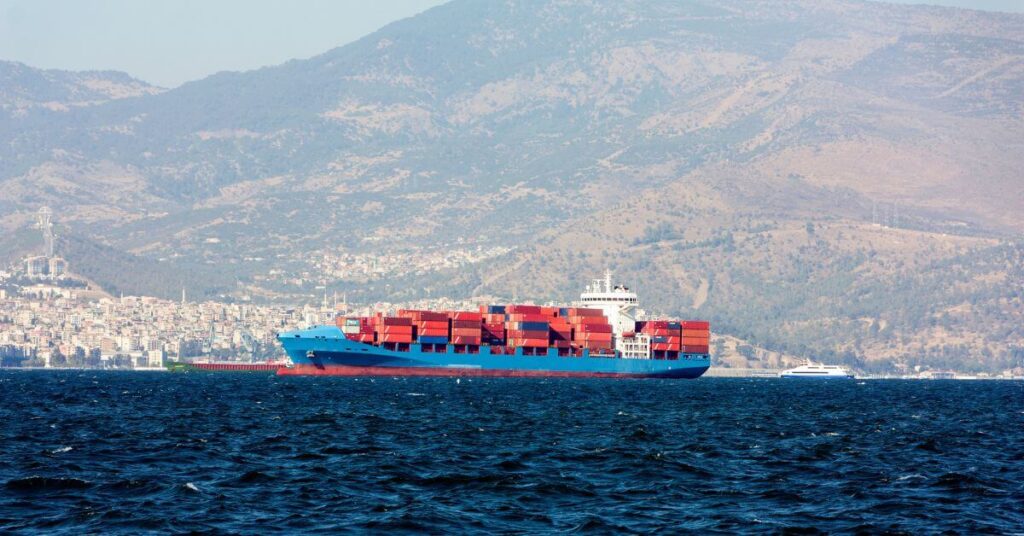
Two vessels have been struck by unknown projectiles, raising alarms over the safety of one of the world’s most critical maritime chokepoints. The latest incident, reported by the United Kingdom Maritime Trade Operations (UKMTO), saw two ships hit near Khasab, Oman, with one bursting into flames.
The attacks occurred about 4 nautical miles west of Khasab, a port on Oman’s Musandam Peninsula just south of the Strait of Hormuz. A master aboard another vessel witnessed the projectiles striking the two ships from a distance of 6 nautical miles and immediately reported the incident to UKMTO. The agency confirmed that one of the vessels caught fire, though the condition of the second remains unknown. No group has claimed responsibility, and UKMTO has not attributed the attack to any specific party, including Iran or the United States.
What We Know About the Attacks
The September 10 incident is the latest in a string of mysterious strikes targeting commercial vessels in the region. Just a day earlier, UKMTO reported that several merchant ships came under disabling fire in the northern Arabian Gulf and the Gulf of Oman. The agency has not released the identities of the vessels involved in the latest attack, nor has it provided an update on the second ship’s status.
However, the attacks bear striking similarities to a May 4 incident involving the South Korean-flagged cargo ship Namu. The 38,314 dwt vessel was struck by two projectiles while anchored off Umm Al Quwain, UAE, causing a fire in its engine room and a 16.5 ft by 23 ft hole in its hull. All 24 crewmembers escaped uninjured, but the damage was severe enough to require the ship to be towed to Dubai for repairs.
South Korean officials later confirmed that the projectiles were Iranian anti-ship missiles from the Nour series. During a briefing on May 27, First Minister of the Ministry of Foreign Affairs Park Yoon-joo stated that the first warhead failed to detonate but ignited a fire, while the second exploded, spreading the flames. The findings were based on an analysis of missile components recovered from the Namu, including the engine, warhead, and airframe, which bore markings consistent with Iranian manufacturing.
“The first warhead that struck the ship did not detonate, but it started a fire in the engine room. The second warhead exploded, causing the fire to spread.”
Park Yoon-joo·First Minister, South Korean Ministry of Foreign Affairs
The Strait of Hormuz: A Global Flashpoint
The Strait of Hormuz, a narrow waterway separating Iran from Oman and the UAE, is the world’s most critical maritime chokepoint. Approximately 20% of the world’s oil passes through its waters daily, making it a strategic target for geopolitical tensions. Recent attacks have heightened concerns over the safety of commercial shipping in the region, with ripple effects felt across global energy markets.
In addition to the Namu, three other vessels have been targeted in recent weeks. On September 9, the Thailand-flagged bulk carrier Mayuree Naree was struck by an unknown projectile 11 nautical miles north of Oman. The fire aboard the ship was extinguished, and no environmental damage was reported. Meanwhile, the Japan-flagged container ship One Majesty sustained minor damage from a projectile 25 nautical miles northwest of Ras Al Khaimah, UAE, and the Marshall Islands-flagged bulk carrier Star Gwyneth was hit 50 miles northwest of Dubai, damaging its hull.
The United States has taken proactive measures to secure the strait, reportedly dismantling more than a dozen Iranian minelaying vessels in an effort to prevent attempts to block the waterway. Iran, however, has vowed to disrupt oil flows through the strait, a threat that has sent shockwaves through global markets. Despite the tensions, some tankers linked to Iranian-associated shipping continue to transit the strait using “dark” voyages, turning off their Automatic Identification System (AIS) trackers to avoid detection.
Iran has also resumed crude exports through its Jask oil terminal on the Gulf of Oman, further complicating the geopolitical landscape. On March 7, a tanker loaded roughly 2 million barrels of crude at the terminal, signaling Iran’s determination to maintain its oil trade despite international pressure. According to Neptune P2P Group, a maritime security firm, seven ships have passed through the Strait of Hormuz since March 8, including five linked to Iranian-associated shipping.
UKMTO has issued a warning to all vessels operating in the area, urging them to transit with caution and report any suspicious activity. The agency’s advisory underscores the growing risks faced by commercial shipping in the region, where the line between state-sponsored attacks and opportunistic strikes remains blurred.
As investigations into the latest attacks continue, the maritime industry is bracing for further disruptions. The Strait of Hormuz, long a powder keg of geopolitical tensions, is once again at the center of a crisis with far-reaching implications for global trade and energy security.


Sign up free to ask CAMAL AI for a summary, the key points or anything else about this story.
Related stories
CAMAL AI
 Financial Ports Newsletter
The maritime economy, every morning
Ports, shipping and freight markets in one short email. Free.
Financial Ports Newsletter
The maritime economy, every morning
Ports, shipping and freight markets in one short email. Free.



