

Oman Slaps 3-Day Deadline on Ships in Hormuz Transit Crackdown
Foreign vessels must now secure navigation permits 72 hours before entering Omani waters or face expulsion within 24.
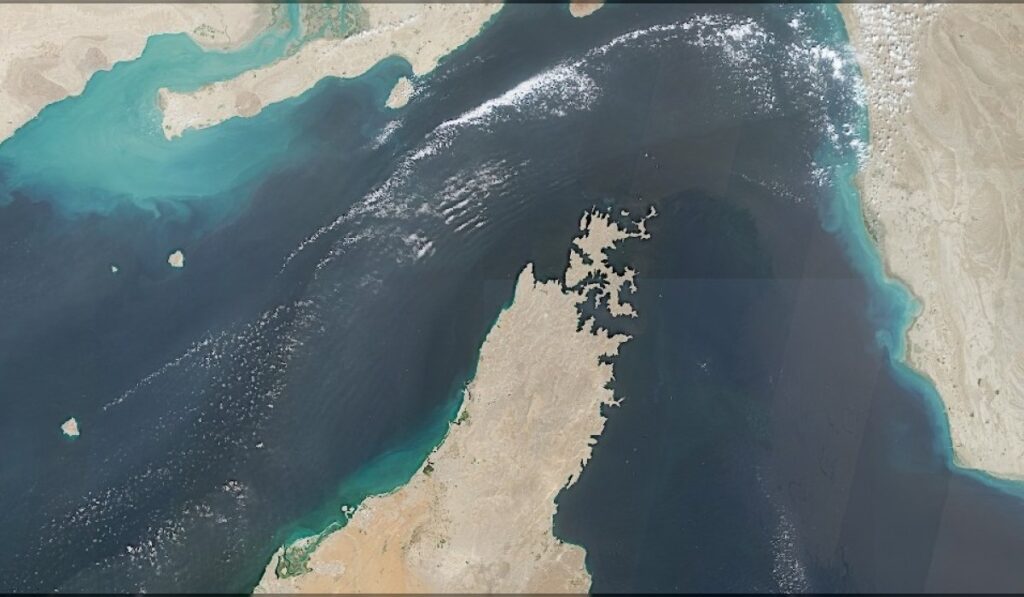
Oman has tightened the screws on rogue shipping in the Strait of Hormuz, issuing a sweeping set of new transit rules that target dark fleet tankers, uninsured vessels and Iranian Revolutionary Guard Corps (IRGC) reconnaissance boats.
The Maritime Security Centre has published a new instruction set grounded in Royal Decree 30/2026, which came into force in February but has only now been rigorously enforced. The rules are a direct response to the growing chaos in Omani territorial waters, where IRGC unmarked boats conduct reconnaissance, lay mines and launch attacks on commercial shipping, while dark fleet tankers, often with fraudulent registration and no valid Protection and Indemnity (P&I) insurance, use the area for clandestine ship-to-ship transfers of crude and LNG.
What the new rules demand: strait of hormuz
Foreign-flagged vessels transiting Omani waters must now apply for a formal navigation licence through a shipping agent at least three days before entry. The application requires proof of valid flag registration and insurance certificates, including P&I cover. Without these, the licence will not be issued, and vessels will be barred from entering Omani waters.
Natural Gas
Once licensed, ships face a series of operational restrictions. They must obtain prior approval before entering any protected or restricted zones, areas that will be defined in forthcoming Notices to Mariners. All weapons and ammunition must be declared and licensed.
Photographing public or private properties is strictly prohibited. Most critically, vessels must maintain continuous Automatic Identification System (AIS) operation while in Omani waters, a measure designed to counter the growing problem of AIS anomalies and GNSS interference, commonly known as GPS jamming and spoofing, that have plagued the Strait of Hormuz in recent months.
Vessels that fail to comply with the new regime face swift expulsion. Any ship whose licence expires or is cancelled must leave Omani territorial waters within 24 hours. Anchoring is prohibited until formal arrival procedures are completed at the nearest Omani maritime port. The rules are issued under Royal Decree 30/2026, which grants the Ministry of Transport, Communications and Information Technology broad authority to regulate maritime transit in the Sultanate’s waters.
Why now, and what it means for global shipping
The timing of the new rules is no coincidence. The Strait of Hormuz, a critical chokepoint for global energy supplies, has become a battleground. Shuttle tankers ferrying oil through the strait face regular attacks from the IRGC, while dark fleet vessels, often operating under flags of convenience with no valid insurance, exploit the area for illicit transfers. The IRGC’s use of unmarked boats for reconnaissance and mine-laying has further destabilised the region, turning Omani waters into a high-risk zone for legitimate commercial shipping.
The enforcement challenge is daunting. Omani Coast Guard must monitor a vast volume of traffic, much of which enters and exits Omani waters before enforcement action can be taken. The new rules, however, signal a clear intent: Oman is no longer willing to tolerate a free-for-all in its territorial waters. The move aligns with the Sultanate’s long-standing commitment to the United Nations Convention on the Law of the Sea (UNCLOS), which grants coastal states the right to regulate transit in their waters.
For shipowners and operators, the message is stark. Compliance is no longer optional. Vessels that fail to secure the necessary licences, maintain AIS operation or adhere to the new restrictions risk being turned away, or worse, becoming entangled in the escalating conflict between Iran and commercial shipping. The new regime also raises questions about the future of dark fleet operations. With Oman tightening its grip, these vessels may be forced to seek alternative routes, further straining an already volatile maritime environment.
The next few weeks will be critical. The Maritime Security Centre has yet to clarify how it will enforce the new rules in practice, particularly in the congested waters of the Strait of Hormuz. What is clear, however, is that Oman has drawn a line in the sand. The era of unchecked transit through its waters is over.


Sign up free to ask CAMAL AI for a summary, the key points or anything else about this story.
Related stories
CAMAL AI
 Financial Ports Newsletter
The maritime economy, every morning
Ports, shipping and freight markets in one short email. Free.
Financial Ports Newsletter
The maritime economy, every morning
Ports, shipping and freight markets in one short email. Free.



