

Six Tankers Hit in a Week: Is Hormuz the New War Zone for Oil?
Two more strikes in the Strait of Hormuz bring weekly attacks to six, as US-Iran tensions escalate
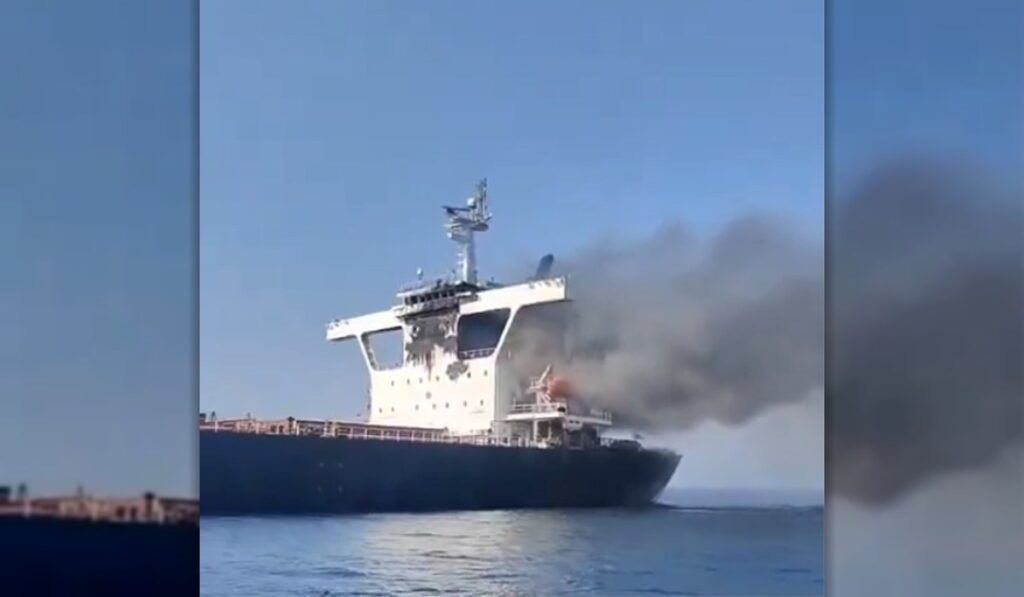
The Strait of Hormuz has seen a sharp escalation in maritime attacks, with two additional tankers struck this week. This brings the total to six vessels targeted in just seven days, according to the UK Maritime Trade Operations (UKMTO). The incidents are part of a broader pattern of 110 attacks linked to the ongoing US-Iran conflict in the region.
The first of the latest attacks involved the Kazimah III, a 317,250-deadweight-ton crude oil tanker operated by Kuwait Oil Tanker Co. The vessel was hit on October 1 while navigating the strait, approximately five miles off Oman’s coast. Iranian state media reported the incident, noting the tanker was on fire, though it did not identify the ship by name. Security firm Ambrey later confirmed the vessel’s identity and the attack.
A second strike occurred late Friday, when an unnamed Panama-flagged crude oil tanker reported being hit while exiting the strait. The ship experienced a blackout and emitted plumes of smoke from its stern, according to Ambrey, which located the vessel about 5.3 nautical miles off Oman’s coast. These latest incidents follow a near-daily pattern of attacks in October, with the International Maritime Organization (IMO) reporting nine ships struck between October 1 and Tuesday alone.
Brent Crude
Targeted Vessels and Iran’s Enforcement: strait of hormuz
Iran’s Persian Gulf Strait Authority has claimed that several of the attacked vessels were on its non-compliant list, which now includes 82 ships. Among them are three UAE-operated tankers: Al Ruwais, a small LR2 product tanker, Sinbad, and Mersin Prosperity. Iran alleges these vessels made unauthorized transits in recent months. However, not all targeted ships were on the list—at least two Kuwaiti-operated tankers were also struck this week.
All attacks have occurred in the southern channel of the Strait of Hormuz, near Oman’s territorial waters. The IMO noted that Wednesday’s attack took place off the coast of Madinat ash Shama, further highlighting the concentrated nature of the strikes.
Blockade and Economic Pressure
The surge in attacks coincides with a severe decline in Iran’s oil revenue. Analysts at Kpler report that Iran has reduced production and halted floating storage loadings. Since the US reinstated its blockade, no large Iranian tankers have escaped the Gulf, and crude reserves stored in the Far East have been depleted. US Central Command confirmed that 125 vessels have been redirected as of September 30 due to the blockade’s strict enforcement.
The escalation comes as diplomatic efforts show no progress. Mediators reported no breakthroughs in talks between the US and Iran during the recent United Nations General Assembly. Meanwhile, the US has deployed a third carrier strike group and up to 10,000 troops to the region, signaling a potential shift in military posture.


Sign up free to ask CAMAL AI for a summary, the key points or anything else about this story.
Related stories
CAMAL AI
 Financial Ports Newsletter
The maritime economy, every morning
Ports, shipping and freight markets in one short email. Free.
Financial Ports Newsletter
The maritime economy, every morning
Ports, shipping and freight markets in one short email. Free.