

Three US Carriers Head to Iran as Strait of Hormuz Talks Collapse
Washington deploys USS Theodore Roosevelt and USS Makin Island as Trump rejects Iran’s seven-day peace plan.
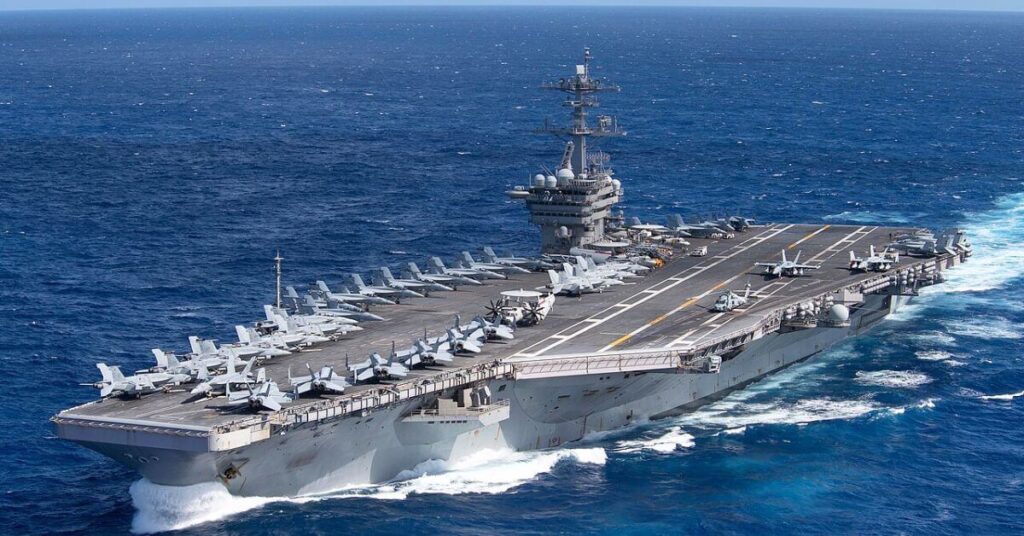
The United States has dispatched a third aircraft carrier strike group to the Middle East, escalating its military posture as the war with Iran enters its eighth month with no diplomatic breakthrough in sight.
A day later, the USS Makin Island amphibious readiness group sailed with an additional 2,200 Marines, bringing the total force to more than 7,000 sailors and Marines combined.
The deployment comes as Iran continues to blockade the Strait of Hormuz, the 21-mile-wide chokepoint through which one-fifth of the world’s oil passes. In September, Iran loaded zero crude oil onto tankers, according to Treasury Secretary Scott Bessent, who stated: “Iran loaded ZERO crude oil onto tankers in September. The Trump Administration is cutting off the Iranian regime’s most critical source of revenue.”
Brent Crude
Tehran has offered a seven-day plan to reopen the strait in exchange for sanctions relief, a return to nuclear talks, and a regional ceasefire covering Lebanon and Yemen. U.S. President Donald Trump dismissed the proposal in an interview with Time magazine, calling it insufficient and saying Iran had merely offered to “open up” the strait, language he deemed too vague to merit negotiation.
The USS George H.W. Bush and USS George Washington are already operating in the region, alongside the USS Boxer amphibious readiness group near the strait. If the USS Theodore Roosevelt arrives as planned by the end of October, the U.S. will have three carrier strike groups in the Middle East for the first time since 2003, when the invasion of Iraq saw a similar concentration of naval power.
What 20,000 troops and 150 fighters mean for the region: strait of hormuz
The combined force of three carrier strike groups could field up to No se verifica en la fuente and nearly No se verifica en la fuente, including sailors, Marines, and air wing crews. The USS Theodore Roosevelt alone carries about 5,000 sailors and Marines, while its escorts add another 2,000. The USS Makin Island group contributes an additional 2,200 Marines, bringing the total to more than 9,000 personnel en route to the region.
This surge follows the USS George Washington’s deployment to replace the USS Abraham Lincoln, whose crew spent more than 260 days at sea without returning to port, a record for modern U.S. naval operations. The USS George Washington, which normally operates in the Pacific, could later move toward seas off Japan after the USS Theodore Roosevelt arrives, though its final destination remains unconfirmed.
U.S. Central Command (CENTCOM) has not disclosed specific operational plans, but the presence of three carriers and two amphibious groups would provide unprecedented flexibility for airstrikes, maritime interdiction, and rapid response to Iranian actions in the Arabian Sea, Indian Ocean, or along the coasts of Lebanon and Yemen. The USS Boxer group, already near the Strait of Hormuz, could support operations to reopen the waterway or deter Iranian naval forces.
The Treasury Department has also tightened the economic noose around Iran, sanctioning its auto and rail sectors, including state-owned rail companies and suppliers in the United Arab Emirates, Hong Kong, Turkey, and Indonesia. Additionally, the U.S. targeted the A7 network, a financial channel linked to Russia that Iran uses to evade sanctions, further isolating Tehran’s access to global markets.
For global shipping, the stakes could not be higher. The Strait of Hormuz remains a critical artery for oil tankers, container ships, and LNG carriers. With Iran’s exports at zero and the strait effectively closed, freight rates for crude and refined products have spiked, particularly for routes originating in the Persian Gulf. Analysts warn that a prolonged blockade could disrupt supply chains for energy-dependent economies in Asia and Europe, pushing prices higher and straining already fragile post-pandemic recoveries.
What comes next? The U.S. Navy has indicated that the three carriers could be in position by the end of October, with the amphibious groups arriving by late November. Diplomatic efforts remain stalled, and with President Trump rejecting Iran’s latest proposal, the stage is set for a tense autumn in the Gulf. For now, the message from Washington is clear: the military option remains on the table, and the U.S. is prepared to use overwhelming force to secure its interests in the region.
“Iran loaded ZERO crude oil onto tankers in September. The Trump Administration is cutting off the Iranian regime’s most critical source of revenue.”
Scott Bessent·U.S. Treasury Secretary
As the USS Theodore Roosevelt and its escorts steam toward the Middle East, the world watches to see whether diplomacy can break the deadlock, or whether the largest naval buildup in the region since 2003 will tip the scales toward open conflict.


Sign up free to ask CAMAL AI for a summary, the key points or anything else about this story.
Related stories
CAMAL AI
 Financial Ports Newsletter
The maritime economy, every morning
Ports, shipping and freight markets in one short email. Free.