

Strait of Hormuz strike kills seafarer as shipping war escalates
One crew member dead and several wounded after unidentified projectile hits vessel near Qeshm Island
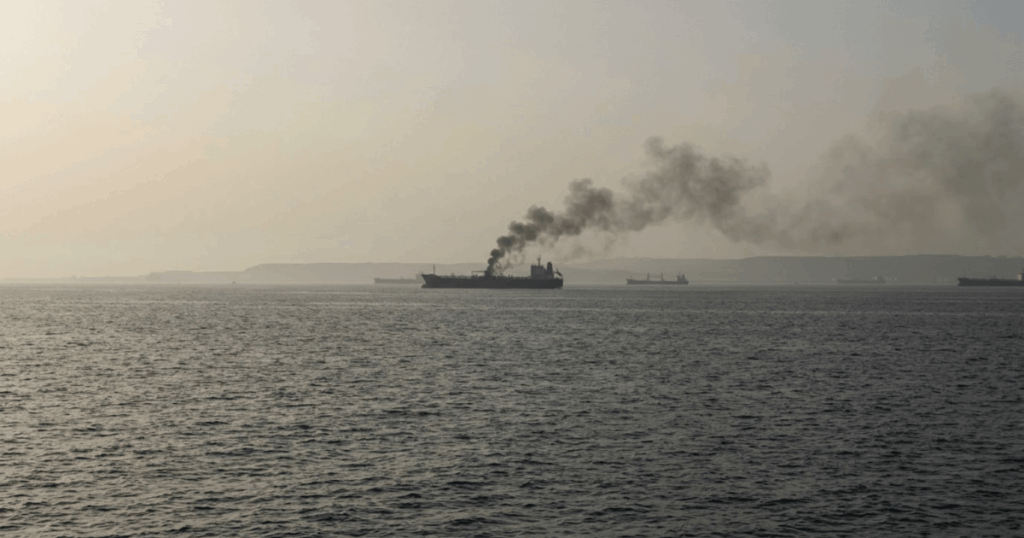
An unidentified projectile struck a commercial vessel in the Strait of Hormuz on Monday night, killing one Iranian seafarer and wounding several others. The attack, near Qeshm Island, marks the latest escalation in a six-month shipping war that has paralysed one of the world’s most critical maritime chokepoints.
Local authorities evacuated the crew, but the third engineer of the Greek-owned, Liberian-flagged bulk carrier Minoan Pioneer remains missing.
The strike occurred just 20 nautical miles north of Oman’s coast, a region where two other vessels reported near-misses within 24 hours.
Natural Gas
The strait’s strategic importance cannot be overstated. Before the conflict, it handled 20 million barrels of oil daily, a volume that has since collapsed by 90%. The blockade has sent energy prices soaring, with crude futures trading at their highest levels in two years. The economic ripple effects extend far beyond the Gulf, impacting fuel prices and supply chains globally.
Iran’s control over the strait is absolute. Qeshm Island, located just 14 miles from the port city of Bandar Abbas, serves as Tehran’s maritime stronghold. Its proximity to the shipping lanes allows Iran’s forces to monitor and, when necessary, interdict vessels.
On Monday, Iran was set to brief regional powers, excluding Bahrain, on a proposed traffic-sharing plan with Oman, though the meeting’s outcome remains uncertain. The plan would establish designated corridors for vessels passing through Iranian and Omani waters, a measure aimed at reducing tensions but one that has yet to gain traction.
The US has responded with force. Days later, on September 8, the US targeted five more Iranian tankers, escalating a tit-for-tat campaign that shows no signs of abating. Iran, in turn, has claimed to have hit three oil tankers travelling through an “unauthorised route” in the strait, as well as three US-linked vessels elsewhere.
The ongoing conflict has drawn international concern, not only for its immediate impact on shipping but also for its potential to disrupt global energy markets. The Strait of Hormuz remains a critical artery for the world’s oil supply, and any prolonged disruption could lead to severe shortages and price volatility. For industries reliant on steady fuel supplies, the situation is a stark reminder of the fragility of global trade routes.
The human cost of the Hormuz blockade: strait of hormuz
For the 20,000 seafarers trapped in the Gulf, the conflict has turned routine voyages into a nightmare. “It’s like being in prison,” one crew member told The Guardian. “We have no idea when this will end.” The Minoan Pioneer incident is the latest in a string of attacks that have left crews scrambling for safety.
In the 24 hours preceding the strike, two other vessels reported near-misses, underscoring the dangers of navigating the region. Seafarers, many of whom are from developing nations, face not only physical risks but also psychological strain, with limited access to communication or support.
The environmental risks are equally dire. With 42 tankers idling in the Gulf, the threat of an oil spill or catastrophic fire looms large. The Strait of Hormuz is not just a shipping lane; it is a tinderbox. A single incident could trigger an ecological disaster, contaminating waters and endangering marine life. The risk of such an event is compounded by the lack of coordinated response mechanisms between Iran and the international community, leaving vessels and their crews vulnerable to both military and environmental threats.
The US maintains a naval presence in the region, enforcing a de facto blockade of Iranian ports. Meanwhile, Iran’s Revolutionary Guard continues to assert dominance over the waterway, turning the strait into a flashpoint for global energy security. For seafarers and shipping companies, the situation has created an impossible dilemma: risk navigating the strait or face indefinite delays and mounting costs. Many have chosen to wait, anchoring in safer waters but unable to proceed with their voyages.
The broader implications for global trade are severe. The Strait of Hormuz is a vital conduit for not only oil but also liquefied natural gas (LNG) and other commodities. Disruptions here reverberate through supply chains, affecting everything from fuel prices to manufacturing costs. For businesses and consumers alike, the conflict serves as a stark reminder of how quickly geopolitical tensions can translate into economic hardship.
As the conflict shows no signs of abating, the international community faces a critical challenge: how to secure a waterway that is indispensable to the global economy. Diplomatic efforts, such as the proposed traffic-sharing plan between Iran and Oman, offer a glimmer of hope, but with trust between the US and Iran at a nadir, a lasting resolution remains elusive.
What this means for the shipping industry and global trade
The paralysis of the Strait of Hormuz has forced shipping companies to seek alternative routes, though none offer the same efficiency or capacity. The Cape of Good Hope, for instance, adds thousands of nautical miles to voyages between the Middle East and Europe, increasing fuel costs and transit times. For container ships and bulk carriers, these delays translate into higher operational costs, which are ultimately passed on to consumers. The situation has also accelerated interest in alternative energy sources, as nations seek to reduce their dependence on Middle Eastern oil.
For the shipping industry, the conflict has underscored the need for greater resilience and contingency planning. Companies are increasingly investing in risk assessment tools, such as those provided by Windward, to monitor threats in real time. However, no amount of technology can fully mitigate the risks posed by a full-scale maritime blockade. The industry’s reliance on just-in-time delivery models, which minimise inventory costs, is now being tested by the unpredictability of geopolitical conflicts.
Governments and international organisations, including the International Maritime Organization (IMO), have called for urgent action to protect seafarers and ensure the free flow of commerce. The IMO, a specialised agency of the United Nations, has urged all parties to respect the principles of freedom of navigation and to work towards a peaceful resolution. However, with the US and Iran locked in a cycle of retaliation, the prospects for a diplomatic breakthrough remain slim.
For now, the shipping industry must adapt to a new reality: one where the Strait of Hormuz is no longer a reliable route. Companies are diversifying their supply chains, exploring new trade corridors, and investing in alternative fuels to reduce their exposure to geopolitical risks. Yet, for as long as the conflict persists, the strait will remain a chokehold on the global economy, with consequences that extend far beyond the Gulf.
Seafarers and shipping companies are advised to monitor updates from the UKMTO and other maritime security organisations, such as the Maritime Security Centre, Horn of Africa (MSCHOA). These platforms provide real-time alerts and guidance for vessels operating in high-risk areas. For those trapped in the Gulf, the message is clear: the path to safety remains uncertain, and the stakes could not be higher.


Sign up free to ask CAMAL AI for a summary, the key points or anything else about this story.
Related stories
CAMAL AI
 Financial Ports Newsletter
The maritime economy, every morning
Ports, shipping and freight markets in one short email. Free.
Financial Ports Newsletter
The maritime economy, every morning
Ports, shipping and freight markets in one short email. Free.