

VLCC Rates Smash $800,000/Day as Hormuz Shuts Down
Middle East conflict sends VLCC earnings to record $800,000 per day on AG-Far East route
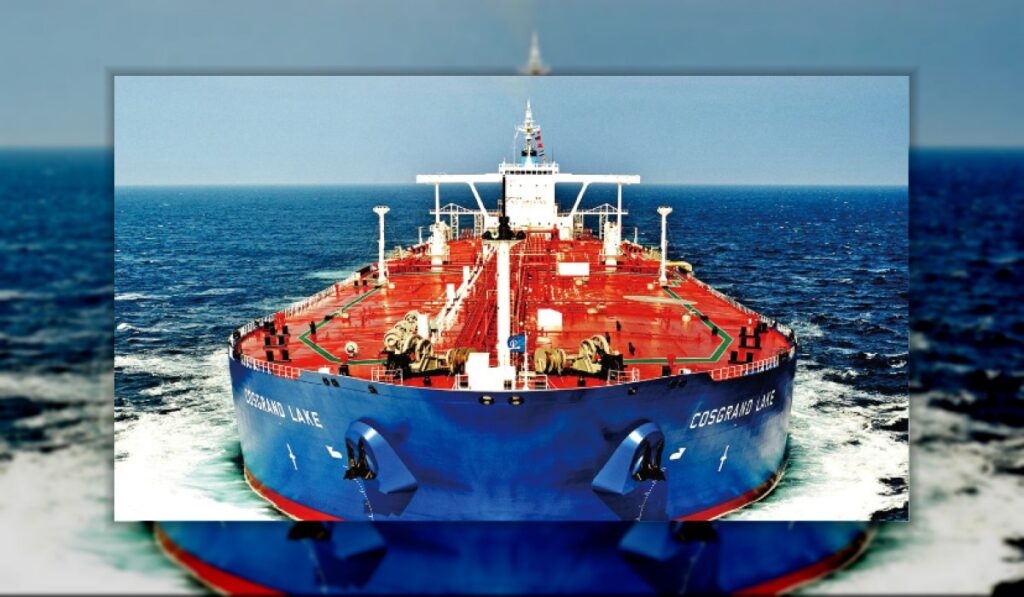
Very Large Crude Carriers (VLCCs) are earning more than $800,000 per day on the Arabian Gulf-Far East route as the closure of the Strait of Hormuz and restrictions in the Bab el-Mandeb Strait choke global oil flows. The surge, described as “truly unprecedented” by Poten & Partners, has sent secondhand VLCC prices soaring to $158 million for a five-year-old vessel, far above newbuild costs.
Only a handful of operators are willing to risk the passage, creating a bottleneck that has pushed benchmark rates to historic highs. In August, the AG-Far East route averaged $600,000 per day, but by early September, daily earnings had climbed above $800,000.
Meanwhile, restrictions in the Bab el-Mandeb Strait, another critical passage between the Red Sea and the Gulf of Aden, have further constrained oil flows from the Middle East to Europe and Asia.
Brent Crude
Even vessels avoiding the conflict zone are reaping extraordinary returns. VLCCs loading in the Gulf of Oman, just outside Hormuz, command $450,000 per day, while those on the West Africa-Far East route earn $380,000. The U.S. Gulf to Asia route, typically less lucrative, now yields $275,000 per day, a figure that would have been unthinkable before the crisis.
Why VLCC Owners Are Paying a Premium for Secondhand Ships
The spot market frenzy has distorted vessel valuations. A five-year-old VLCC now costs $158 million, while a newbuild order is priced at $129 million. The discrepancy is simple: owners can deploy a secondhand vessel immediately in the red-hot market, whereas a newbuild would take years to deliver. With future rates uncertain, the premium reflects the value of instant earnings.
The current market dynamics have also exposed the risks of over-reliance on newbuildings. The VLCC orderbook, equivalent to 40% of the current fleet, represents a significant influx of tonnage that could flood the market once deliveries begin. However, the average age of the global VLCC fleet, at 13 years, suggests that older vessels may be retired sooner, potentially offsetting the impact of new supply. This balance between scrapping and new deliveries will be critical in determining the market’s direction once geopolitical tensions ease.
Poten & Partners, the maritime consultancy behind the analysis, is a leading authority on tanker markets, providing data and insights to shipowners, charterers, and financial institutions.
“This may never happen again!” warns Erik Broekhuizen, head of tanker research at Poten & Partners. The VLCC orderbook, equivalent to 40% of the current fleet, suggests a potential glut once newbuilds hit the water. However, the age profile of the global VLCC fleet, averaging 13 years, could mitigate the downturn if geopolitical tensions ease.
The global VLCC fleet stands at 928 vessels, each capable of carrying two million barrels of crude. These tankers dominate long-haul oil transportation, but their earnings have always been volatile. The last time rates neared $200,000 per day was in July 2008, during the shipping “super cycle,” and again in April 2020, when Saudi Arabia flooded the market amid pandemic lockdowns. Both booms were followed by prolonged slumps.
The surge in VLCC rates is not just a windfall for shipowners, it also has significant implications for global oil markets. With VLCCs earning more than $800,000 per day on key routes, the cost of transporting crude from the Middle East to Asia has skyrocketed, adding pressure to already tight supply chains.
Refiners in Asia, particularly in China and India, are feeling the pinch. Both countries rely heavily on Middle Eastern crude, and the longer voyages required to avoid the Strait of Hormuz are increasing delivery times and costs. Some refiners may seek alternative suppliers, such as Russia or West Africa, but these routes also face challenges, including sanctions, logistical constraints, and higher freight rates. The result is a complex balancing act for buyers, who must weigh the costs of different supply options against the risks of relying on unstable regions.
For now, the market remains at the mercy of geopolitics. The closure of the Strait of Hormuz shows no signs of abating, and tensions in the Bab el-Mandeb Strait continue to disrupt traffic. If the situation persists, VLCC rates could climb even higher, further squeezing refiners and pushing up global oil prices. However, if the straits reopen, the market could see a rapid correction, with rates plummeting as vessel supply normalises.
What’s Next for VLCC Rates, and Global Oil Prices?
Analysts are divided on the sustainability of the current spike. Some point to the 40% orderbook and warn of an impending bust, while others argue that the fleet’s aging profile and potential de-escalation in the Middle East could prolong the rally. For now, the market remains at the mercy of geopolitics.
VLCCs loading in the Gulf of Oman are earning $450,000 per day, a rate that underscores the premium for avoiding Hormuz. Meanwhile, the West Africa-Far East and U.S. Gulf-Asia routes continue to benefit from the diversion of cargoes, with rates at $380,000 and $275,000 per day, respectively. These routes, while less lucrative than the AG-Far East, still offer attractive returns compared to historical averages, reflecting the broader dislocation in global oil logistics.
The current environment has also reignited debates about the long-term viability of VLCCs as the workhorses of global oil trade. Some industry observers argue that the risks associated with key chokepoints like the Strait of Hormuz and Bab el-Mandeb may accelerate the shift toward alternative supply routes, such as pipelines or overland transport. However, for the foreseeable future, VLCCs remain indispensable, and their earnings will continue to be a barometer of geopolitical stability and global oil flows.
For stakeholders, the message is clear: monitor developments in the Middle East closely. The reopening of the Strait of Hormuz could trigger a sharp correction in VLCC rates, while a prolonged closure could sustain the current boom. Either way, the market’s volatility serves as a reminder of the fragile balance between supply, demand, and geopolitics in the global oil trade.
“What is happening is truly unprecedented.”
Erik Broekhuizen·Head of Tanker Research, Poten & Partners
The immediate future hinges on whether the Strait of Hormuz reopens. If the closure persists, VLCC rates could climb further, squeezing refiners and pushing up global oil prices. For now, tanker owners are enjoying the windfall, but history suggests the boom will not last. Industry players are advised to keep a close eye on official channels, such as the Poten & Partners website, for updates on market trends and geopolitical developments that could shape the next phase of this unprecedented rally.


Sign up free to ask CAMAL AI for a summary, the key points or anything else about this story.
Related stories
CAMAL AI
 Financial Ports Newsletter
The maritime economy, every morning
Ports, shipping and freight markets in one short email. Free.
Financial Ports Newsletter
The maritime economy, every morning
Ports, shipping and freight markets in one short email. Free.