

US Coast Guard Seizes Dark Fleet Tanker Carrying Hidden Fuel to Cuba
91-metre M/V Grace intercepted with illicit fuel in ballast tanks amid tightening US oil blockade
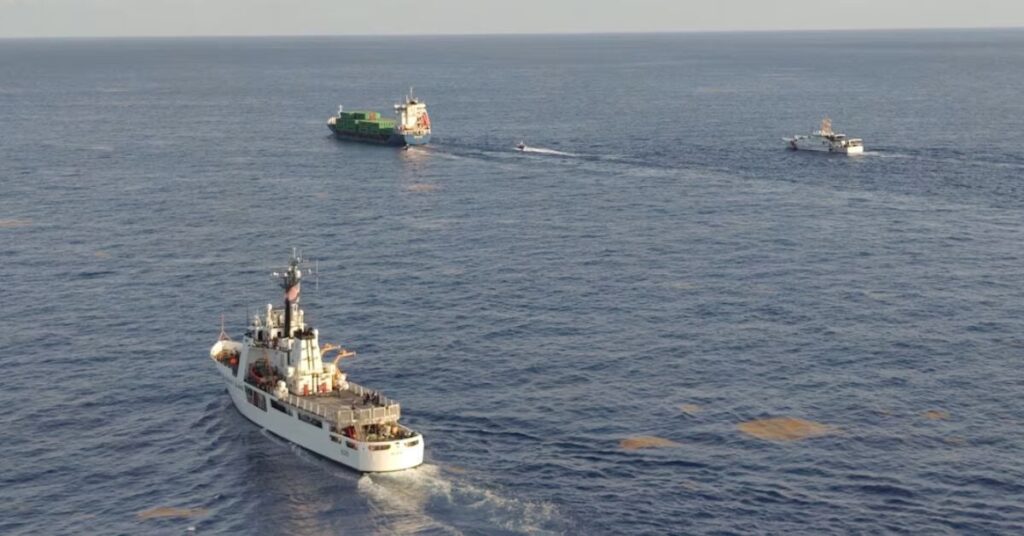
The U.S. Coast Guard has intercepted a 91-metre tanker carrying illicit fuel to Cuba, exposing the growing use of “dark fleet” vessels to bypass U.S. sanctions.
The interception, conducted in coordination with the Mexican Navy, underscores the escalating risks posed by unregulated fuel transfers in the region. After boarding the vessel, Coast Guard personnel escorted it to Progreso, Mexico, where a subsequent inspection revealed large quantities of fuel stored in the ship’s ballast tanks, along with several containers suspected of holding additional illicit cargo. Such practices not only violate international law but also heighten the risk of environmental disasters, including oil spills that could devastate marine ecosystems and coastal communities.
Ballast tanks: Coast Guard
Vice Adm. Nate Moore, the Coast Guard’s deputy commandant for operations, emphasised the broader implications of these operations.
Royal Caribbean
“Illicit fuel shipments violate international law and pose severe environmental threats in the Caribbean.”
Vice Adm. Nate Moore·Deputy Commandant for Operations, U.S. Coast Guard
Moore further stressed the importance of international cooperation in combating such activities, stating,
“Working with other countries was important to stop illegal fuel shipments and enforce international law.”
Vice Adm. Nate Moore·Deputy Commandant for Operations, U.S. Coast Guard
The M/V Grace is not an isolated case. Kitts and Nevis, which was also found to be carrying fuel in its ballast tanks. Both interceptions highlight the growing reliance on substandard vessels to circumvent U.S.
The Geopolitical Stakes: Cuba’s Fuel Crisis and U.S. Pressure
The interception of the M/V Grace comes amid a deepening fuel crisis in Cuba, exacerbated by a U.S. oil blockade introduced earlier this year.
Venezuela, once Cuba’s primary oil supplier, halted shipments after the U.S. ousted President Nicolás Maduro in January. Mexico, another traditional supplier, has also reduced its exports to the island, leaving Cuba increasingly reliant on clandestine shipments like those carried by the M/V Grace. The U.S. has intensified its patrols in the waters around Cuba, deploying Coast Guard cutters such as the Alert and Charles Sexton, along with surveillance aircraft and specialised law enforcement teams, to disrupt these illicit supply chains.
Adm. Kevin Lunday, the Coast Guard Commandant, issued a stark warning to operators of dark fleet vessels.
“The high seas are not a sanctuary for lawlessness. Dark fleet actors who employ deceptive tactics to engage in illicit activities will not evade justice.”
Adm. Kevin Lunday·Commandant, U.S. Coast Guard
His remarks reflect the Coast Guard’s commitment to enforcing international maritime laws and preventing environmental disasters in the Caribbean, a region already vulnerable to the impacts of climate change and pollution.
The environmental risks posed by dark fleet operations are particularly concerning. Fuel stored in ballast tanks is more prone to leaks, and the use of ageing, poorly maintained vessels increases the likelihood of spills. The U.S. Coast Guard has warned that such incidents could have catastrophic consequences for marine life, fisheries, and coastal communities, many of which rely on tourism and fishing for their livelihoods.
The agency has also highlighted the broader implications for global maritime security, noting that unregulated vessels often operate without proper insurance, crew protections, or adherence to safety standards.
For Cuba, the interception of the M/V Grace is another blow to its already strained fuel supply. The island’s government has yet to comment on the incident, but the loss of the shipment is likely to worsen the ongoing energy crisis. With traditional suppliers cutting off shipments and U.S. patrols intensifying, Cuba’s ability to secure fuel through legal channels remains severely limited. The reliance on dark fleet vessels, while a short-term solution, carries significant risks, both for the environment and for the stability of the Cuban economy.
The U.S. Coast Guard has not disclosed the exact amount of fuel found on the M/V Grace, nor has it provided details on how officials determined the shipment was bound for Cuba. However, the operation serves as a clear signal that the U.S. will continue to target vessels suspected of violating sanctions or engaging in illicit activities. The agency’s collaboration with the Mexican Navy also underscores the importance of regional partnerships in addressing transnational maritime threats.
Looking ahead, the Coast Guard is expected to maintain a robust presence in the Caribbean, with ongoing patrols and inspections aimed at disrupting dark fleet operations. For Cuba, the challenge will be to find alternative sources of fuel while avoiding the environmental and legal risks associated with illicit shipments. For the broader maritime industry, the rise of the dark fleet poses a growing threat to safety, security, and environmental sustainability, one that will require coordinated international action to address.
As the situation develops, stakeholders in the region, including governments, environmental groups, and maritime organisations, will be closely monitoring the impact of these interceptions. The M/V Grace case is unlikely to be the last, but it serves as a stark reminder of the high stakes involved in the global fuel trade and the lengths to which some will go to evade sanctions.


Sign up free to ask CAMAL AI for a summary, the key points or anything else about this story.
Related stories
CAMAL AI
 Financial Ports Newsletter
The maritime economy, every morning
Ports, shipping and freight markets in one short email. Free.
Financial Ports Newsletter
The maritime economy, every morning
Ports, shipping and freight markets in one short email. Free.



