

Five on Board: Medical Helicopter Crash Off Catalina Claims Three Lives
An Airbus H-135 operated by REACH Air Medical Services went down in 240 feet of water.
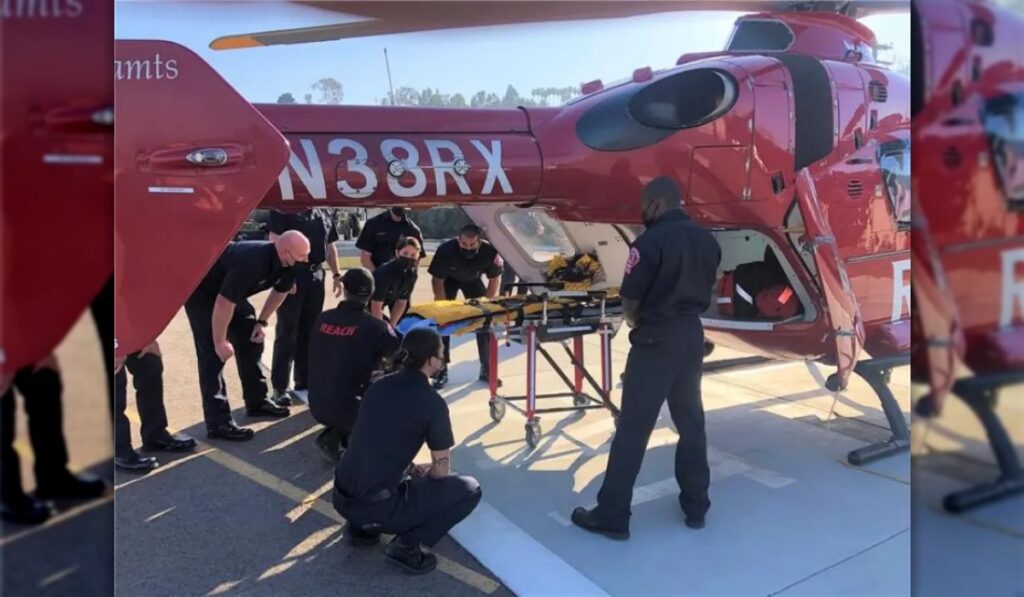
A medical helicopter carrying five people crashed into the ocean near Catalina Island on Wednesday night, killing three and leaving two survivors in stable condition after a massive search-and-rescue operation.
on Wednesday, Sept. 30, shortly after taking off from the island. Coast Guard (USCG) launched an immediate high-priority search, deploying an MH-60 Jayhawk helicopter and a response boat from LA/Long Beach. LA County’s fire department also joined the effort, which later expanded to include a subsurface examination of the wreckage using a remotely operated vehicle (ROV).
The wreckage was located in 240 feet of water, a depth that required specialised equipment and posed significant risks for human divers. The National Transportation Safety Board (NTSB) has confirmed plans to recover the helicopter for a full investigation, though the timeline remains unclear due to the challenging conditions. The NTSB, an independent U.S. federal agency, is responsible for investigating civil aviation accidents and incidents, as well as those involving other modes of transportation.
The USCG, which led the search-and-rescue operation, is a branch of the U.S. Its primary missions include maritime safety, security, and environmental stewardship. The MH-60 Jayhawk helicopter deployed in this operation is a medium-range recovery aircraft designed for search-and-rescue, law enforcement, and military readiness missions.
The victims and survivors
The three fatalities have been identified as Pilot Steven Robinson, Flight Nurse Jessica deVries, and patient Catalina Romero, 45. Robinson, a former U.S. His career spanned military and civilian aviation, reflecting a lifelong commitment to service.
The surviving crew member, Flight Nurse Brad Sparks, and the patient’s son were rescued and hospitalised in stable condition. The patient’s body was recovered from the wreckage on Thursday afternoon, nearly 24 hours after the crash.
“The [helicopter] crew has trained alongside us, shared our space, and answered calls across our region for years. They are part of our family, and this loss is felt very deeply here.”
Jessamyn Specht·Oceanside Fire Chief
What the crash means for air medical services
For patients and families relying on medical flights, the crash raises concerns about the safety of air ambulance services. While such incidents are statistically rare, they highlight the need for stringent safety protocols, regular maintenance, and continuous training for pilots and medical staff.
The Federal Aviation Administration (FAA) regulates air ambulance operations in the U.S., setting standards for equipment, crew qualifications, and operational procedures. The agency is likely to review its guidelines in light of this crash, particularly regarding night operations and over-water flights.
Industry experts have long debated the balance between speed and safety in air medical transport. Helicopters like the H-135 are designed to reach remote or hard-to-access locations quickly, but their operations are inherently riskier than ground transport. Weather conditions, mechanical failures, and human error can all contribute to accidents, making rigorous oversight essential. The NTSB’s investigation will likely examine these factors, as well as the specific circumstances of this flight, to determine whether systemic changes are needed.
The Federal Aviation Administration (FAA) and NTSB are leading the investigation into the cause of the crash. The agencies have not yet released preliminary findings, but the recovery of the wreckage will be critical in determining what went wrong.
The Airbus H-135 is a widely used model in air medical services, known for its reliability and advanced avionics, which makes the incident particularly concerning for the industry. The FAA, which oversees civil aviation in the U.S., will collaborate with the NTSB to assess whether regulatory changes are necessary to prevent similar tragedies in the future.
In a statement, REACH Pacific Region President Sean Russel said the company was “devastated” by the loss, calling the crew members “the very best in air medical care, skill, courage, compassion, and service to others.” The suspension of flights reflects the company’s commitment to safety and its cooperation with the ongoing investigation. REACH has also offered support to the families of the victims, including counselling services and financial assistance.
The crash has deeply affected the first-responder community in Southern California, where air medical services play a critical role in emergency response. The USCG and local fire departments regularly collaborate with private air ambulance providers like REACH, and the loss of the crew has been felt across the region. For many first responders, this tragedy serves as a stark reminder of the risks they face daily in their efforts to save lives.
For families relying on medical flights, the incident raises questions about safety protocols and the risks associated with air ambulance services. While such crashes are rare, they highlight the dangers faced by crews who operate in challenging conditions, often at night or in poor weather, to transport critically ill patients to hospitals. The NTSB’s investigation will provide clarity on the cause of the crash, but the broader conversation about safety in air medical transport is likely to continue for months, if not years.
The NTSB is expected to release an initial report within the coming weeks, though a full investigation could take months. The agency’s process typically involves collecting evidence, interviewing witnesses, analysing flight data, and reconstructing the sequence of events leading to the crash. In the meantime, the USCG has warned that recovery operations at the crash site will continue to be hazardous due to the depth and conditions of the wreckage. The Los Angeles County Department of Medical Examiner will also play a key role in identifying the victims and providing closure to their families.
For those affected by the tragedy, memorial services are being planned in the coming days. The families of the victims have requested privacy as they grieve, but tributes have already begun pouring in from colleagues, first responders, and members of the community who were touched by the lives of those lost. The aviation and medical communities will honour the legacy of Steven Robinson, Jessica deVries, and Catalina Romero, whose dedication to service and compassion will not be forgotten.
For the public, the incident serves as a reminder of the vital role played by air medical services in emergency care. While the risks are real, the benefits, such as rapid access to specialised treatment, are often life-saving. As the investigation unfolds, the focus will remain on ensuring that such tragedies are prevented in the future, while continuing to provide critical medical transport to those in need.


Sign up free to ask CAMAL AI for a summary, the key points or anything else about this story.
Related stories
CAMAL AI
 Financial Ports Newsletter
The maritime economy, every morning
Ports, shipping and freight markets in one short email. Free.
Financial Ports Newsletter
The maritime economy, every morning
Ports, shipping and freight markets in one short email. Free.