

Yanbu Port Fire: Who Fired the Mystery Projectile at Saudi Arabia’s Oil
An unidentified projectile struck Saudi Arabia’s Yanbu port on 1 October.
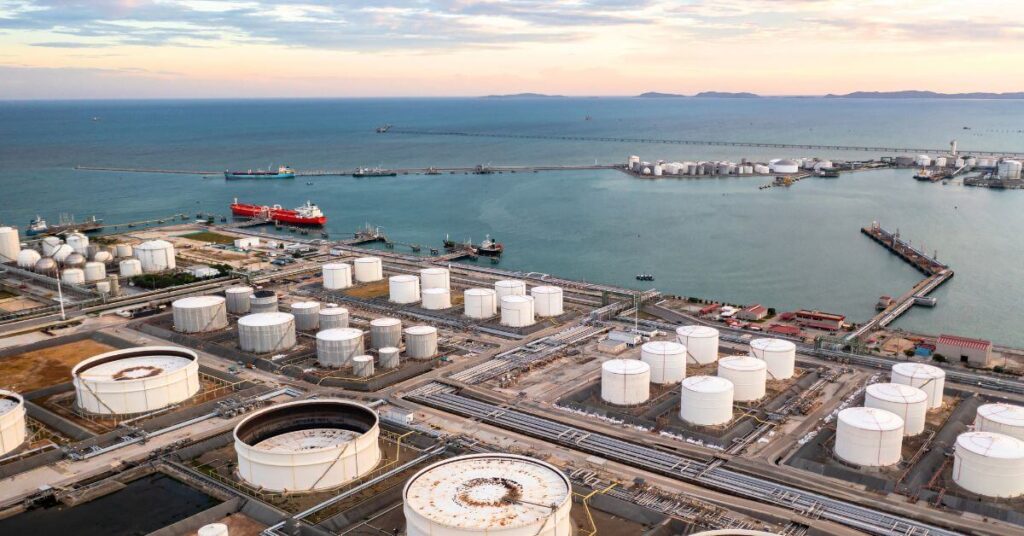
An unidentified projectile struck Saudi Arabia’s Yanbu port on 1 October, triggering a fire and temporarily disrupting operations at one of the kingdom’s key oil export hubs. The incident, reported at 13:15 local time, was classified as an aerial attack but left critical questions unanswered about its origin and impact.
The attack briefly halted loading operations for a Liberian-flagged tanker, though the vessel’s identity, owner, and cargo remain undisclosed. Maritime intelligence firm Clearwater Dynamics confirmed the fire but provided no details on casualties or damage to port infrastructure. The type of projectile—whether a drone, missile, or other weapon—was not identified, and Saudi authorities have not attributed responsibility to any group.
Recent Disruptions to Saudi Oil Exports: Saudi Arabia
The incident occurred just days after crude loading at Yanbu resumed following an 11-day shutdown caused by a drone strike on 11 September. By 29 September, the port was processing approximately 2 million barrels per day, a fraction of the 7 million bpd capacity of the East-West Pipeline, which spans 1,200 km from Saudi Arabia’s eastern oil fields to the Red Sea coast.
Satellite imagery from 27 September showed nearly 10 million barrels of crude being loaded at Yanbu and the nearby Al Muajjiz terminal, highlighting the port’s role in global energy supplies. However, the pipeline’s throughput remains below full capacity, estimated between 2 million and 2.65 million bpd, due to ongoing security concerns.
Yanbu hosts several major oil terminals operated by Saudi Aramco, including the Yanbu North Crude Terminal, which has a loading capacity of around 1.5 million barrels per day and can accommodate vessels up to 500,000 deadweight tonnes. The port’s strategic location makes it a critical alternative export route, particularly as tensions in the Persian Gulf persist.
Uncertainty Surrounding the Attack
While some reports suggest Yemen’s Houthi rebels may have been responsible, neither Saudi Aramco nor port authorities have publicly confirmed this. The lack of a claim or official attribution leaves the motive and perpetrators unclear. Adding to the ambiguity, Saudi authorities reported intercepting and destroying another missile targeting the Yanbu area around the same time, though no connection to the port fire has been established.
A separate drone strike also hit the SAMREF refinery in Yanbu, a joint venture between Saudi Aramco and ExxonMobil, though details on the damage remain under assessment. These incidents underscore the growing risks to Saudi Arabia’s energy infrastructure, particularly as attacks on Red Sea export routes become more frequent.
The kingdom’s reliance on alternative export routes, such as the East-West Pipeline, has increased amid regional instability. Yet, as the 1 October attack demonstrates, even these critical chokepoints remain vulnerable to disruption.


Sign up free to ask CAMAL AI for a summary, the key points or anything else about this story.
Related stories
CAMAL AI
 Financial Ports Newsletter
The maritime economy, every morning
Ports, shipping and freight markets in one short email. Free.
Financial Ports Newsletter
The maritime economy, every morning
Ports, shipping and freight markets in one short email. Free.



