

US Navy Fires $13 Laser Shots in Hormuz—Xbox Controller Included
60-kilowatt HELIOS system deployed on warships in the Strait of Hormuz destroys drones for just $13 per shot.
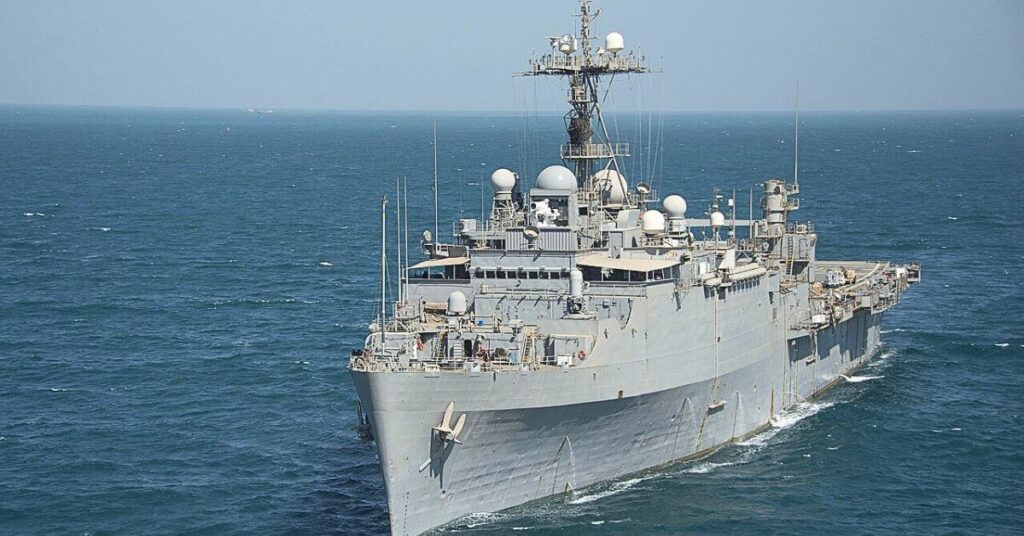
The US Navy has deployed high-energy laser weapons on warships patrolling the Strait of Hormuz, marking one of the first operational uses of directed-energy systems in an active conflict zone. The 60-kilowatt lasers, controlled via modified Xbox-style controllers, have already been used to counter drones and other aerial threats, offering a radical shift in naval defence economics.
The system, known as High-High-Energy Laser with Integrated Optical Dazzler and Surveillance and Surveillance (HELIOS), is mounted on large warships due to its size and power requirements. Unlike traditional anti-aircraft missiles, which can cost thousands or even millions of dollars per engagement, a single HELIOS shot consumes just $13 worth of electricity. This cost efficiency is a game-changer for sustained operations, particularly in high-threat areas like the Strait of Hormuz, where drone attacks have become increasingly common.
How the Laser Weapon Works, and Why It’s a Breakthrough: laser weapons
The HELIOS system operates by converting electrical power into a concentrated beam of photons, which heats and melts targeted sections of a drone or missile. The laser remains invisible to the naked eye, detectable only under infrared light, and requires several seconds of dwell time, meaning operators must keep the beam locked onto a moving target to ensure destruction. This precision allows for selective engagement, such as disabling a drone’s sensors rather than obliterating the entire aircraft.
Frontline
One of the most striking innovations is the use of Xbox-style controllers to operate the system. The familiar layout reduces training time for sailors, many of whom are already accustomed to gaming interfaces. US Secretary of War Pete Hegseth demonstrated the system’s ease of use in June at White Sands Missile Range in New Mexico, where he reportedly shot down a drone after minimal instruction. This accessibility could accelerate the adoption of laser weapons across naval fleets.
The deployment in West Asia follows successful tests aboard the USS George H.W. Bush, where the system tracked and engaged multiple drones. However, the Strait of Hormuz marks a critical step forward, as it represents the first use of such technology in a live combat environment. The US military has been developing directed-energy weapons for nearly five decades, but recent advancements in power generation and targeting have finally made them viable for frontline use.
The Strategic Implications for Naval Warfare
The shift to laser-based defence systems reflects broader trends in modern warfare, where cost, precision, and sustainability are increasingly prioritised. Traditional missile systems, while effective, are prohibitively expensive for prolonged engagements. In contrast, HELIOS can engage multiple targets without depleting ammunition, provided the ship’s power supply remains intact. US destroyers rely on turbine engines for electricity, while nuclear-powered supercarriers could theoretically sustain laser operations indefinitely.
The technology’s potential extends beyond the US Navy. The Royal Navy is already installing a similar system on its destroyers, with plans to have it operational by next year. Meanwhile, Ukraine has been testing AI-guided lasers against Russian Shahed suicide drones since mid-2026, highlighting the growing global race to integrate directed-energy weapons into defence strategies. Along the US southern border, similar systems have reportedly brought down at least 11 drones operated by Mexican drug cartels, demonstrating their versatility in asymmetric warfare.
Despite its advantages, the HELIOS system is not without limitations. The need for sustained dwell time means it is less effective against fast-moving or highly manoeuvrable targets. Additionally, the laser’s power requirements restrict its use to larger warships, limiting deployment on smaller vessels. However, the US Army has already awarded a $500 million contract to develop more compact, war-ready laser systems, suggesting these challenges may soon be overcome.
For naval forces operating in high-risk regions like the Strait of Hormuz, the introduction of laser weapons could redefine the rules of engagement. The ability to neutralise threats at a fraction of the cost of traditional missiles provides a strategic edge, particularly in conflicts where drone swarms and low-cost aerial threats are prevalent. As the technology matures, it may also reduce the logistical burden of transporting and storing conventional munitions, further enhancing operational flexibility.
The US Navy’s deployment of HELIOS is a clear signal that directed-energy weapons are no longer the stuff of science fiction. With the Royal Navy and other allied forces following suit, the era of laser-based defence has arrived, and it’s being controlled by a familiar piece of gaming hardware.


Sign up free to ask CAMAL AI for a summary, the key points or anything else about this story.
Related stories
CAMAL AI
 Financial Ports Newsletter
The maritime economy, every morning
Ports, shipping and freight markets in one short email. Free.
Financial Ports Newsletter
The maritime economy, every morning
Ports, shipping and freight markets in one short email. Free.



