

US Kills Four in Caribbean Drug Boat Strike—Is This a War on Cartels?
The latest US military strike on a suspected drug-smuggling vessel in the Caribbean Sea killed four people.
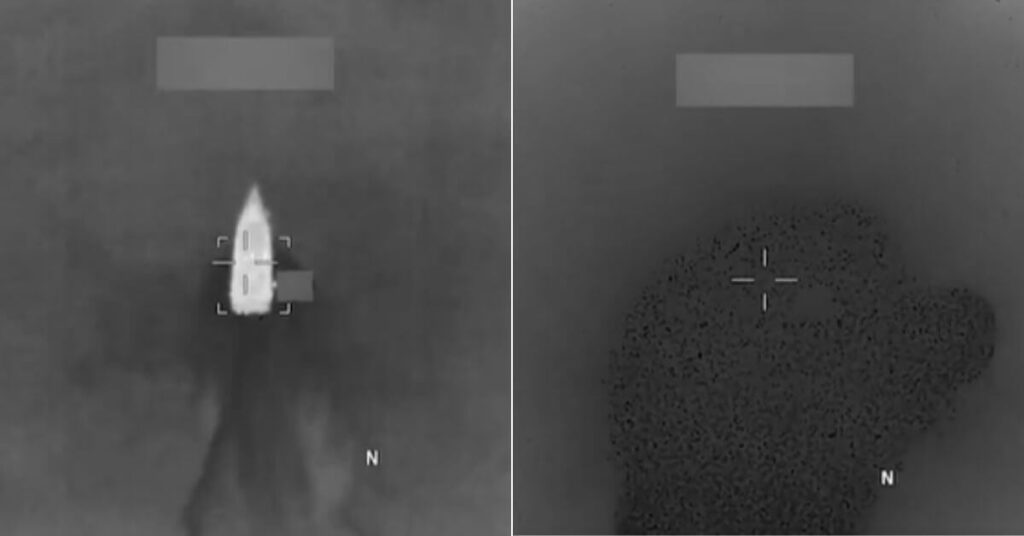
The US military has killed four people in its latest strike on a suspected drug-smuggling boat in the Caribbean Sea, escalating a campaign that has left at least 235 dead since September 2026. October 4 4 attack, carried out by Joint Task Force Western Hemisphere under US Southern Command (SOUTHCOM), targeted a go-fast vessel travelling along a known trafficking route, but no drugs were recovered.
The strike, confirmed by SOUTHCOM in a tweet on October 5, 2026, marks the 70th such operation under a campaign launched by the Trump administration to disrupt drug trafficking in Latin America. A video posted on X showed an explosion hitting a moving boat, which the military identified as a go-fast vessel carrying what it termed ‘narco-terrorists’. However, the US has not provided evidence of drugs on board, raising questions about the legal basis for the lethal operation.
What Justifies These Strikes?: Drug
The Trump administration has framed the strikes as part of an ‘armed conflict’ with cartels, a claim President Donald Trump reiterated in a White House roundtable on October 23, 2026. Defence Secretary Pete Hegseth has argued that the operations are necessary to stem the flow of drugs into the US, citing intelligence that links targeted vessels to trafficking networks. Yet, the lack of physical evidence in many cases has drawn criticism from legal experts and lawmakers, who question whether the strikes comply with international law.
Royal Caribbean
SOUTHCOM’s statement on the latest strike claimed ‘confirmed intelligence’ showed the boat’s involvement in narco-trafficking, but it did not specify what that intelligence entailed. The military has previously described similar operations as ‘kinetic strikes’, a term typically used in warfare, further blurring the line between law enforcement and military action. The first strike on September 2, 2026, involved a ‘double-tap’ attack that killed 11 people, a tactic more commonly associated with counterterrorism operations than drug interdiction.
Regional Alliances and Legal Grey Zones
The US has sought to expand its military footprint in Latin America, securing agreements with several countries to conduct joint operations. In August, Hegseth claimed that Colombia, Guatemala, and Honduras had agreed to allow US forces to carry out missions on their territory. However, Guatemala swiftly denied the claim, highlighting the fragile nature of these alliances. Ecuador, by contrast, has actively collaborated with the US since March, including in operations to sink vessels allegedly used as refuelling stations for drug traffickers.
The legal framework for these strikes remains contentious. Under international law, lethal force is generally permissible only in self-defence or during armed conflict. The Trump administration’s assertion of an ‘armed conflict’ with cartels is not universally recognised, leaving the strikes in a legal grey zone. Critics argue that the operations risk violating sovereignty and could set a dangerous precedent for military action against non-state actors.
The campaign has also drawn comparisons to the US’s broader strategy in the region, which includes sanctions, intelligence-sharing, and support for local security forces. However, the use of direct military force, particularly in international waters, marks a significant escalation. The Caribbean Sea and eastern Pacific Ocean have become focal points for these operations, with the US military targeting vessels along established trafficking routes.
For maritime stakeholders, the strikes pose operational risks. Shipping routes in the Caribbean are among the busiest in the world, and the presence of military forces conducting lethal operations could disrupt commercial traffic. While the US has emphasised that its targets are ‘go-fast boats’, small, high-speed vessels typically used by traffickers, there is always a risk of misidentification or collateral damage.
The latest strike comes as the US continues to press Latin American governments for greater cooperation. In Panama, Hegseth met with regional leaders in August to discuss joint operations, though the details of those agreements remain unclear. Meanwhile, the US has ramped up its presence in the eastern Pacific, where it has worked with Ecuador to intercept and sink vessels linked to drug trafficking.
As the campaign enters its second year, questions persist about its effectiveness and legality. While the US claims the strikes have disrupted trafficking networks, the lack of transparency around intelligence and the absence of drugs in many cases have fuelled scepticism. For now, the Trump administration shows no signs of slowing the operations, framing them as a necessary front in the war on drugs.
For those operating in the region, the message is clear: the waters of the Caribbean and eastern Pacific are no longer just commercial routes, but active conflict zones. The implications for shipping, security, and international law are profound, and the debate over whether this is a war or a crackdown is far from settled.


Sign up free to ask CAMAL AI for a summary, the key points or anything else about this story.
Related stories
CAMAL AI
 Financial Ports Newsletter
The maritime economy, every morning
Ports, shipping and freight markets in one short email. Free.
Financial Ports Newsletter
The maritime economy, every morning
Ports, shipping and freight markets in one short email. Free.



