

Michigan truck haul: 368 lbs of heroin and 174 guns seized in single stop
A routine inspection on Interstate 69 uncovered 167 kg of suspected heroin and 174 firearms.
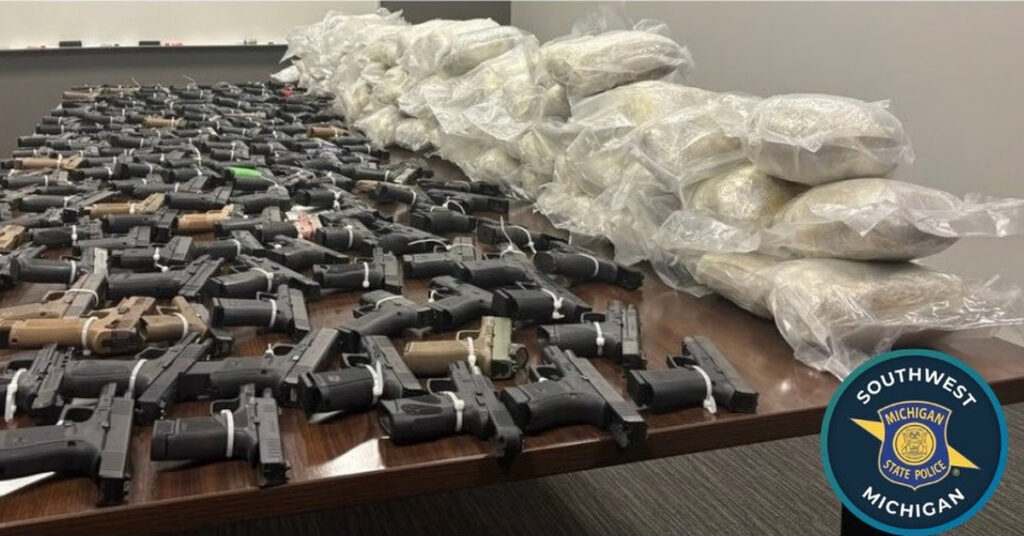
A single traffic stop on Interstate 69 near Marshall, Michigan, has exposed a staggering haul of illegal contraband: approximately 167 kilograms (roughly 368 pounds) of suspected heroin and 174 handguns with obliterated serial numbers.
The seizure occurred around 2 p.m. when officers stopped a semi-truck traveling through Calhoun County. Inside the truck, police found 92 bundles containing the suspected heroin, alongside the cache of firearms, all with their identifying marks deliberately destroyed to prevent tracing.
The location of the stop was no accident. Interstate 69 serves as a critical commercial artery, linking southern Michigan to Indiana and the Canadian border. and Canada.
The Michigan State Police (MSP) is a statewide law enforcement agency responsible for traffic safety, criminal investigations, and commercial vehicle enforcement.
Michigan State Police confirmed that the male driver was arrested on drug and weapons-related charges but have not released his identity, citing the ongoing investigation. The case remains sensitive, with officials emphasising the need to protect witnesses and avoid compromising the prosecution.
The incident also highlights the strategic importance of Calhoun County, where the stop occurred. Situated along Interstate 69, the county is a key transit point for freight moving between the industrial hubs of the Midwest and the Canadian border.
The broader fight against illegal trafficking on U.S. highways: Michigan
The incident highlights the critical role of commercial vehicle enforcement in combating illegal trafficking. The obliterated serial numbers on the recovered firearms suggest an attempt to bypass federal tracking systems, a tactic increasingly used by traffickers to evade law enforcement.
For Michigan, the seizure comes at a time when the state is grappling with a rising tide of drug-related deaths. According to local health data, more people in Southwest Michigan die from drug overdoses each year than from car crashes and homicides combined. The 167 kg of suspected heroin seized in this single stop could have flooded streets across multiple states, fuelling addiction and violence.
This trend is not unique to Michigan; across the U.S., opioid-related overdoses have surged in recent years, with heroin and synthetic opioids like fentanyl driving much of the crisis. The U.S. Drug Enforcement Administration (DEA) has repeatedly warned that Mexican cartels are the primary suppliers of heroin to the U.S. market, often using commercial transport routes to smuggle narcotics from production hubs in Mexico to distribution networks in American cities.
The role of commercial trucking in drug trafficking is well-documented. A 2022 report by the FBI’s Memphis Cargo Theft Task Force found that nearly 60% of large-scale drug seizures in the U.S. involved commercial vehicles.
The task force, which focuses on cargo theft and trafficking along major freight corridors, has identified Interstate 69 as a high-risk route for smuggling due to its connectivity to the Canadian border and its heavy commercial traffic. The report also noted that traffickers frequently use mislabelled shipments or hidden compartments in trucks to conceal contraband, tactics that require specialised training and equipment for law enforcement to detect.
MSP has urged the public to remain vigilant and report any suspicious activity. Tips can be submitted anonymously via email at MSP-ROTECT@michigan.gov or by calling the agency’s anonymous tip line at 269-982-8664. The investigation is ongoing, with authorities expected to announce further developments as the case progresses toward prosecution.
The bust also raises questions about the effectiveness of current screening methods for commercial vehicles. While roadside inspections are a key tool for law enforcement, the sheer volume of freight moving through highways like I-69 means that only a fraction of trucks can be thoroughly checked.
This incident may prompt calls for increased funding and technology to enhance detection capabilities, particularly in high-traffic corridors near international borders. Advanced scanning technologies, such as mobile X-ray units and artificial intelligence-driven cargo analysis, are already in use at some ports and border crossings, but their deployment along highways remains limited due to cost and logistical challenges.
For businesses operating in the freight and logistics sector, this seizure serves as a reminder of the risks associated with unknowingly transporting illegal goods. Companies are increasingly adopting stricter compliance protocols, including background checks for drivers, real-time tracking of shipments, and partnerships with law enforcement to identify and mitigate smuggling risks.
Industry groups, such as the American Trucking Associations (ATA), have also called for greater collaboration between the private sector and government agencies to combat trafficking, arguing that shared intelligence and technology can help close gaps in enforcement.
For residents of Michigan and neighbouring states, the implications of this bust are both immediate and long-term. The removal of 167 kg of suspected heroin from circulation could prevent countless overdoses and disrupt local drug markets, while the seizure of 174 untraceable firearms reduces the risk of gun-related violence. As authorities pursue the investigation, communities along Interstate 69 and other major freight routes may see heightened law enforcement presence, including increased inspections and surveillance.
For now, the focus remains on the legal proceedings against the arrested driver. The case serves as a warning to traffickers: even a routine stop can unravel years of planning and expose operations that threaten public safety. As authorities piece together the full scope of this network, the seizure stands as a rare but critical victory in the fight against illegal drug and weapons trafficking.
The outcome of this case could also set a precedent for future prosecutions, particularly if investigators uncover links to larger criminal organisations. For the public, the message is clear: vigilance and cooperation with law enforcement are essential tools in the ongoing battle against trafficking.
Those with information about suspected drug or weapons trafficking in Michigan can contact the MSP’s anonymous tip line at 269-982-8664 or submit a report online via the agency’s website. Additional resources, including overdose prevention programmes and community safety initiatives, are available through local health departments and non-profit organisations across the state.


Sign up free to ask CAMAL AI for a summary, the key points or anything else about this story.
Related stories
CAMAL AI
 Financial Ports Newsletter
The maritime economy, every morning
Ports, shipping and freight markets in one short email. Free.
Financial Ports Newsletter
The maritime economy, every morning
Ports, shipping and freight markets in one short email. Free.



