

Indonesia Seizes $210m Ketamine Haul from Mongolian Tanker in Malacca
Authorities intercept 1.16 tonnes of ketamine hydrochloride worth 3.48 trillion rupiah ($210m) aboard MT Global 168
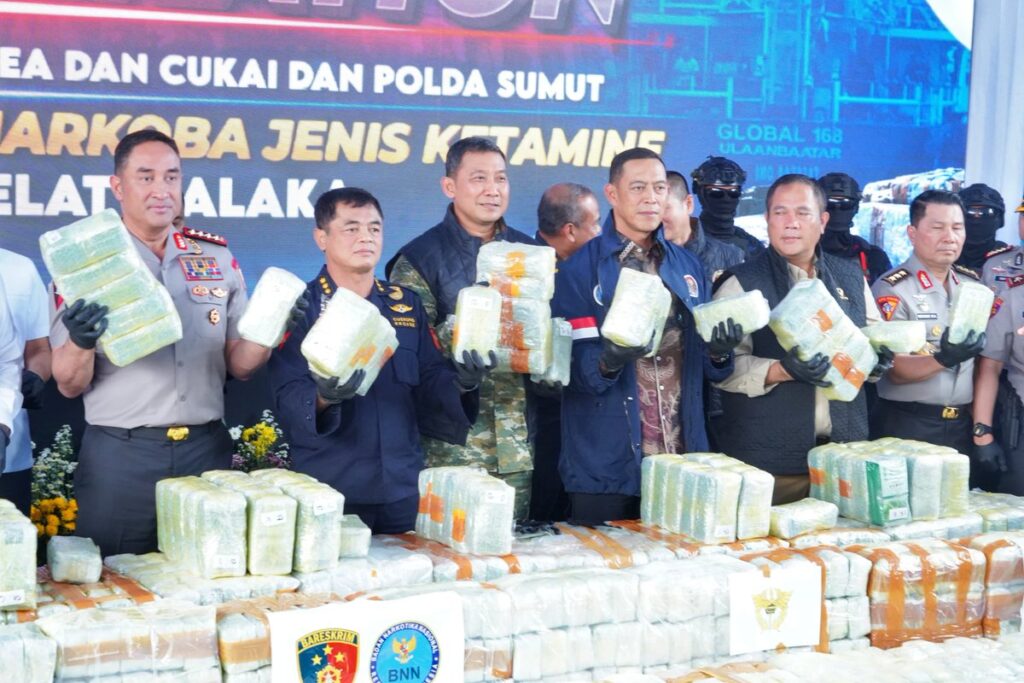
The operation, conducted by Indonesia’s National Police, underscores the country’s role as a key transit point for international drug trafficking networks. The ketamine, packed in 54 sacks, was discovered aboard the tanker following a coordinated enforcement effort involving maritime and narcotics units. All eight crew members, seven Indonesians and one Chinese national, have been detained for questioning, while investigators trace the origins of the shipment and its intended distribution channels.
The MT Global 168, registered under Mongolia’s flag, is owned by a Malaysian-registered company based in Johor. The vessel’s movements had raised red flags among Indonesian authorities, who had been monitoring it for suspected smuggling activity.
The seizure of the MT Global 168 is not an isolated incident.
The Royal Malaysia Police have been notified of the seizure, and Malaysia’s national narcotics unit, led by Director Hussein Omar Khan, plans to question the two Malaysian businessmen listed as owners of the MT Global 168. “We have identified the individuals and are trying to locate them.
The MT Global 168: A vessel under scrutiny: Indonesia
Indonesia’s legal framework for drug offences remains among the strictest in the world, with trafficking technically punishable by death. However, a moratorium on executions introduced in 2016 has led to indefinite imprisonment on death row as the de facto maximum sentence. Gen. Suyudi Ario Seto, Indonesia’s National Police Chief, emphasised the broader impact of the seizures during a news conference in Belawan: “The evidence we seized today is not merely a statistical achievement, but millions of young lives that have been saved.".
The back-to-back operations in Aceh and North Sumatra highlight Indonesia’s vulnerability to transnational drug trafficking. The Golden Triangle, encompassing parts of Myanmar, Laos, and Thailand, remains a primary source of methamphetamine and other synthetic drugs, with traffickers frequently exploiting maritime routes through the Strait of Malacca and the Andaman Sea. The region’s porous borders and high volume of commercial shipping create opportunities for smugglers to conceal large quantities of narcotics within legitimate cargo.
For maritime stakeholders, the incident serves as a stark reminder of the risks associated with vessels operating under flags of convenience, such as Mongolia’s, which are often scrutinised for lax regulatory oversight. The MT Global 168’s registration under a landlocked country’s flag raises questions about the effectiveness of international maritime regulations in preventing illicit activities.
While Mongolia is a signatory to the United Nations Convention on the Law of the Sea (UNCLOS), its limited maritime enforcement capabilities make it an attractive option for shipowners seeking to obscure their operations.
The investigation into the MT Global 168 is ongoing, with Indonesian and Malaysian authorities collaborating to dismantle the broader trafficking network. The focus now shifts to identifying the organisers behind the shipment, tracing the financial flows, and determining whether the ketamine was destined for local distribution or further transit to other markets. The case also underscores the need for enhanced regional cooperation, particularly in sharing intelligence and coordinating enforcement efforts across Southeast Asia’s maritime borders.
Regional cooperation and legal consequences
For the shipping industry, the seizure of the MT Global 168 reinforces the importance of compliance with international maritime security protocols. Vessels found to have disabled their AIS transmissions or engaged in suspicious movements risk not only legal repercussions but also reputational damage, which can have long-term financial consequences for operators. The incident may prompt calls for stricter enforcement of AIS regulations and greater scrutiny of vessels registered under flags of convenience, particularly those operating in high-risk regions.
As the investigation unfolds, the fate of the detained crew members remains uncertain. While Indonesia’s moratorium on executions provides a temporary reprieve, the severity of the charges, coupled with the country’s stringent drug laws, means that those found guilty could face life imprisonment. The case also serves as a cautionary tale for maritime crews, who may unknowingly become involved in smuggling operations orchestrated by criminal syndicates.
The next steps in the investigation will likely involve forensic analysis of the ketamine to determine its origin, as well as interrogations of the detained crew and the vessel’s owners. Indonesian authorities have indicated that they will pursue all possible leads to identify the masterminds behind the operation, with a particular focus on dismantling the financial networks that facilitate such large-scale drug trafficking.
The cooperation between Indonesia and Malaysia is expected to intensify in the coming weeks, with joint task forces potentially being established to target other vessels suspected of involvement in similar activities.
For now, the seizure of the MT Global 168 stands as a significant blow to the region’s drug trafficking networks, but it also highlights the persistent challenges faced by law enforcement in combating maritime smuggling. As Gen. Suyudi Ario Seto noted, “The back-to-back operations underscore how Indonesia remains a major target for international drug trafficking organisations.” The fight against narcotics in Southeast Asia’s waters is far from over, but this latest bust demonstrates that authorities are increasingly capable of disrupting the flow of illicit drugs through coordinated action and intelligence-sharing.


Sign up free to ask CAMAL AI for a summary, the key points or anything else about this story.
Related stories
CAMAL AI
 Financial Ports Newsletter
The maritime economy, every morning
Ports, shipping and freight markets in one short email. Free.



