

China’s Fujian: 3 Electromagnetic Catapults Redefine Naval Power
The 316-metre Type 003 carrier marks China’s first use of electromagnetic launch technology, bridging the gap.
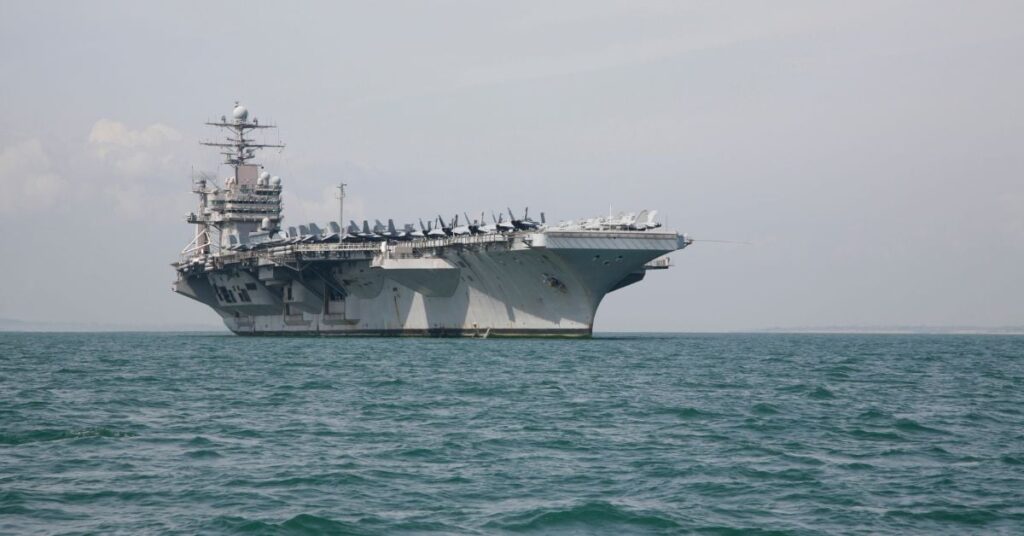
The People’s Liberation Army Navy (PLAN) has reached a significant milestone with the deployment of its largest warship, the Type 003 aircraft carrier Fujian. Measuring 316 metres in length and displacing between 80,000 and 85,000 tonnes, the Fujian represents a major leap in China’s naval capabilities.
Unlike its predecessors, the Liaoning and Shandong, both based on Soviet-era designs, the Fujian introduces a catapult-assisted takeoff but arrested recovery (CATOBAR) system. The earlier carriers relied on ski-jump ramps, forcing aircraft to take off under their own power, which limited their fuel and weapons payloads.
The Fujian’s advanced launch system eliminates this constraint, enabling the deployment of heavier, more capable aircraft, including the Xi’an KJ-600. This aircraft enhances the carrier’s operational reach by providing over-the-horizon radar, battle management, and long-range targeting capabilities.
Innovative Propulsion and Power Systems: electromagnetic catapults
The Fujian’s propulsion system sets it apart from U.S. aircraft carriers, which rely on nuclear reactors. Instead, the Chinese carrier operates on a combination of steam turbines and diesel generators. To power its three electromagnetic catapults without nuclear energy, Chinese engineers developed a Medium-Voltage Direct Current (MVDC) system. This technology efficiently stores and distributes high-voltage energy bursts, allowing the catapults to recharge and fire without overloading the ship’s boilers.
While the Fujian’s endurance of 8,000 to 10,000 nautical miles is less than that of nuclear-powered U.S. carriers, it remains a formidable asset. In terms of size and capability, the Fujian falls between the U.S. Navy’s Nimitz-class and Gerald R. Ford-class carriers. The Nimitz-class uses steam catapults, whereas the Ford-class employs the more advanced Electromagnetic Aircraft Launch System (EMALS).
China’s Growing Naval Ambitions
The Fujian’s deployment comes as China accelerates its naval expansion. The country’s first two carriers, the Liaoning and Shandong, were based on a Soviet design purchased from Ukraine in the 1990s. While these vessels provided valuable experience in carrier operations, they were limited by their ski-jump launch systems. The Fujian’s advanced capabilities mark a shift toward a more modern and capable fleet.
China is already constructing a fourth carrier, the Type 004, at the Dalian Shipyard in Liaoning province. Analysts believe this vessel will be China’s first nuclear-powered supercarrier, potentially surpassing the size of the U.S. Navy’s USS Gerald R. Ford, currently the world’s largest warship. The Ford measures 1,106 feet in length and displaces over 100,000 tonnes.
With the U.S. Navy operating 11 active aircraft carriers, it remains the dominant blue-water force. However, the Fujian’s deployment signals China’s determination to challenge this supremacy. As the PLAN continues to expand, the balance of naval power in the Indo-Pacific region is poised for significant shifts.


Sign up free to ask CAMAL AI for a summary, the key points or anything else about this story.
Related stories
CAMAL AI
 Financial Ports Newsletter
The maritime economy, every morning
Ports, shipping and freight markets in one short email. Free.



