

US Navy’s $200bn dry dock gamble: first new Pearl Harbor dock since WWII
Dry Dock 5 will service Virginia-class submarines 60 feet below waterline as Navy’s $200bn modernisation plan spirals
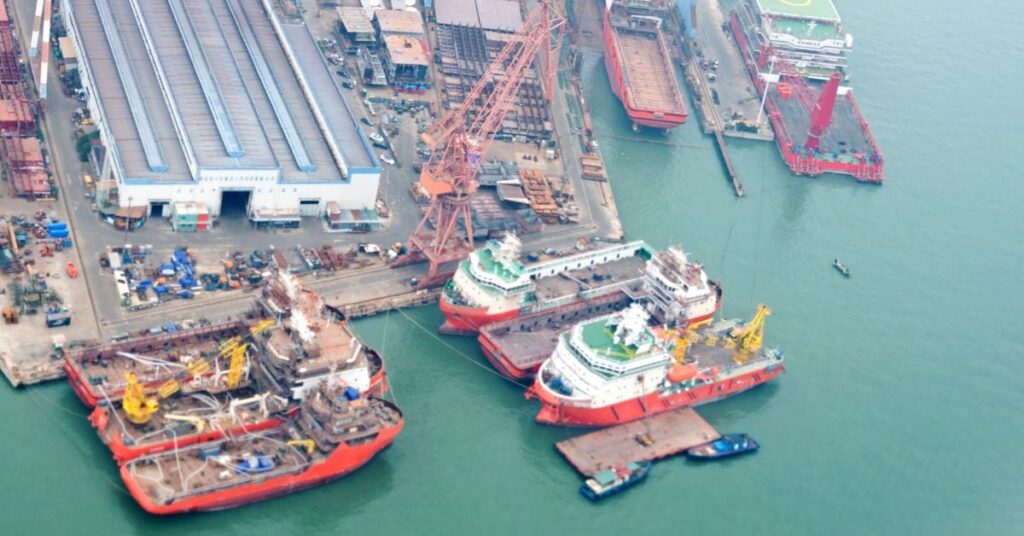
Pearl Harbor Naval Shipyard is breaking ground on the U.S. Navy’s most ambitious military construction project in decades: a new dry dock that will become the first at the base capable of servicing modern nuclear submarines since World War II.
The $21 billion Shipyard Infrastructure Optimization Program (SIOP) aims to upgrade all four public naval shipyards, but the centerpiece at Pearl Harbor, Dry Dock 5, will directly support the Virginia-class attack submarines that form the backbone of the Pacific fleet. The current Dry Dock 3, built during the 1940s, lacks the depth to accommodate these larger vessels, forcing the Navy to rely on outdated infrastructure.
Modernizing Pacific submarine maintenance: Pearl Harbor
Capt. Ryan McCrillis, commander of Pearl Harbor Naval Shipyard & Intermediate Maintenance Facility, stated the project would “boost capabilities and keep the fleet combat-ready in the Pacific.” Once completed, Dry Dock 5 will be the first facility in Hawaii equipped to handle Virginia-class submarines, addressing a critical gap in the Navy’s maintenance network.
Construction crews have already overcome significant hurdles to prepare the site. Workers first dredged sediment and built a temporary trestle at the Waipio Peninsula to stage equipment. Off-site, they fabricated nine massive concrete floors, which were then transported to the harbor and lowered onto the seabed. Divers and specialists secured the units using underwater tremie pours, a technique that ensures precise placement in deep water.
The most complex phase involved creating a dry workspace 60 feet below the waterline. Contractors installed interlocking steel sheet panels and large pipe piles to form a cofferdam, a temporary watertight enclosure. A pump well was also constructed to manage future drainage, allowing crews to eventually dewater the site. Capt. Chris Coggina, commanding officer of the construction project, called this step “the riskiest part of the project,” as failure would prevent any further work at depth.
Engineering challenges 60 feet below sea level
With the cofferdam in place, construction will shift to permanent concrete walls, crane-rail foundations, an electrical substation, a water treatment plant, and ten supporting buildings. The workforce is projected to expand from 350 to over 1,000 workers as the project progresses. Meanwhile, Navy personnel are conducting operational trials to ensure a smooth transition once the dry dock becomes operational.
Rear Adm. Omarr Tobias, commander of Naval Facilities Engineering Systems Command Pacific, emphasized the project’s strategic value: “It depends on speed, survivability, resilience, and the infrastructure that is built today.” However, a recent Government Accountability Office report revealed the SIOP’s costs have ballooned far beyond initial estimates, with expanded seismic upgrades, utility work, and environmental projects pushing the total price tag into the hundreds of billions and extending the timeline by decades.


Sign up free to ask CAMAL AI for a summary, the key points or anything else about this story.
Related stories
CAMAL AI
 Financial Ports Newsletter
The maritime economy, every morning
Ports, shipping and freight markets in one short email. Free.



