

Sweden’s Baltic Sea surveillance gets unmanned boost
Four Saildrone Voyager USVs will patrol Sweden’s territorial waters for a full year under NORDEFCO framework.
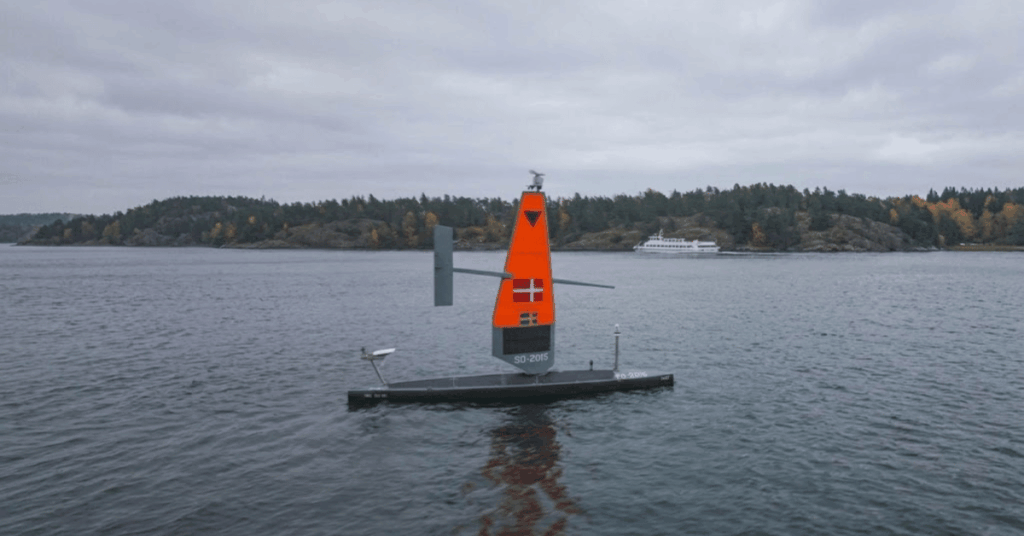
Sweden has launched a year-long maritime surveillance mission in the Baltic Sea using four Saildrone Voyager unmanned surface vehicles (USVs), marking a shift toward persistent, unmanned intelligence collection in Northern Europe. The deployment, part of a 12-month agreement with the Swedish Armed Forces, will cover 1,440 contracted vehicle-days of continuous operations across Sweden’s territorial waters and exclusive economic zone.
The decision to deploy Saildrone’s USVs reflects Sweden’s strategic focus on enhancing maritime domain awareness without relying solely on crewed vessels. Johan Wahren, project manager at Sweden’s Defence Materiel Administration (FMV), emphasised the operational philosophy behind the mission:
“This is fundamentally not about four unmanned vessels, but about access to sustained intelligence collection at sea. In other words, we are purchasing a persistent maritime surveillance service, and Saildrone provides the vessels that supply the Navy with data.”
Johan Wahren·Project Manager at Sweden’s Defence Materiel Administration (FMV)
The Saildrone Voyager fleet will operate as a managed service, with Saildrone responsible for maintenance, deployment, and tasking. This model allows the Swedish Navy to maintain round-the-clock surveillance without diverting crewed assets from other critical missions.
NORDEFCO Framework: A Blueprint for Nordic Defence Cooperation: Baltic Sea
This mission is the first national deployment under the Nordic Defence Cooperation (NORDEFCO) framework, a collaborative initiative that includes Denmark, Finland, Iceland, Norway, and Sweden. NORDEFCO aims to streamline defence procurement and operational coordination among its members, enabling faster adoption of proven technologies like Saildrone’s USVs.
Robert Kleist, Saildrone’s European managing director, highlighted the significance of the framework:
“This mission reflects Sweden’s commitment to securing the Baltic Sea and highlights Saildrone’s growing operational presence across Northern Europe. Sweden is investing in year-round maritime awareness as an operational capability. The NORDEFCO framework gives Nordic nations a common mechanism for accessing that capability while allowing each country to define and operate its own mission.”
Robert Kleist·European Managing Director at Saildrone
For Sweden, this means leveraging Saildrone’s existing infrastructure and expertise to deploy USVs rapidly, without the delays associated with traditional procurement processes.
Saildrone’s role in this mission extends beyond the provision of USVs. The company will also handle the operational aspects of the deployment, including maintenance, data transmission, and tasking.
The registration of four Saildrone Voyager USVs under the Danish national flag earlier this year further underscores the company’s commitment to establishing a clear regulatory framework for its operations in Europe. This move supports Saildrone’s ability to operate alongside various European nations, including Sweden, and ensures compliance with international maritime laws. Saildrone Europe, based in Denmark, will flag additional USVs in the coming weeks, expanding the company’s operational footprint in the region.
Implications for Maritime Security in Northern Europe
The deployment of Saildrone’s USVs in the Baltic Sea is a significant development for maritime security in Northern Europe. Baltic Sea is a critical waterway for trade, energy transportation, and military mobility, making it a focal point for regional defence strategies.
For the Swedish Navy, the introduction of USVs represents a shift toward a more flexible and scalable approach to maritime surveillance. Unlike crewed vessels, which require significant logistical support and personnel, USVs can operate continuously for extended periods, reducing operational costs and increasing the frequency of patrols. This capability is particularly valuable in the Baltic Sea, where the proximity to Russia and the presence of critical infrastructure, such as undersea pipelines and cables, demand constant vigilance.
The mission also highlights the growing importance of unmanned systems in modern naval operations. Saildrone has supported defence and security missions in a variety of challenging environments, including the High North, the Southern Ocean, and the Middle East. The company’s ability to operate in extreme conditions demonstrates the versatility of its USVs, making them an attractive option for nations seeking to enhance their maritime domain awareness.
For Sweden, the deployment of Saildrone’s USVs is just the beginning. The 12-month mission will provide valuable data on the effectiveness of unmanned surveillance in the Baltic Sea, potentially paving the way for future deployments. The Swedish Armed Forces are likely to evaluate the performance of the USVs throughout the year, assessing their ability to deliver real-time intelligence and support broader defence objectives.
The NORDEFCO framework further enhances the scalability of this model. By providing a common procurement mechanism for Nordic nations, the framework enables countries like Denmark, Finland, and Norway to adopt similar capabilities without the need for lengthy negotiations or bespoke contracts. This collaborative approach reduces costs and accelerates the deployment of advanced technologies, strengthening the collective defence posture of the region.
As the 12-month mission progresses, the Swedish Armed Forces will closely monitor the performance of the Saildrone Voyager USVs. The data collected during this period will inform future decisions on the role of unmanned systems in Sweden’s maritime strategy. If successful, the deployment could serve as a model for other Nordic nations, further solidifying the role of USVs in regional defence.
For Saildrone, the mission represents a significant milestone in its expansion across Northern Europe. The company’s growing operational presence in the region underscores its commitment to supporting defence and security missions with cutting-edge technology. With additional USVs set to be flagged in Denmark in the coming weeks, Saildrone is well-positioned to play a key role in shaping the future of maritime surveillance in Europe.
The Swedish Navy’s adoption of unmanned systems reflects a broader trend in naval operations, where the focus is shifting toward flexibility, scalability, and cost-effectiveness. As geopolitical tensions in the Baltic Sea region continue to evolve, the ability to maintain persistent maritime domain awareness will be critical for Sweden and its Nordic partners. The deployment of Saildrone’s USVs is a step in the right direction, offering a glimpse into the future of maritime security in Northern Europe.


Sign up free to ask CAMAL AI for a summary, the key points or anything else about this story.
Related stories
CAMAL AI
 Financial Ports Newsletter
The maritime economy, every morning
Ports, shipping and freight markets in one short email. Free.



