

Estonia’s First Electric Ferry to Cut Emissions
A 95-metre vessel powered by Steerprop’s next-gen CRP units will slash emissions on Estonia’s Virtsu–Kuivastu route by.
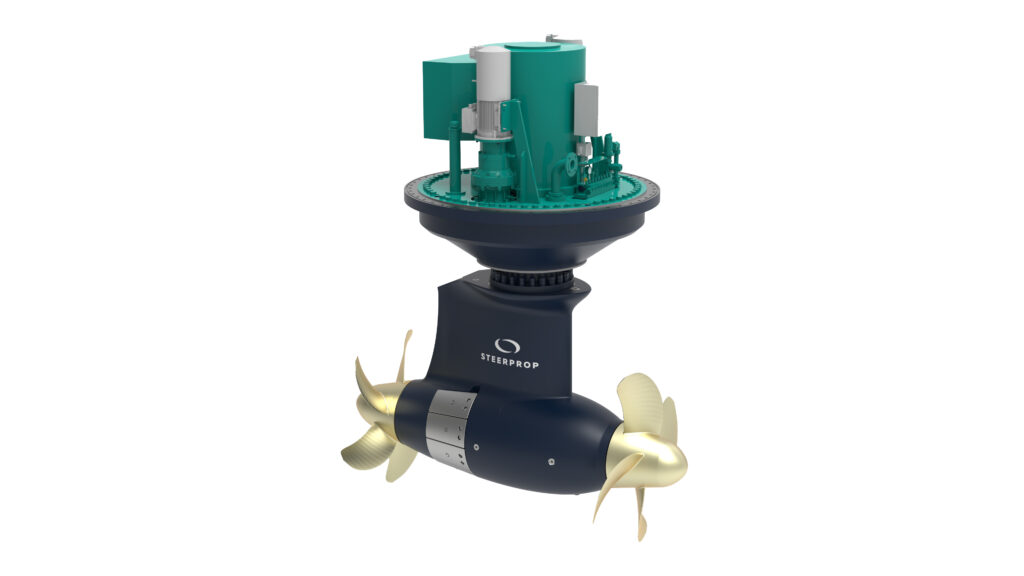
Estonia is set to launch its first fully electric passenger ferry, powered by Finnish propulsion specialist Steerprop’s latest contra-rotating propeller (CRP) technology.
The ferry will be propelled by two Steerprop SP 25 CRP units, featuring permanent magnet motor drives and the company’s next-generation CRP technology. This advancement introduces pressure lubrication as standard, reducing mechanical losses and boosting efficiency by 3.5 percentage points. The system is designed to deliver high thrust in ice, wind, and open water conditions, even with tight propeller diameter constraints.
Why Steerprop’s Propulsion Tech Stands Out: Ferry
Steerprop’s CRP technology is known for its ability to achieve higher thrust and efficiency than single-propeller units of similar size. The unique push-and-pull configuration of the propellers on a single shaftline allows the ferry to operate with less power, reducing energy consumption and emissions. This makes it particularly suited for Estonia’s icy conditions, where the ferry will be classed to 1B Ice Class, enabling operation in ice up to 60 cm thick.
Norwegian Cruise Line
Markku Miinala, Steerprop’s Cruise & Ferry Segment Director, highlighted the significance of the project:
“The latest Steerprop CRP development has resulted in a propulsor with unique efficiency and thrust performance, and one that offers an even greater performance boost for vessels operating in ice conditions. Steerprop is pleased to widen its installed base in Estonia, where we already operate four double-ended ferries with Steerprop CRP propulsors on the Saaremaa and Hiiumaa routes.”
Markku Miinala·Cruise & Ferry Segment Director at Steerprop
The ferry’s primary power source will be renewable shore power, stored in a 3 MWh battery system. For severe weather and emergency operations, auxiliary biodiesel generators will provide an operating range of at least 1,000 nautical miles without refuelling. Designed by Norwegian firm LMG Marin, the vessel will accommodate up to 110 passenger vehicles or 8 freight trucks, with capacity for 380 passengers.
Funding and Timeline: What’s Next?
The total value of the design and construction contract is €49.93 million, with €28 million co-funded by the European Union Modernisation Fund and the remainder covered by Estonia’s CO₂ quota trading mechanisms.
Steerprop’s propulsion equipment is scheduled for delivery in late 2027, with the ferry expected to enter operation in late 2028.
This project aligns with Estonia’s broader goals of reducing maritime emissions and transitioning to cleaner energy sources. The ferry’s ability to operate on fully electric power for its primary route, while maintaining reliability in harsh conditions, sets a precedent for future vessels in the region. Estonia’s maritime sector has long been a cornerstone of its economy, with ferries serving as lifelines for island communities. The adoption of electric propulsion technology reflects the country’s proactive approach to balancing economic needs with environmental sustainability.
Estonian State Fleet, which oversees the operation of state-owned vessels, has been at the forefront of modernising the country’s maritime infrastructure. The fleet’s investment in this technology reflects a growing trend in the maritime industry, where efficiency and sustainability are becoming critical factors in vessel design. The success of this ferry could serve as a blueprint for other Baltic nations, many of which face similar challenges in decarbonising their ferry fleets while ensuring year-round connectivity.
For industry stakeholders, the project also highlights the importance of collaboration between propulsion specialists, shipyards, and government funding bodies. The partnership between Steerprop, CRIST SA, and the Estonian State Fleet demonstrates how public and private sectors can work together to achieve shared sustainability goals. The involvement of the European Union Modernisation Fund further underscores the role of supranational institutions in supporting innovative projects that have regional and global implications.
As the first fully electric passenger ferry in Estonia, the vessel will serve as a testbed for future electric and hybrid vessels, potentially influencing similar projects across the Baltic region. The Baltic Sea is one of the busiest maritime areas in Europe, with heavy traffic from passenger ferries, cargo ships, and tankers.
The adoption of electric propulsion in this region could significantly reduce emissions and noise pollution, contributing to the EU’s broader environmental objectives. For operators and policymakers, the ferry’s performance will provide valuable data on the feasibility of scaling up electric propulsion technology in other parts of the Baltic and beyond.
For those interested in tracking the ferry’s progress, updates on the project can be found on the websites of the Estonian State Fleet and Steerprop. The European Union Modernisation Fund also provides details on its funded projects, offering insights into how public funding is accelerating the transition to greener maritime transport.


Sign up free to ask CAMAL AI for a summary, the key points or anything else about this story.
Related stories
CAMAL AI
 Financial Ports Newsletter
The maritime economy, every morning
Ports, shipping and freight markets in one short email. Free.



