

Poland’s Baltic Sea Wind Farm Now Powers 1.5 Million Homes—Here’s How
76 turbines now installed at Poland’s first 1.2 GW offshore wind farm, supplying 3% of national demand.
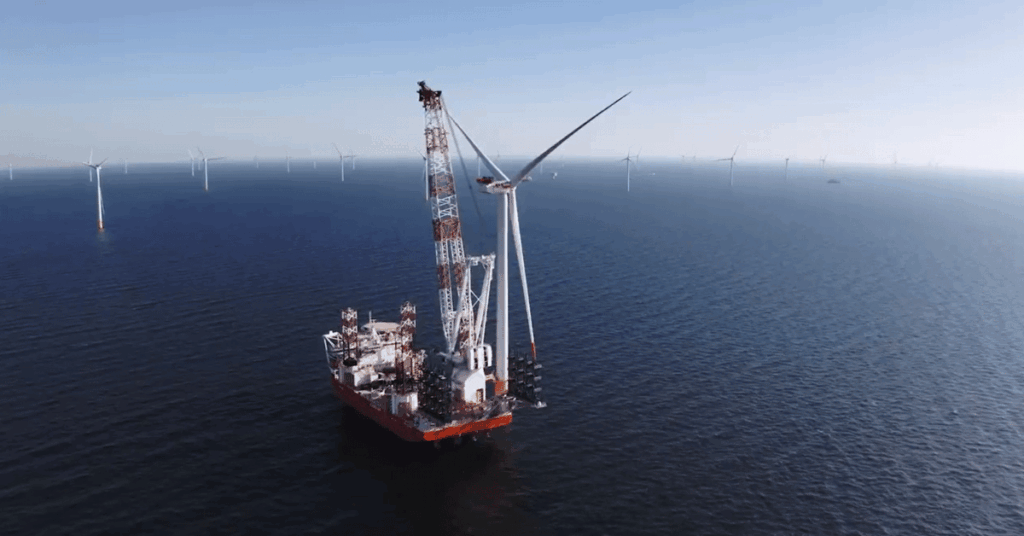
Poland’s first offshore wind farm, Baltic Power, has reached a major milestone with the completion of all 76 turbines in the Baltic Sea. The 1.2 GW project, a joint venture between Polish energy group ORLEN and Canadian developer Northland Power, will supply clean electricity to more than 1.5 million households, reducing the country’s reliance on coal.
The installation was carried out by Danish contractor Cadeler using its jack-up vessels, Wind Osprey and Wind Mover. Each of the 76 Vestas V236-15 MW turbines stands over 260 metres tall, taller than the Eiffel Tower, and has a swept area of more than 43,700 square metres. The project, located 23 kilometres off the Pomeranian coast, delivered its first power to Poland’s national grid in July 2026 and is now entering the final stages before full commissioning.
Why This Wind Farm Matters for Poland’s Energy Transition: offshore wind farm
Poland has long depended on coal for its energy needs, with the Belchatow lignite-fired power station ranking as the world’s largest. However, the Baltic Power wind farm represents a critical step toward diversifying the country’s energy mix. Once fully operational, it will generate up to 4 TWh of electricity annually, covering approximately 3% of Poland’s current demand.
ORLEN, Poland’s largest energy group, has been a driving force behind the country’s shift toward renewables. The state-controlled company, which also operates refineries and petrol stations, has committed to reducing its carbon footprint by investing in offshore wind, solar, and hydrogen projects. Baltic Power is its flagship offshore wind initiative, marking a strategic pivot from traditional fossil fuels to cleaner energy sources.
Prime Minister Donald Tusk, quoted by PAP news agency, called the project a “key element for the country’s energy security.” The shift aligns with Poland’s broader strategy to expand renewable energy sources and develop its first nuclear power station. For Polish households, this means a more stable and sustainable energy supply, reducing both costs and carbon emissions. The government’s target is to generate 23% of its energy from renewables by 2030, with offshore wind playing a central role in achieving this goal.
The wind farm’s electricity comes ashore at Choczewo, near the Pomeranian Baltic coast north of Gdansk. The location was strategically chosen for its strong and consistent wind resources, ensuring optimal energy production. Poland’s Baltic Sea coastline offers some of the best wind conditions in Europe, with average wind speeds exceeding 9 metres per second at hub height. This makes it an ideal region for offshore wind development, with potential for further expansion in the coming decades.
The €4.7 billion ($5.3 billion) investment in Baltic Power underscores the scale of Poland’s commitment to offshore wind. The project has also created thousands of jobs during its construction phase, with long-term employment opportunities expected in operations and maintenance. For local communities in Pomerania, this represents a significant economic boost, as the wind farm becomes a cornerstone of the region’s energy infrastructure.
What Baltic Power Means for Polish Consumers and Businesses
The completion of Baltic Power’s turbine installation is more than just a technical achievement, it signals a shift in how Poland powers its economy. For consumers, the wind farm will contribute to lower and more stable electricity prices over time, as renewable energy reduces the country’s dependence on volatile fossil fuel markets. Households in northern Poland, in particular, stand to benefit from a more resilient local grid, with fewer outages and disruptions.
Businesses, too, will see advantages. The influx of clean energy supports Poland’s industrial sector, which has faced pressure to decarbonise under EU climate regulations. Companies in manufacturing, logistics, and technology can now access a greener energy supply, enhancing their competitiveness in European markets. Additionally, the growth of offshore wind is expected to attract further investment in related industries, such as turbine manufacturing, port infrastructure, and maritime services.
For the broader energy market, Baltic Power sets a precedent for future projects. The Polish government has already identified additional offshore wind zones in the Baltic Sea, with auctions planned for the coming years. These developments could add up to 11 GW of offshore wind capacity by 2040, positioning Poland as a leader in Central and Eastern Europe’s renewable energy transition. The success of Baltic Power demonstrates that large-scale offshore wind is not only feasible but also economically viable in the region.
With turbine installation complete, Baltic Power is now focused on final testing and commissioning. The project’s success has already positioned Poland as a leader in offshore wind in Central and Eastern Europe, attracting interest from international investors and developers. Cadeler’s CEO, Mikkel Gleerup, highlighted the significance of the milestone:
“We are pleased to have completed the installation of all 76 turbines at Baltic Power, Poland’s first offshore wind farm. This is an important milestone for the project and for the development of offshore wind in Poland. Projects of this scale require highly capable vessels, experienced teams and close collaboration across the project. We are proud to have supported our client in reaching this milestone and look forward to building on our partnerships in Poland as the country’s offshore wind industry continues to develop.”
Mikkel Gleerup·CEO of Cadeler
The Baltic Power project is expected to serve as a blueprint for future offshore wind developments in Poland. The government has set ambitious targets for renewable energy, aiming to reduce coal’s dominance in the national grid. The Ministry of Climate and Environment has outlined a roadmap that includes the development of up to 5.9 GW of offshore wind capacity by 2030, with further expansion beyond that date. This aligns with the EU’s broader climate goals, which require member states to achieve climate neutrality by 2050.
For industry stakeholders, the project’s completion opens the door to new opportunities. Polish ports, such as Gdansk and Gdynia, are already investing in infrastructure to support offshore wind operations, including assembly hubs and service bases. These developments will create jobs and stimulate economic growth in coastal regions, which have historically relied on fishing and tourism.
For Polish consumers, the benefits are clear: a more reliable energy supply, lower carbon emissions, and long-term cost stability. As the country continues to expand its renewable energy infrastructure, offshore wind will play a pivotal role in shaping a sustainable future for Poland’s electricity market. Households can monitor the wind farm’s performance and energy output through Poland’s national grid operator, PSE, which provides real-time data on electricity generation and consumption.
Looking ahead, the success of Baltic Power could accelerate the development of additional offshore wind farms in the Baltic Sea, further solidifying Poland’s position as a key player in Europe’s energy transition. With the right policies and investments, the country is poised to become a hub for offshore wind innovation and expertise. The next phase of Poland’s energy revolution is already underway, and Baltic Power is leading the charge.


Sign up free to ask CAMAL AI for a summary, the key points or anything else about this story.
Related stories
CAMAL AI
 Financial Ports Newsletter
The maritime economy, every morning
Ports, shipping and freight markets in one short email. Free.
Financial Ports Newsletter
The maritime economy, every morning
Ports, shipping and freight markets in one short email. Free.



