

South Korea Bets Big on SMRs: Will Ships Soon Run on Nuclear Power?
HD Hyundai’s $800m investment in Small Modular Reactors could revolutionise maritime propulsion by 2028.
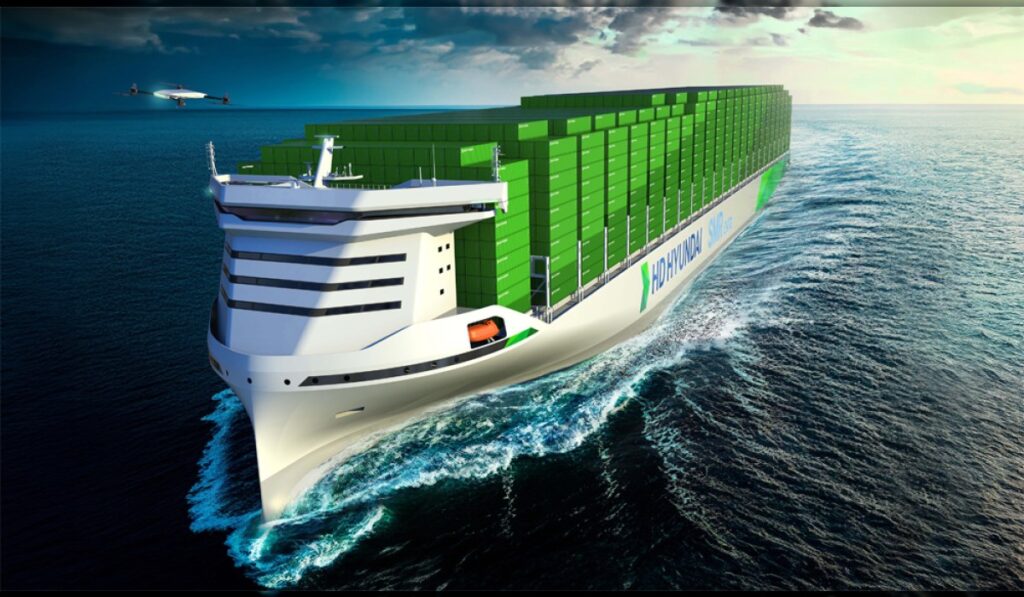
South Korean shipbuilder HD Hyundai is advancing its push to commercialize Small Modular Reactors (SMRs) for maritime use through a new collaboration involving industry and academic partners. The initiative aims to combine shipbuilding expertise with nuclear technology to accelerate the development and deployment of SMR-powered vessels.
The newly established SMR Marine Technology Demonstration Center brings together 12 organizations, including the Korean Register, nuclear industry leaders, and universities. The partnership will leverage existing research facilities to streamline technology verification and reduce redundant investments. Their focus includes developing core technologies for marine SMR applications and pursuing government-backed research and development projects.
Redesigning Vessel Architecture with SMRs: small modular reactors
HD Hyundai’s subsidiary, HD Korea Shipbuilding & Offshore Engineering (HD KSOE), has already introduced a design for a 15,000 TEU containership powered by SMRs. The model, which received Approval in Principle from the American Bureau of Shipping (ABS), eliminates the need for traditional engine exhaust systems and fuel tanks. By removing large engine rooms, the design optimizes space for additional cargo, improving efficiency.
The company has incorporated a marine radiation shielding system using a double-tank method with stainless steel and light water containment. This approach enhances safety while maintaining the economic benefits of SMR technology. HD KSOE plans to open a marine nuclear demonstration facility at its Future Technology Center in Yongin by 2027 to further validate the safety of its designs.
Expanding Beyond Maritime Applications
HD Hyundai is also exploring broader applications for SMR technology. In May 2026, the company signed a memorandum of understanding with U.S.-based TerraPower and Hyundai Engineering & Construction to accelerate the commercialization of next-generation nuclear reactors. The partnership aims to address growing demand for SMR-based power generation through joint technology development.
Chung Kisun, Chairman of HD Hyundai, emphasized the strategic importance of the collaboration: “We expect this cooperative framework to accelerate the commercialization of next-generation Natrium reactors. We will actively respond to demand for SMR-based power generation through our own technology and global partnerships.”
The company’s logistics arm, Hyundai Glovis, is also evaluating SMR-powered car carriers in partnership with U.S. firm Liberty Global Logistics. The project focuses on routes between Korea and the United States, potentially setting a precedent for nuclear-powered shipping on high-volume trade lanes.
The South Korean government is supporting these efforts through the K-Moonshot initiative, which promotes collaboration between the shipbuilding, nuclear, and marine technology sectors. While challenges such as regulatory approvals and public perception remain, HD Hyundai’s partnerships and resources position it as a key player in the transition toward nuclear-powered maritime transport.


Sign up free to ask CAMAL AI for a summary, the key points or anything else about this story.
Related stories
CAMAL AI
 Financial Ports Newsletter
The maritime economy, every morning
Ports, shipping and freight markets in one short email. Free.
Financial Ports Newsletter
The maritime economy, every morning
Ports, shipping and freight markets in one short email. Free.



