

13,000-TEU Ship Ditches Manual Lashing—Here’s What Changes
HD Hyundai delivers a 13,000-TEU vessel that eliminates manual container securing, boosting deck capacity by over 10%.
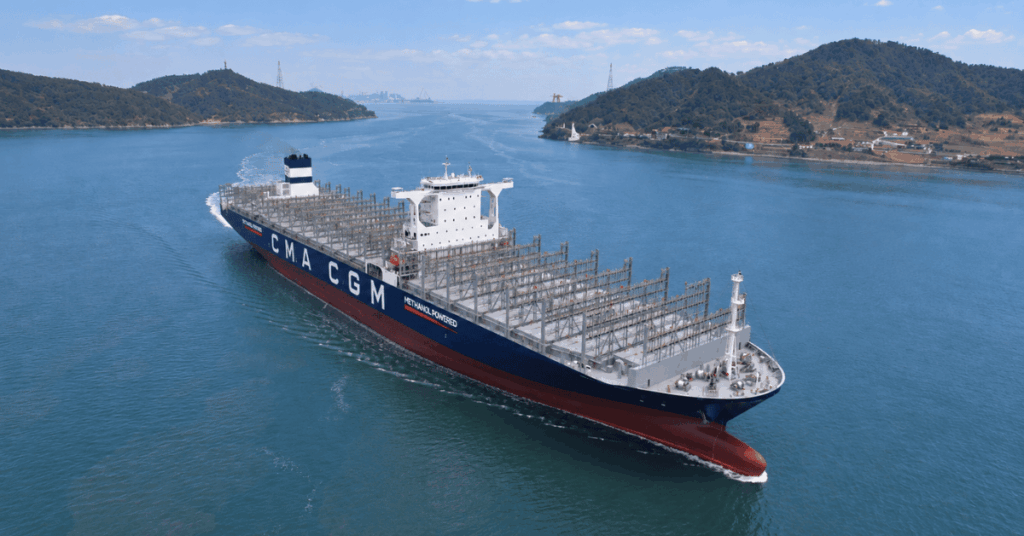
HD Hyundai has unveiled the maritime industry’s first container ship that eliminates manual lashing, a breakthrough that increases cargo capacity by over 10% while improving safety for dock workers. The 13,000-TEU vessel, delivered to a French shipping company, integrates a hybrid Lashing-Free system developed by HD Hyundai Heavy Industries.
The new design removes the traditional need for crew members to manually secure containers with lashing equipment. Instead, the ship extends cell guides—vertical supports that align containers in the cargo hold—above deck. This extension was previously impossible due to large hatch covers blocking the path. To solve this, engineers created a standardized portable bench, identical in size to a 40-foot container, which fits between the cell guides and can be installed using standard port cranes.
For containers stowed outside the cell guide area, HD Hyundai developed a Twistlock Rooting System that anchors them directly to the ship’s structure. Together, these technologies stabilize cargo in rough seas and high winds, reducing the risk of container loss and marine pollution. Sea trials in September confirmed the system’s effectiveness, showing significantly less vibration compared to conventional vessels with hatch covers and lashing bridges.
HD Hyundai Heavy
Innovation in Cargo Securing: Lashing
The Lashing-Free system not only enhances safety by removing hazardous manual labor but also streamlines operations at container terminals. By enabling faster loading and unloading, the technology supports the broader shift toward automation in maritime logistics. Industry recognition came in 2024 when the International Maritime Organization highlighted the system as a key innovation for preventing container loss at sea.
HD Hyundai Heavy Industries has secured multiple patents for the technology and plans to adapt it for smaller vessels. Senior Executive Vice President Hongryeul Ryu stated the company will continue refining the system, including adding weathertight features to protect cargo in extreme conditions. The goal, he noted, is to deliver measurable improvements in safety, efficiency, and automation to strengthen competitiveness in new ship orders.


Sign up free to ask CAMAL AI for a summary, the key points or anything else about this story.
Related stories
CAMAL AI
 Financial Ports Newsletter
The maritime economy, every morning
Ports, shipping and freight markets in one short email. Free.
Financial Ports Newsletter
The maritime economy, every morning
Ports, shipping and freight markets in one short email. Free.



