

World’s first lashing-free boxship cuts crew work by 30%—here’s how
HD Hyundai delivers 13,000 TEU methanol-fuelled vessel to CMA CGM with patented hybrid system.
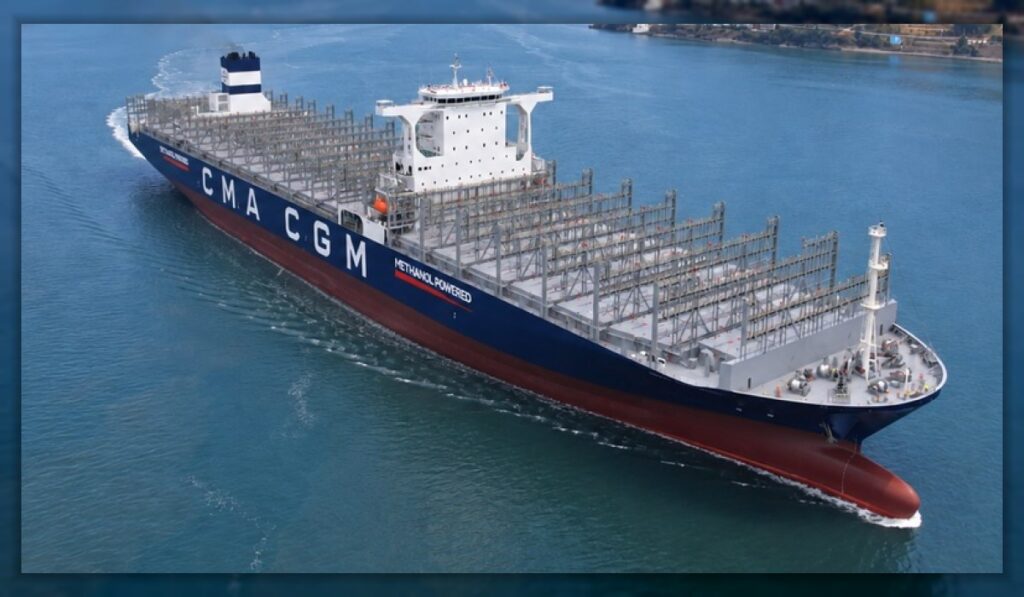
HD Hyundai has delivered the world’s first containership designed to eliminate manual lashing, a development that removes one of the most labor-intensive tasks in container shipping. The 13,000 TEU vessel, powered by a methanol dual-fuel system, was handed over to French shipping company CMA CGM after construction at HD Hyundai’s yards in South Korea.
The vessel incorporates HD Hyundai’s proprietary hybrid lashing-free technology, which replaces traditional steel rods and lashing equipment with an extended cell guide system. These guides, typically used below deck to align containers, now extend above deck, securing cargo without manual intervention.
How the lashing-free system works: lashing-free containership
A key innovation is the portable bench—a standardized structure the size of a 40-foot container—installed between the cell guides. This allows terminal cranes to handle it as part of routine cargo operations. Containers positioned outside the cell guides are secured directly to the hull using a newly developed twist-lock routing system, enhancing stability.
Sea trials in September confirmed the design’s advantages, including over 10% more deck cargo capacity compared to similar vessels and reduced vibration. The system also improves operational stability in heavy weather, addressing risks like cargo shifting and loss.
The technology has already gained regulatory recognition, presented to the IMO’s Sub-Committee on Carriage of Cargoes and Containers in 2024 and secured under multiple patents. HD Hyundai plans to expand the system to smaller and mid-sized vessels, potentially transforming global shipping operations.
Implications for the shipping industry
By automating container securing, the lashing-free design aligns with industry trends toward unmanned operations and greater efficiency. The increased cargo capacity and reduced labor requirements could lower costs and environmental impact per container transported, supporting the sector’s decarbonization goals.
This milestone marks a shift in container shipping, offering a safer, more efficient alternative to conventional methods as global trade demands evolve.


Sign up free to ask CAMAL AI for a summary, the key points or anything else about this story.
Related stories
CAMAL AI
 Financial Ports Newsletter
The maritime economy, every morning
Ports, shipping and freight markets in one short email. Free.
Financial Ports Newsletter
The maritime economy, every morning
Ports, shipping and freight markets in one short email. Free.



