

Alaska LNG: Why South Korea’s $50bn Gamble Is Hitting a Wall
Vice President JD Vance admits ‘details’ remain unresolved as Seoul demands commercial feasibility before committing.
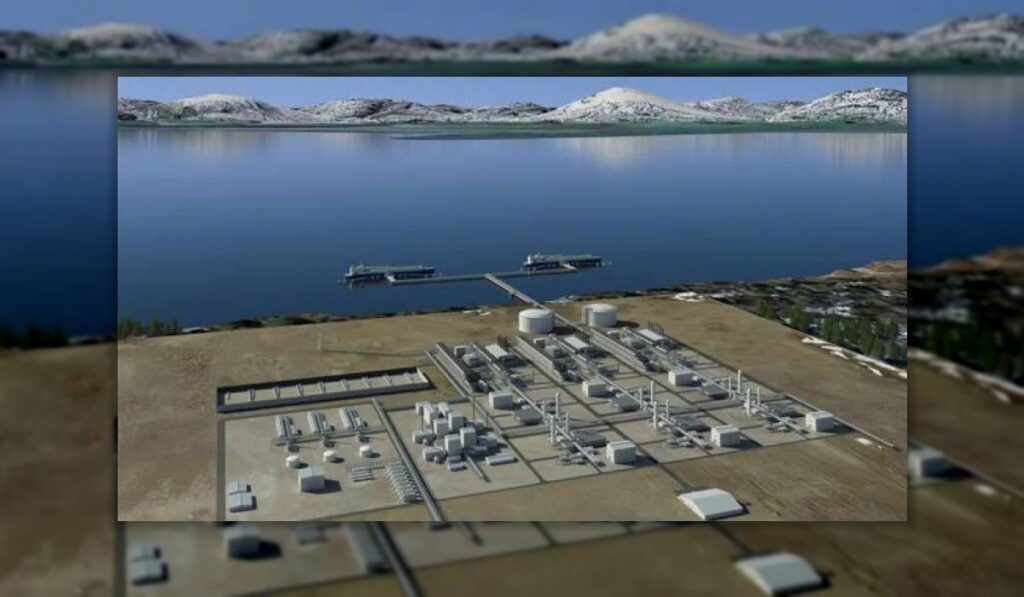
history, faces fresh scrutiny after South Korea’s government declared the White House-backed investment deal “not yet finalised". Vice President JD Vance acknowledged on Monday that “details” remain unresolved, casting doubt on the timeline for the 800-mile project connecting Alaska’s North Slope to a liquefaction plant on the Gulf of Alaska.
The Alaska LNG pipeline, designed to deliver 20 million tonnes per annum of liquefied natural gas to Asian markets, has been plagued by financial and logistical challenges since its inception. Originally backed by oil majors BP, ExxonMobil, and ConocoPhillips, all three companies withdrew by 2016, leaving the state-owned Alaska Gasline Development Corporation and investment firm Glenfarne Group to spearhead the project.
The estimated cost of $45-55 billion, equivalent to up to $2.7 billion per mtpa, makes it one of the most capital-intensive LNG ventures globally, nearly three times the cost of comparable Gulf Coast projects.
Natural Gas
Why South Korea’s Investment Is Critical
However, Seoul’s Ministry of Trade has since clarified that no final decision has been made, stating that a review based on “commercial rationality and domestic legal procedures” is still underway.
“We are initiating a review premised on commercial rationality and domestic legal procedures, and neither the decision on whether to invest nor the scale has been determined,” the ministry said in a statement. The project’s high capital expenditure and lack of binding sales contracts, only preliminary offtake commitments totalling 13 mtpa, have raised concerns among South Korean regulators and lawmakers.
Choi Su-jin, a lawmaker from the opposition People Power Party, criticised the proposed terms as “a typical unfair and toxic contract” in which South Korea would assume the full $50 billion risk without U.S. federal guarantees.
“It is a typical unfair and toxic contract in which the South Korean government fully assumes the astronomical funds and risks of $50 billion. without any U.S. federal guarantee.”
Choi Su-jin·Lawmaker, People Power Party
The financial viability of the project is further complicated by its remote location. The pipeline must traverse rugged, sparsely populated regions of central Alaska, where harsh seasonal weather and logistical challenges drive up construction and maintenance costs. suppliers.
The Political Stakes and What Comes Next
On Friday, Trump threatened to penalise South Korea if it did not follow through on the announced deal, telling reporters, “If they don’t want to do it, that’s OK with me. I’ll just charge them more. Tell them if they don’t sign shortly, I’m going to double it up.".
“If they don’t want to do it, that’s OK with me. I’ll just charge them more. Tell them if they don’t sign shortly, I’m going to double it up.”
President Donald Trump·U.S. President
“I think this is something that’s going to happen. Obviously, there are still some details that have to be worked out, and the Koreans have mentioned that,” Vance told Reuters.
The uncertainty surrounding the Alaska LNG pipeline is not limited to its financial and logistical hurdles. South Korea’s Ministry of Trade, Industry and Energy has pushed back against the White House’s characterisation of the deal as finalised, with Minister Kim Jung-Kwan stating that describing the investment as settled “went far beyond” the current state of discussions. The ministry’s cautious stance reflects broader concerns about the project’s commercial feasibility and the potential risks for South Korean taxpayers.
For Alaska, the pipeline represents a lifeline for its economy and state budget, which has struggled with declining oil revenues. The project is expected to create thousands of jobs and generate significant tax revenue, but its success hinges on securing long-term buyers and financing. With only 13 mtpa in preliminary offtake commitments and no binding sales contracts, the project’s sponsors face an uphill battle to attract the necessary capital.
A former senior State of Alaska official with experience on the project warned that the lack of progress is concerning. “Currently, there is no evidence that any entity is willing to fund this project, nor is there any evidence that customers have stepped forward to purchase the gas,” the official told Chosun Ilbo.
The next steps for the Alaska LNG pipeline remain unclear. South Korea’s Ministry of Trade is expected to conduct a thorough review of the project’s feasibility, while U.S. officials continue to press for a swift resolution. For now, the $55 billion question, whether the pipeline will move from the drawing board to reality, remains unanswered. Stakeholders will be watching closely as the two governments navigate the delicate balance between geopolitical ambitions and commercial realities.
In the meantime, the broader $200 billion U.S.-Korea trade and investment package, which includes the Alaska LNG pipeline, faces its own set of challenges. South Korea’s Industry Ministry has reportedly disputed an $8.4 billion investment in an enhanced oil recovery project announced by Trump, further complicating the bilateral economic relationship. As negotiations continue, the fate of Alaska LNG could serve as a bellwether for the future of U.S.-Korea energy cooperation.


Sign up free to ask CAMAL AI for a summary, the key points or anything else about this story.
Related stories
CAMAL AI
 Financial Ports Newsletter
The maritime economy, every morning
Ports, shipping and freight markets in one short email. Free.
Financial Ports Newsletter
The maritime economy, every morning
Ports, shipping and freight markets in one short email. Free.



