

South Korea Boosts Patrol Fleet to $1.6bn as Illegal Fishing Surges
Seoul allocates $266m to expand its 3,000-ton patrol fleet from 11 to 17 vessels by 2030.
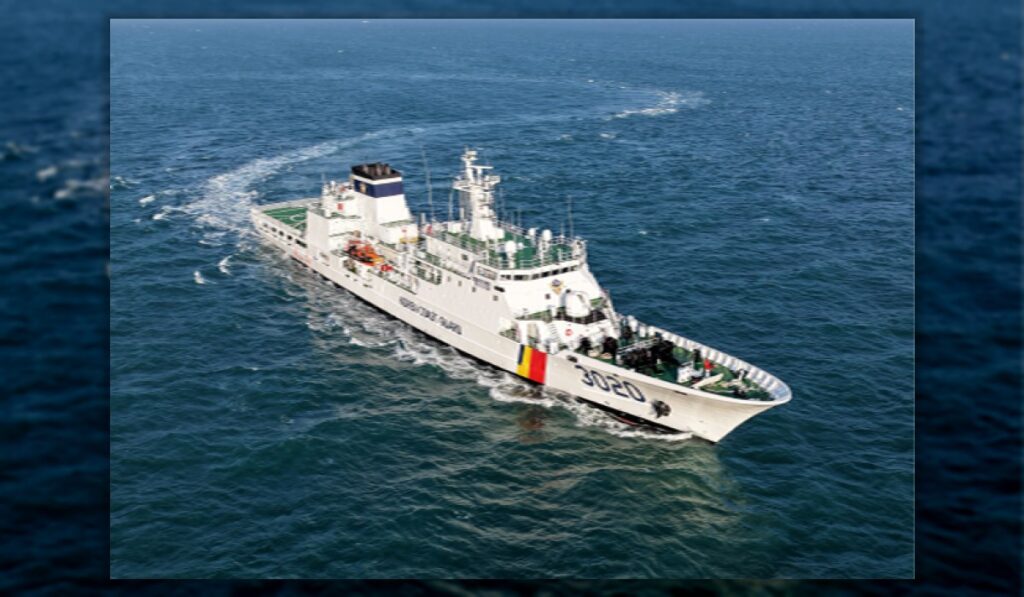
South Korea will expand its coastguard fleet with six new 3,000-tonne patrol vessels by 2030, backed by a 6.7% budget increase to 2.2 trillion won ($1.6 billion) for 2027. The move targets rising illegal fishing in the Yellow Sea and reinforces maritime sovereignty near disputed waters.
The Ministry of Planning and Budget announced the plan after reviewing operations in the West Sea, where Chinese fishing boats frequently breach the Northern Limit Line. Officials confirmed the fleet expansion will include one vessel commissioned next month and another by late 2027, with three more added by 2030.
Why the expansion matters for maritime security: South Korea
The Korea Coast Guard (KCG) is South Korea’s primary maritime law enforcement agency, responsible for patrolling the country’s 12-nautical-mile territorial waters and exclusive economic zone (EEZ). Established in 1953, the KCG operates under the Ministry of Oceans and Fisheries, with a mandate to combat illegal fishing, smuggling, and maritime terrorism, while also conducting search-and-rescue operations.
The new 3,000-tonne patrol vessels are designed for long-range patrols, with a 6,000-nautical-mile range, 122-metre length, and armaments including 40mm and 20mm naval guns. Each ship carries 85 crew and features helicopter landing facilities, enabling rapid response to illegal fishing and smuggling. These capabilities are critical for monitoring the Northern Limit Line (NLL), a de facto maritime boundary in the Yellow Sea that North Korea does not recognise, leading to frequent confrontations.
“To strengthen security response systems in key waters, such as the broad maritime areas of the West Sea and zones with undelimited maritime boundaries, the government plans to increase the number of 3,000-ton class patrol vessels in the West Sea,” the ministry stated. The Korea Coast Guard’s national policy emphasises “unwavering maritime sovereignty and safe waters.”
The West Sea, also known as the Yellow Sea, is a hotspot for illegal fishing, particularly by Chinese vessels. South Korea’s EEZ in this region is rich in squid and other marine resources, making it a target for poachers. The KCG has reported a steady increase in illegal fishing incidents, with Chinese boats often ignoring warnings and entering South Korean waters. The new patrol vessels will enhance the KCG’s ability to intercept and deter such activities, reducing the economic losses estimated at $100 million annually.
The budget also allocates $65.5 million for smaller 500-tonne enforcement vessels, with construction of two starting in 2026 and two more in 2027. These vessels will focus on intercepting illegal fishing boats, a persistent issue in the Korea-China Provisional Measures Zone, a designated area where fishing activities are regulated but frequently violated.
Timeline and funding for the fleet upgrade
The expansion is phased, with $32 million earmarked to complete a vessel already under construction and $37 million to start three more. The total investment for the 3,000-tonne-class programme reaches $266 million, while the 500-tonne vessels will cost $65.5 million. This funding reflects the South Korean government’s commitment to modernising its maritime enforcement capabilities amid growing challenges in the region.
The Korea Coast Guard’s 2027 budget proposal, totalling KRW 2.2291 trillion ($1.64 billion), represents a 6.7% increase from the 2026 budget of KRW 2.0885 trillion ($1.54 billion). This growth is driven by the need to address rising maritime threats, including illegal fishing, smuggling, and territorial disputes. The budget also includes KRW 62.9 billion ($46.3 million) from a state property fund, bringing the total proposed financial resources for 2027 to KRW 2.292 trillion ($1.69 billion).
In addition to vessels, the budget includes KRW 2.5 billion ($1.8 million) for protective equipment and KRW 2.1 billion ($1.5 million) for training facilities. The coastguard will also deploy 22 coastal patrol drones in 2027, scaling to 154 drones across 77 stations by 2029. These drones will enhance surveillance capabilities, allowing the KCG to monitor vast maritime areas more efficiently and respond to incidents in real time.
Recent enforcement operations highlight the urgency: on 11 August, 31 coastguard vessels intercepted 8 Chinese fishing boats near Yeonpyeong Island, ordering 24 others to leave. The crackdown reflects broader tensions over illegal fishing, which costs South Korea an estimated $100 million annually in lost revenue. The operation followed a wider enforcement plan announced on 27 August, aimed at curbing illegal activities in the Yellow Sea.
The Yellow Sea, bordered by South Korea, China, and North Korea, is one of the world’s most strategically significant maritime regions. It serves as a critical route for commercial shipping, connecting major ports in China and South Korea, including Busan, Incheon, and Qingdao. The sea is also rich in marine resources, making it a prime fishing ground and a frequent site of territorial disputes.
The Northern Limit Line (NLL), established by the United Nations Command after the Korean War, serves as the de facto maritime boundary between North and South Korea. However, North Korea does not recognise the NLL, leading to periodic clashes. The KCG’s expanded fleet will play a crucial role in monitoring this boundary, deterring provocations, and ensuring the safety of commercial vessels transiting the area.
The Korea-China Provisional Measures Zone, established in 2016, was intended to reduce fishing disputes between South Korea and China. However, violations remain common, with Chinese boats frequently entering South Korean waters to exploit the region’s rich squid stocks. The new patrol vessels will enable the KCG to enforce regulations more effectively, reducing the economic impact of illegal fishing on South Korea’s fishing industry.
The Korea Coast Guard’s fleet expansion has significant implications for the shipping industry. The Yellow Sea is a vital corridor for global trade, with thousands of commercial vessels passing through annually. The KCG’s increased presence will enhance maritime safety, reducing the risks of collisions, smuggling, and unauthorised transits. This is particularly important for container ships and tankers, which rely on secure shipping lanes to transport goods efficiently.
The upgrade also signals South Korea’s commitment to maintaining stability in the region. The 3,000-tonne patrol vessels’ extended range and advanced capabilities will allow the KCG to respond more effectively to maritime incidents, including search-and-rescue operations and environmental disasters. For example, the vessels’ helicopter landing facilities enable rapid deployment of medical teams or disaster response units, improving outcomes in emergencies.
For local fishermen, the KCG’s enhanced enforcement capabilities offer greater protection against illegal fishing, which has long undermined their livelihoods. The new vessels will help ensure that South Korean fishermen can operate without competition from unauthorised foreign boats, supporting the sustainability of the country’s fishing industry.
The fleet expansion is part of South Korea’s broader maritime strategy, which includes strengthening cooperation with neighbouring countries to address shared challenges. The KCG regularly conducts joint exercises with the Japan Coast Guard and the United States Coast Guard, focusing on anti-piracy, search-and-rescue, and environmental protection. These collaborations enhance regional security and foster trust among maritime nations.
The Korea Coast Guard’s fleet expansion is already underway, with the first new 3,000-tonne patrol vessel set for commissioning in October 2026. The second vessel will follow in the second half of 2027, with three more added by 2030. The 500-tonne enforcement vessels will begin construction in 2026, with two additional vessels starting in 2027.
For stakeholders in the shipping and fishing industries, the KCG’s increased presence will bring greater security and predictability to operations in the Yellow Sea. Companies and fishermen are encouraged to stay informed about enforcement updates through the Korea Coast Guard’s official website, which provides real-time alerts and operational reports.
The Ministry of Oceans and Fisheries will also publish regular updates on the fleet expansion, including construction milestones and deployment schedules. These updates will be available on the ministry’s official website, offering transparency on the progress of the project.
With the first vessel set to enter service next month, the Korea Coast Guard’s expanded fleet will gradually enhance its operational reach, ensuring more robust patrols in the Yellow Sea and beyond. This upgrade underscores South Korea’s determination to safeguard its maritime interests and maintain stability in one of the world’s most critical shipping corridors.


Sign up free to ask CAMAL AI for a summary, the key points or anything else about this story.
Related stories
CAMAL AI
 Financial Ports Newsletter
The maritime economy, every morning
Ports, shipping and freight markets in one short email. Free.
Financial Ports Newsletter
The maritime economy, every morning
Ports, shipping and freight markets in one short email. Free.