

UN Negotiates Ban on Seamount Trawling by 2027
A proposal to phase out bottom trawling on seamounts in international waters could be agreed this week.
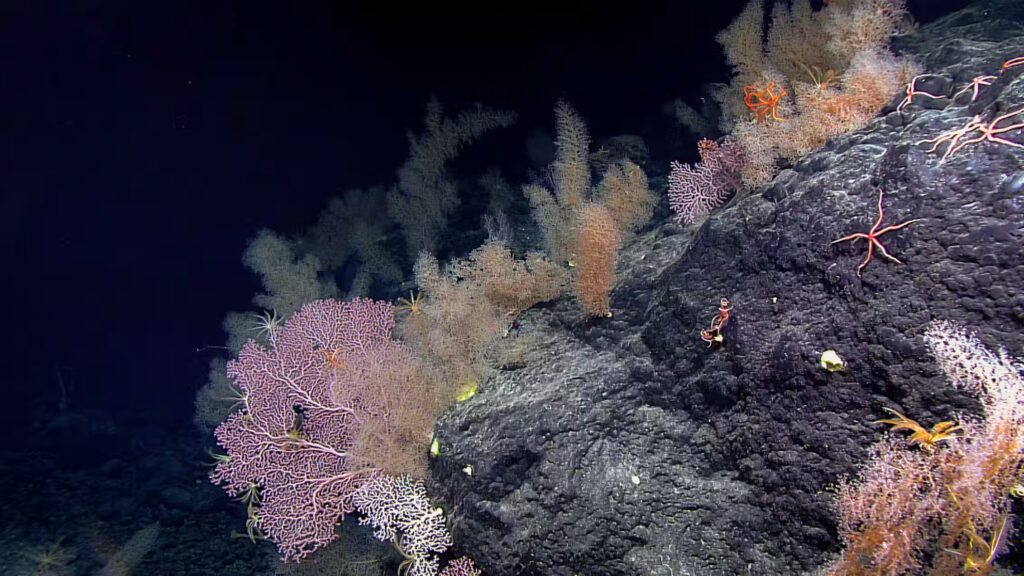
The United Nations is negotiating a landmark proposal to phase out bottom trawling on seamounts in international waters by the end of 2027, a move scientists say is critical to protecting these underwater biodiversity hotspots from irreversible damage.
They act as oases in the open ocean, supporting cold-water coral reefs, ancient sponges, and species such as fish, turtles, sharks, and whales. Yet for decades, these ecosystems have been targeted by bottom trawlers, whose weighted nets scour the seabed, destroying centuries-old marine life in a single pass.
Why bottom trawling is devastating seamounts
Bottom trawling is the most destructive fishing practice on seamounts. Vessels drag nets 80 to 200 metres wide, held open by metal doors weighing up to five tonnes, across the slopes and summits of these underwater mountains. The nets scoop up commercially valuable species like orange roughy and toothfish, but the collateral damage is catastrophic.
These organisms provide shelter, feeding grounds, and nurseries for marine life, much like trees and shrubs on land. Once destroyed, their ecological roles are lost, and scientists have found no evidence of full recovery even 40 years after trawling stops.
David Attenborough’s recent documentary, Ocean, highlighted the scale of the destruction, offering rare footage of trawled seamounts. The United Nations has described bottom trawling as the “greatest current threat to seamount ecosystems.”
Where trawling persists, and where progress is being made
Twenty years have passed since the UN first called for the protection of vulnerable marine ecosystems like seamounts. Yet almost all seamounts in international waters remain exposed to trawling. This week, nations are negotiating the UN’s Sustainable Fisheries Resolution, which includes a proposal to ban the practice on seamounts in international waters by the end of 2027. If agreed, it would mark the first concrete measure with a deadline to protect these ecosystems.
Some progress has already been made. Bottom trawling is no longer permitted on seamounts of fishable depths in the Northwest Atlantic, and parts of the Atlantic and Indian Oceans have also closed seamounts to trawlers. However, these protections cover just 1.5% of known seamounts. In the South Pacific, seamounts and underwater ridges like the Lord Howe Rise, lying off Australia’s east coast, are still being trawled.
Momentum for protection has been building. The 2022 Global Biodiversity Framework set a goal of protecting 30% of the oceans by 2030, and conservation bodies like the International Union for Conservation of Nature (IUCN) have pushed for stronger measures. The UN Convention on Migratory Species adopted a resolution on seamount conservation, and the High Seas Treaty (BBNJ Agreement) came into effect this year, improving protections for marine life in international waters.
Scientific support for the ban is overwhelming. Over 400 scientists have signed the Seamounts Proclamation, urging governments to act on the evidence and end bottom trawling on seamounts in international waters. The question is whether momentum and scientific evidence will translate into a firm agreement.”
Australia, a major ocean nation, has long taken a strong stance on bottom trawling in international waters and played a key role in fisheries management in the South Pacific.
«Greatest current threat to seamount ecosystems.»
United Nations·International organisation


Sign up free to ask CAMAL AI for a summary, the key points or anything else about this story.
Related stories
CAMAL AI
 Financial Ports Newsletter
The maritime economy, every morning
Ports, shipping and freight markets in one short email. Free.



