

70th US Airstrike on Drug Boats Kills Four as UN Calls Attacks Illegal
US Southern Command’s 70th lethal strike in the Caribbean raises total fatalities to 234.
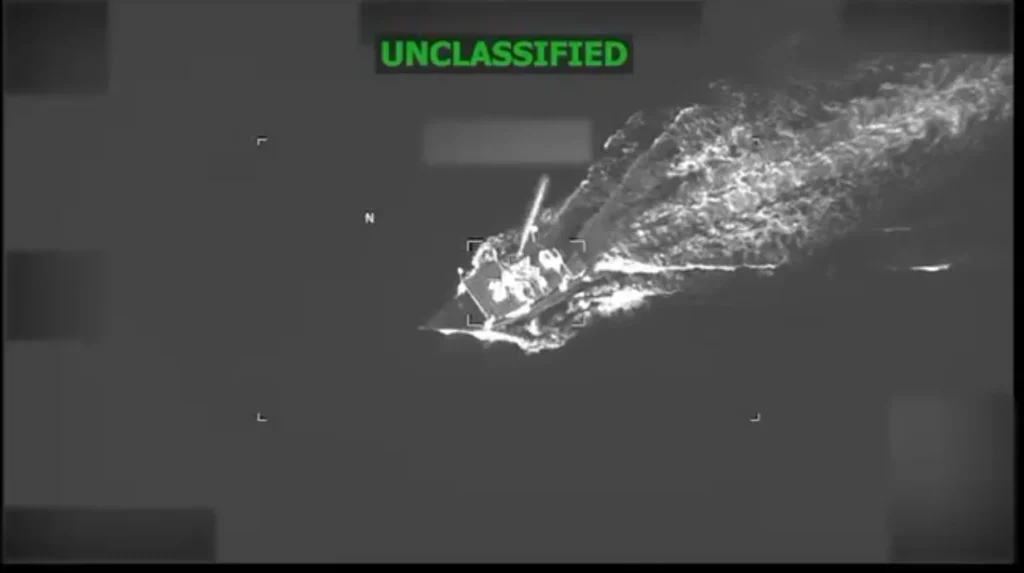
The U.S. Southern Command (Southcom) has carried out its 70th lethal airstrike against a suspected drug-running vessel in the Caribbean, killing four people and pushing the death toll in the campaign to 234. The strike, conducted on September 19, 2026 (Friday), targeted a boat operating on “established narco-trafficking routes,” according to Southcom, which cited confirmed intelligence linking the vessel to illicit narcotics smuggling.
The latest operation highlights the dual approach of U.S. counternarcotics efforts in the region: lethal force when aerial assets are the sole means of engagement, and nonlethal boarding operations when Coast Guard or Marine Corps teams are involved. In the past two weeks alone, Marine Corps units have boarded and destroyed two “floating gas station” fuel boats in the Eastern Pacific, handing over suspects to Ecuadorian authorities.
The vessel targeted in the latest strike was described as moving at moderate speed with a cluttered top deck or canopy, a departure from the stripped-down “go-fast” boats typically used by traffickers. Southcom released a seven-second video of the strike, though it did not specify the type of illicit substances allegedly carried by the vessel.
Royal Caribbean
The U.S. military’s use of lethal force against suspected drug boats has drawn sharp criticism from the United Nations. A brief released on September 20, 2026, by U.N. Special Rapporteur on counter-terrorism and human rights Ben Saul condemned the strikes as violations of international law, human rights, and potential crimes against humanity. The report argues that the U.S. justification of self-defense does not apply, as the individuals aboard the vessels did not pose an imminent lethal threat.
The Strike: What Happened on September 19: us airstrikes
“The United States military attacks are, however, contrary to international law, violate the human right to life, and plausibly constitute crimes against humanity,” Saul wrote. The report further contends that transporting narcotics does not qualify as an “armed attack” under international law, as the harm caused by drugs is too distant from the act of smuggling itself.
“Such acts are also too causally distant to be regarded as an attack, since deaths may result only after a chain of intervening events, including distribution, sale and consumption in a manner that is excessive or otherwise unsafe,” the brief states.
The U.N. also rejected the U.S. argument that the strikes fall under humanitarian law or the law of the sea. “The law of the sea does not authorize the offensive military targeting of vessels allegedly trafficking narcotics (that is, outside the law of national self-defense, humanitarian law, or personal self-defense or defense [of] others from an imminent lethal threat to life), even with flag State consent,” the report concluded.
Despite the criticism, Southcom Commander Gen. Francis L. Donovan has defended the operations as necessary to dismantle narco-terrorist networks. “We are exerting unrelenting pressure on these narco-terrorists and hurting them where it counts: dismantling their intricate networks, disrupting their sophisticated logistics, and dealing a blow to their finances,” Donovan said in a statement. “This is what total systemic friction looks like.”
Legal and Humanitarian Concerns
In addition to the military operations, the U.S. has secured agreements with Colombia, Guatemala, and Honduras to conduct joint military operations against criminal groups on their soil. eliminar ‘Defense Secretary Pete Hegseth’ (no verificado) also visited Panama earlier this month, underscoring the regional focus of the campaign.
While Southcom has emphasized the precision of its operations, the risk of misidentification remains a concern, particularly in areas with heavy maritime traffic. The U.S. Coast Guard and Navy have not issued specific advisories for commercial vessels, but industry groups have called for clearer guidelines to avoid unintended engagements.
The next steps in the campaign remain unclear. Southcom has not indicated whether it plans to adjust its tactics in response to the U.N. criticism or if further strikes are imminent. However, the command’s rhetoric suggests that the operations will continue unabated, with Donovan’s statements framing the effort as a long-term battle against transnational criminal organizations.
For now, the 70th strike serves as a stark reminder of the escalating conflict in the region’s waters, and the legal and humanitarian debates it has ignited.


Sign up free to ask CAMAL AI for a summary, the key points or anything else about this story.
Related stories
CAMAL AI
 Financial Ports Newsletter
The maritime economy, every morning
Ports, shipping and freight markets in one short email. Free.
Financial Ports Newsletter
The maritime economy, every morning
Ports, shipping and freight markets in one short email. Free.



