

US Navy’s Shipbuilding Crisis: Why Korea Holds the Key to Survival
Washington turns to Seoul after decades of delays, cost overruns, and a fleet shrinking despite ballooning budgets.
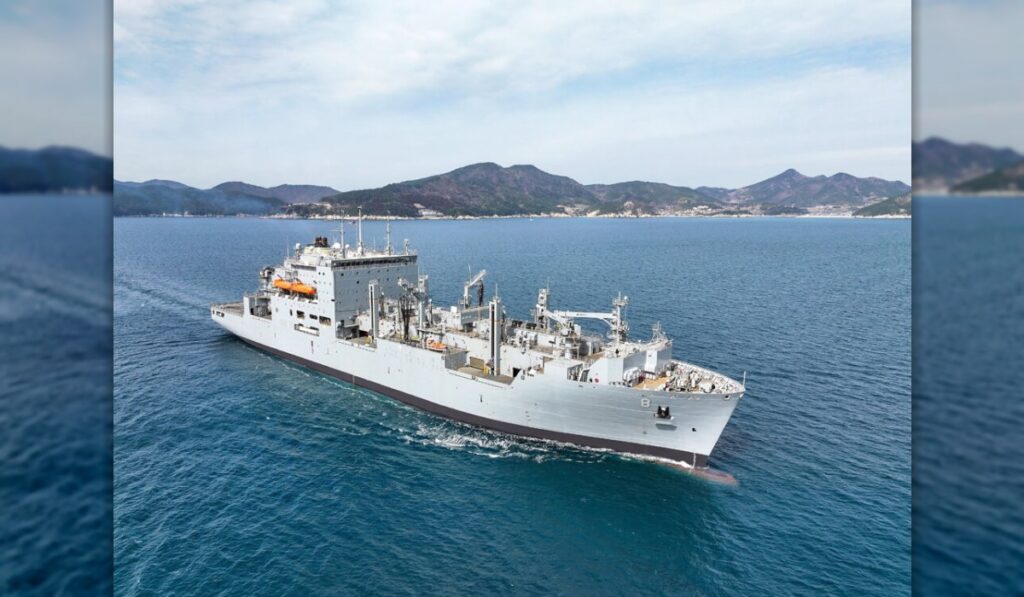
The US Navy’s shipbuilding crisis has reached breaking point. May 2026 2026 Shipbuilding Plan marks a radical shift: stable long-term demand, foreign investment in American yards, and even overseas construction of some naval vessels. But can US institutions adapt fast enough to harness Korean expertise against China’s maritime dominance?
The numbers tell a grim story. The US battle-force fleet peaked at 568 ships in 1987, but by 2015 had collapsed to just 271. Despite a shipbuilding budget that has doubled over the past two decades, the Navy’s fleet in 2026 stands at 291 ships, smaller than it was in 2003. The statutory target of 355 ships remains a distant dream, with the FY2027 projection forecasting just 299 by 2031.
The crisis runs deeper than delayed deliveries. The US maritime-industrial base has atrophied. Shipbuilding employment has plummeted from 198,700 in 1980 to 145,700 in 2025, while submarine production alone is estimated to require 100,000 additional workers. Virginia-class-class submarine program, a cornerstone of US naval power, limps along at 1.1-1.2 boats per year, half the long-stated target of two. Maintenance backlogs compound the problem, with ships spending more time in dry dock than at sea.
Hanwha Ocean
The root cause lies in the collapse of America’s commercial shipbuilding sector. Meanwhile, the commercial shipbuilding workforce has dwindled, leaving the Navy dependent on a shrinking pool of expertise.
The consequences are stark. The yard’s three floating docks require approximately $5 millionlion annually in preventive maintenance alone, yet its skilled-trade workforce has fluctuated between 190 and 275 workers in recent months.
Enter South Korea. Shipbuilding Partnership Initiative (KUSPI), launched in May 2025, formalises the collaboration, with the Korea-U.S.
Hanwha’s $5bn investment in Philly Shipyard, acquired in December 2024, aims to ramp up annual output from fewer than two ships to as many as twenty. The plan includes modernising the yard’s infrastructure, expanding its workforce, and integrating Korean production techniques. HD Hyundai’s partnership with Huntington Ingalls Industries, meanwhile, could bring Korean module fabrication to US yards. The goal? Distributed shipbuilding, with up to 50% of work performed at overseas sites, up from just 10% today.
Shipbuilding Partnership Center (KUSPC), opened in Washington on 23 July 2026, serves as the hub for this collaboration. The centre, accompanied by fifteen agreements between Korean and US firms, focuses on technology transfer, workforce development, and supply chain integration. One key initiative is the Korea-U.S.
Strategic Investment Corporation, which channels private and public funding into modernising US shipbuilding infrastructure. The Multi-Year Acquisition and Sustainment Global Alliance (MASGA), a $150bn commitment announced in 2026, further underpins these efforts, with government-funded wage increases at Electric Boat and Newport News reducing attrition by up to five percentage points.
But political hurdles loom. The FY2027 National Defense Authorization Act, passed by the House, seeks to bar federal funding for warships built in foreign yards. The provision reflects longstanding protectionist sentiment in Congress, where lawmakers argue that outsourcing naval construction undermines American jobs and security.
Yet the Navy’s May 2026 plan makes clear that without Korean expertise, the US cannot hope to match China’s maritime-industrial juggernaut. The Indo-Pacific’s balance of power may hinge on whether Washington can reconcile its strategic needs with domestic political realities.
China’s sanctions on Hanwha Ocean entities, imposed in October 2025 before being suspended for a year, underscore the geopolitical risks. The sanctions targeted five US-linked Hanwha subsidiaries, including Hanwha Philly Shipyard, in retaliation for Washington’s support of Seoul’s defence partnerships. While the suspension offers temporary relief, the episode highlights the fragility of transpacific industrial alliances in an era of great-power competition.
What This Means for the Global Maritime Industry: Shipbuilding
The US-Korean partnership is more than a stopgap measure, it is a blueprint for the future of naval shipbuilding. For the US, the collaboration offers a lifeline to revive its stagnant industrial base. For South Korea, it provides access to the world’s largest defence market, while diversifying its customer base beyond commercial shipping. The implications extend beyond military vessels. The techniques honed in naval shipbuilding, modular construction, digital design, and distributed manufacturing, could spill over into commercial sectors, reshaping global supply chains.
For shipowners and operators, the shift could accelerate the adoption of hybrid construction models. The US Navy’s embrace of distributed shipbuilding, where components are fabricated in multiple locations before final assembly, may set a precedent for commercial fleets. This approach could reduce lead times, lower costs, and mitigate risks associated with single-yard dependencies. However, it also introduces new complexities, such as coordinating logistics across borders and ensuring consistent quality standards.
The stakes are clear. The Indo-Pacific’s balance of power hinges on whether the US can rebuild its shipbuilding base, or whether it will cede the seas to Beijing. For now, the answer lies in Seoul. But the clock is ticking. China’s yards, which accounted for just 5% of global output in 1999, now command more than half, with no signs of slowing. If the US and South Korea fail to deliver, the maritime order of the 21st century may be written in Shanghai, not Washington or Seoul.
For industry stakeholders, the message is unambiguous: adapt or risk irrelevance. The US Navy’s May 2026 plan is not just a policy document, it is a call to action. Shipbuilders, suppliers, and policymakers must collaborate to modernise infrastructure, upskill workforces, and streamline procurement.
Shipbuilding Partnership Center (KUSPC) serves as a critical resource, offering guidance on technology transfer, regulatory compliance, and workforce development. Meanwhile, the Korea-U.S. Strategic Investment Corporation provides financial incentives for firms willing to invest in US-based production.
The next steps are clear. The US must accelerate its adoption of Korean production techniques, while South Korea must navigate the political and geopolitical minefields of transpacific collaboration. For the maritime industry, the partnership offers a rare opportunity to reshape global supply chains, but only if both sides can overcome their respective challenges. The alternative is a world where China’s maritime dominance goes unchallenged, with profound implications for trade, security, and economic stability.


Sign up free to ask CAMAL AI for a summary, the key points or anything else about this story.
Related stories
CAMAL AI
 Financial Ports Newsletter
The maritime economy, every morning
Ports, shipping and freight markets in one short email. Free.
Financial Ports Newsletter
The maritime economy, every morning
Ports, shipping and freight markets in one short email. Free.



