

Acta Hercules: The €60m CSOV Powering Offshore Wind’s Future
Acta Marine christens its second methanol-ready CSOV, strengthening its fleet to seven vessels by year-end.
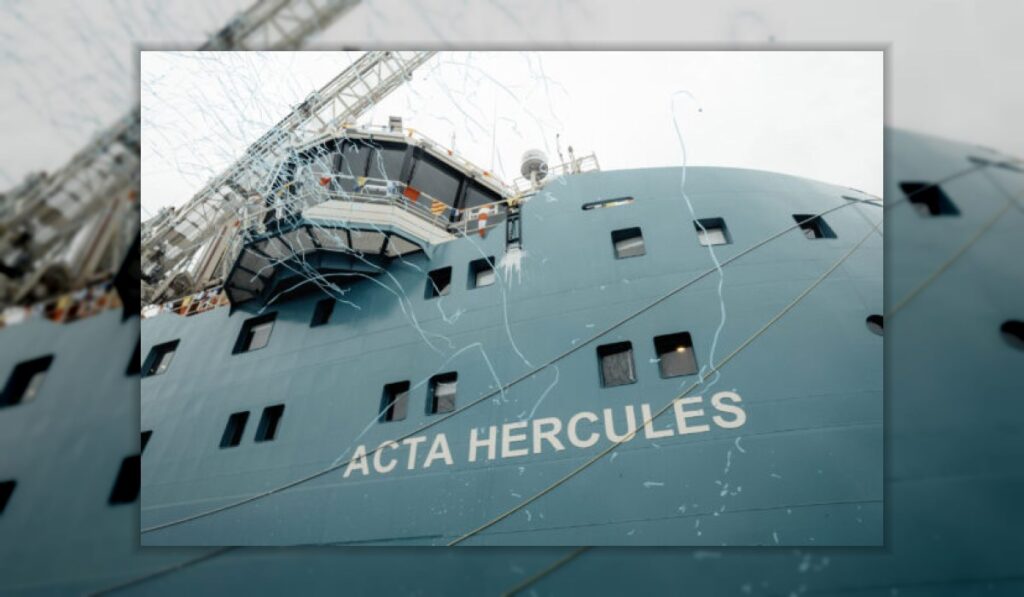
Acta Marine has christened its latest methanol-ready Commissioning Service Operation Vessel (CSOV), Acta Hercules, in a ceremony held in IJmuiden, the Netherlands, on 5 October 2026.
The company’s fleet expansion reflects its commitment to scaling operations in line with the global push for renewable energy.
Rob Boer, CEO of Acta Marine, highlighted the vessel’s strategic importance:
“Today marks a proud milestone for everyone at Acta Marine. Although Acta Hercules is already successfully supporting our client Vestas, this christening provides an opportunity to recognise the many people, partners and organisations who contributed to her development, construction and delivery. Acta Hercules strengthens our ability to support clients in the rapidly growing offshore wind market.”
Rob Boer·CEO of Acta Marine
The vessel’s deployment under a long-term charter for Vestas, a global leader in wind energy, reflects the increasing demand for specialised support in offshore wind farms.
Sustainability at the Core of Acta Hercules’s Design
The offshore wind sector is under increasing pressure to reduce its environmental footprint, and Acta Hercules is designed to meet this challenge. The vessel’s methanol dual-fuel engines and advanced battery energy storage system significantly lower emissions compared to conventional diesel-powered vessels.
The integration of battery storage further enhances the vessel’s sustainability credentials. The system allows for energy optimisation during operations, reducing fuel consumption and emissions. This is particularly critical for vessels like Acta Hercules, which spend extended periods at sea supporting offshore wind projects. The combination of methanol dual-fuel capability and battery storage positions Acta Hercules as a leader in sustainable maritime operations within the offshore wind sector.
What Acta Hercules Means for the Offshore Wind Supply Chain
The deployment of Acta Hercules under a long-term charter for Vestas highlights the growing demand for specialised vessels in the offshore wind industry. As offshore wind farms move further from shore and into deeper waters, the need for vessels capable of supporting complex operations in harsh conditions has become paramount. CSOVs like Acta Hercules are designed to bridge this gap, offering the flexibility and technical capabilities required for the construction, commissioning, and maintenance of offshore wind turbines.
For offshore wind developers, the availability of specialised vessels is a critical factor in project planning. Delays in vessel availability can lead to cost overruns and project delays, making long-term charters with reliable operators like Acta Marine a strategic priority. The vessel’s ability to accommodate up to 135 personnel also addresses the industry’s need for efficient crew transfers, reducing downtime and improving project timelines.
Acta Hercules’s role in the offshore wind supply chain extends beyond its immediate operational capabilities. The vessel’s advanced technology and sustainability features set a benchmark for future CSOV designs, encouraging other operators to adopt similar innovations. This, in turn, supports the broader industry’s transition toward decarbonisation and operational efficiency.
Acta Hercules joins Acta Pegasus and Acta Gemini as the third vessel delivered in Acta Marine’s four-CSOV programme. The final vessel, Acta Aquarius, is expected to join the fleet later this year, bringing the total number of dedicated Walk-to-Work and Construction Service Operation Vessels to seven. This expansion aligns with Acta Marine’s long-term strategy to support the full lifecycle of offshore energy projects across Europe, from construction to maintenance and decommissioning.
The fleet’s modernisation also reflects the industry’s shift toward sustainability. Acta Hercules’s methanol dual-fuel capability and battery storage system reduce emissions compared to conventional vessels, aligning with the offshore wind sector’s decarbonisation goals. As offshore wind capacity grows, projected to reach 450 GW globally by 2030, vessels like Acta Hercules will play a pivotal role in ensuring efficient and environmentally responsible operations.
For stakeholders in the offshore wind sector, Acta Marine’s fleet expansion offers a glimpse into the future of maritime support for renewable energy projects. The company’s focus on sustainability, operational efficiency, and scalability positions it as a key player in Europe’s offshore wind ambitions. With Acta Aquarius set to join the fleet later this year, Acta Marine is well on its way to becoming a leading provider of specialised vessels for the offshore wind industry.
Acta Marine’s fleet expansion and the deployment of Acta Hercules are part of a broader trend in the offshore wind sector. Industry stakeholders, including developers, vessel operators, and policymakers, can stay informed on the latest developments by following updates from Acta Marine’s official channels.
For those interested in the technical specifications and operational capabilities of Acta Hercules and other CSOVs, industry reports and maritime publications often feature in-depth analyses of vessel designs and their impact on offshore wind projects. Additionally, organisations like the International Maritime Organization (IMO) and the Global Wind Energy Council (GWEC) provide updates on regulatory developments and industry trends that shape the future of offshore wind and maritime operations.
For Acta Marine, the christening of Acta Hercules is more than a ceremonial milestone; it’s a statement of intent. With a fleet of seven specialised CSOVs by year-end, the company is positioning itself as a key enabler of Europe’s offshore wind ambitions, offering scalable solutions for an industry in rapid transition.


Sign up free to ask CAMAL AI for a summary, the key points or anything else about this story.
Related stories
CAMAL AI
 Financial Ports Newsletter
The maritime economy, every morning
Ports, shipping and freight markets in one short email. Free.
Financial Ports Newsletter
The maritime economy, every morning
Ports, shipping and freight markets in one short email. Free.



