

210,000-Tonne Tri-Fuel Giants: The Ships
MOL and Vale sign 25-year deal for world’s first ethanol-methanol-ready ore carriers to slash emissions by up to 90%.
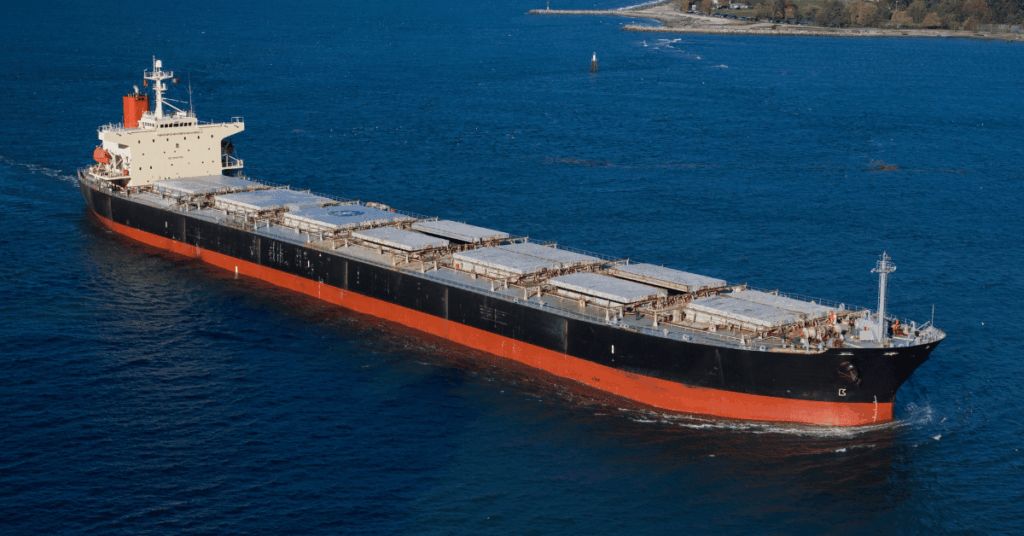
Mitsui O.S.K. Lines (MOL) has secured a 25-year contract with Vale International to operate two groundbreaking 210,000-tonne ore carriers, the first in the world to run on ethanol, methanol, and conventional fuel. The vessels, set for delivery in 2030, mark a significant step in decarbonising bulk shipping.
The agreement, signed by MOL MOL Ocean Bulk Pte. Ltd.. Ltd. (MOLOB), a Singapore-based subsidiary of MOL, will see the vessels transport iron ore from Brazil to global destinations, primarily China. The tri-fuel propulsion system offers flexibility, allowing the ships to switch fuels based on availability, cost, and environmental benefits.
Mitsui O.S.K. The group’s commitment to sustainability is not new; under its BLUE ACTION 2035 Phase 2 strategy, MOL has set an ambitious target to achieve net-zero greenhouse gas (GHG) emissions by 2050.
Natural Gas
The decision to invest in tri-fuel vessels reflects a broader industry shift.
What This Means for the Global Supply Chain: Tri-Fuel
The two vessels will not only be the first of their kind but also feature an LNG/ammonia-ready design, future-proofing them for emerging zero-carbon fuels. This adaptability is crucial as the shipping industry faces increasing pressure to reduce greenhouse gas (GHG) emissions under international regulations.
Ethanol, one of the fuels in the tri-fuel system, is particularly noteworthy for its environmental benefits. According to industry data, ethanol could slash carbon emissions by up to 90% compared to heavy fuel oil when considering the full lifecycle of the fuel, from production to consumption. Its growing availability and ease of handling make it a practical choice for large-scale adoption in maritime transport.
The vessels also incorporate next-generation energy-saving technologies, further enhancing their efficiency. With a length of 299.95 metres and a breadth of 50 metres, they are designed to maximise cargo capacity while minimising fuel consumption.
The partnership between MOL and Vale International is part of a larger effort by Vale, one of the world’s largest mining companies, to reduce its Scope 3 emissions, those generated indirectly through its supply chain. Shipping accounts for a significant portion of these emissions, and Vale’s collaboration with MOL is a key step in its decarbonisation roadmap. The 25-year contract ensures long-term stability for both companies while aligning with global climate goals.
Under its BLUE ACTION 2035 Phase 2 environmental vision, the MOL Group has committed to achieving net-zero GHG emissions by 2050. The operation of these tri-fuel vessels will play a key role in meeting this target while also helping Vale reduce its Scope 3 emissions, those generated indirectly through its supply chain.
What This Means for the Future of Green Shipping
The partnership extends beyond vessel operations. MOL plans to collaborate with customers and partners across the entire fuel supply chain for ethanol and methanol, from procurement to bunkering. This holistic approach aims to accelerate the decarbonisation of the shipping industry and promote sustainable resource transport. The development of bunkering infrastructure for alternative fuels is a critical challenge, and MOL’s proactive stance could help drive investment in this area.
The vessels’ primary route will be the transoceanic transport of iron ore from Brazil, a critical trade lane for global steel production. China, the world’s largest importer of iron ore, will be the main destination, underscoring the project’s significance for the global economy. The Brazil-to-China route is one of the busiest in the world, with over over 300 million tonneslion tonnes of iron ore shipped annually, making it a prime candidate for decarbonisation efforts.
For the shipping industry, this project sets a precedent. As regulators tighten emissions standards and customers demand greener supply chains, the ability to switch between multiple fuels could become a competitive advantage. The tri-fuel design offers a pragmatic solution, balancing immediate operational needs with long-term sustainability goals. It also provides a hedge against fuel price volatility, a persistent challenge in the maritime sector.
Looking ahead, the success of these vessels could pave the way for broader adoption of alternative fuels in bulk shipping. With delivery slated for 2030, the industry will be watching closely to see how this pioneering project performs. If successful, it could serve as a blueprint for other shipping companies and commodity traders seeking to reduce their carbon footprint. For stakeholders, the key questions will be whether the vessels can deliver on their emissions reduction promises and whether the economics of alternative fuels can compete with conventional options.
The implications of this project extend beyond shipping. The adoption of ethanol and methanol as marine fuels could stimulate investment in biofuel production, creating new opportunities for agricultural and chemical industries. Ethanol, for example, can be produced from sugarcane, corn, or other biomass, while methanol can be derived from natural gas or renewable sources like green hydrogen. This diversification of fuel sources could enhance energy security and reduce dependence on fossil fuels.
For ports and logistics providers, the shift to alternative fuels will require significant infrastructure upgrades. Bunkering facilities for ethanol and methanol are still limited, and ports will need to invest in storage tanks, pipelines, and safety protocols to accommodate these fuels. The MOL-Vale partnership could accelerate these developments, particularly in key hubs like Singapore, Rotterdam, and Shanghai, which serve as major bunkering centres.
Investors and financial institutions are also taking note. The shipping industry’s transition to green fuels is attracting billions in sustainable finance, with banks and asset managers increasingly prioritising projects that align with environmental, social, and governance (ESG) criteria. MOL’s tri-fuel vessels could serve as a benchmark for future investments in maritime decarbonisation, demonstrating the viability of alternative fuels in large-scale commercial operations.
As the 2030 delivery date approaches, the maritime industry will be closely monitoring the progress of these vessels. Their performance could influence regulatory decisions, fuel standards, and industry-wide adoption of alternative propulsion systems. For now, the MOL-Vale partnership stands as a bold step toward a more sustainable future for global trade.


Sign up free to ask CAMAL AI for a summary, the key points or anything else about this story.
Related stories
CAMAL AI
 Financial Ports Newsletter
The maritime economy, every morning
Ports, shipping and freight markets in one short email. Free.
Financial Ports Newsletter
The maritime economy, every morning
Ports, shipping and freight markets in one short email. Free.



