

Hydrogen Engine Cuts Ship Emissions by 95%—First Large-Vessel Test in 2028
Japan’s 6UEC35LSGH engine achieves over 95% GHG reduction in factory tests, set for onboard trials in April 2028.
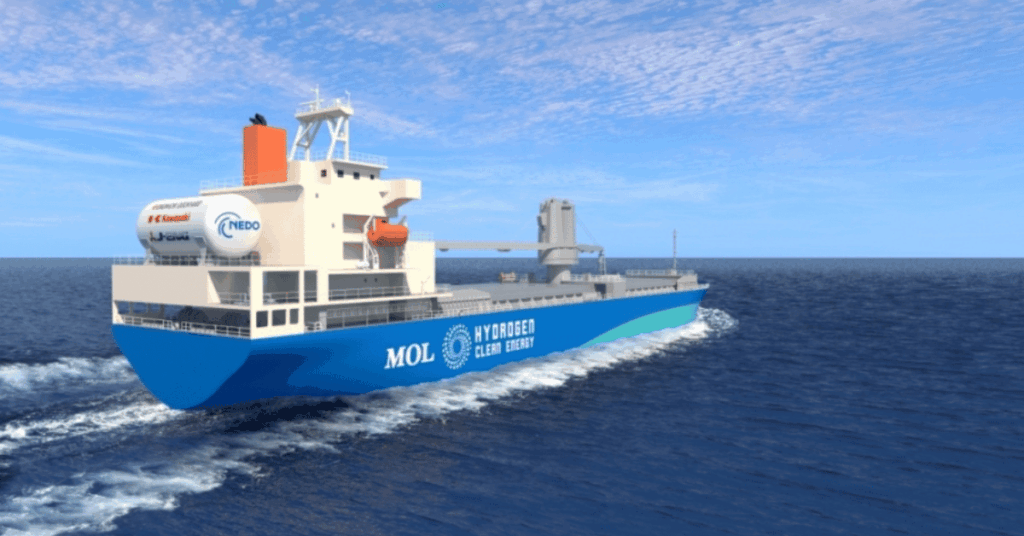
The breakthrough comes as part of the Green Innovation Fund Project, led by Japan’s NEDO (NEDO). The engine, which uses a high-pressure direct injection system to burn hydrogen directly in its cylinders, achieved a hydrogen co-firing rate of at least 95%, a figure that translates into a near-total elimination of carbon emissions compared to traditional heavy-fuel-oil engines.
The engine’s design addresses two major challenges: efficiency and safety.
The high-pressure direct injection system ensures stable combustion of hydrogen, a fuel known for its volatility. To mitigate risks, the engine incorporates a leak-prevention structure and double-walled piping for fuel supply lines. These measures were validated during approval testing conducted in the presence of Nippon Kaiji Kyokai (ClassNK), the classification society overseeing the project’s safety standards.
The engine’s development was a collaborative effort involving Japan Engine Corporation, Kawasaki Heavy Industries, and Yanmar Power Solutions. Kawasaki will supply the vessel’s Marine Hydrogen Fuel System (MHFS), which includes hydrogen storage tanks and the equipment needed to deliver fuel to the engine. The system is designed to handle liquefied hydrogen, a critical component for long-haul shipping.
The next phase of the project will see the engine installed on a 17,500 DWT multipurpose vessel, currently under construction at Onomichi Dockyard for Mitsui O.S.K. Lines (MOL) and MOL Drybulk. The installation is scheduled for January January 2027, with sea trials to follow before the vessel enters demonstration service in April 2028. During this period, the engine’s performance and durability will be tested under real-world conditions, a critical step toward commercial viability.
How the Engine Works, and Why It Matters for Shipping: hydrogen engine
The project, known as Blue Harmony, aims to develop and commercialise hydrogen-fuelled vessels.
For the maritime industry, the transition to hydrogen is not without challenges. However, the success of the 6UEC35LSGH engine could accelerate investment in hydrogen supply chains, making it a more viable option for global shipping.
The Blue Harmony project is also exploring the development of bunkering equipment for liquefied hydrogen, which would enable ships to refuel at ports. Kawasaki Heavy Industries is leading this effort, with plans to develop and manufacture the necessary equipment.
ClassNK’s involvement underscores the importance of safety in the project. The classification society will conduct comprehensive safety assessments at every stage, from the engine’s development to the vessel’s design, construction, and operation. These assessments are essential for gaining regulatory approval and ensuring that hydrogen-fuelled vessels can operate safely in commercial fleets.
The 17,500 DWT vessel, once equipped with the hydrogen engine, will serve as a floating laboratory. The demonstration phase, set to begin in April 2028, will focus on the engine’s performance under actual operating conditions, including its response to varying loads, fuel consumption rates, and long-term durability. The results of these tests will be critical in determining whether hydrogen can become a mainstream fuel for commercial shipping.
From Factory to Fleet: The Road to Commercialisation
For shipowners and operators, the shift to hydrogen represents both an opportunity and a risk. While the environmental benefits are clear, the economic case for hydrogen remains uncertain. However, as production scales up and technology improves, prices are expected to fall, making hydrogen a more competitive option.
The maritime industry is under increasing pressure to reduce its environmental footprint. The European Union’s inclusion of shipping in its Emissions Trading System (ETS) from 2024 has added a financial incentive for companies to adopt cleaner fuels. Similarly, the IMO’s upcoming Carbon Intensity Indicator (CII) regulations will require ships to improve their energy efficiency, further driving demand for alternative fuels like hydrogen.
Japan’s leadership in hydrogen technology for shipping is part of a broader national strategy to become a global leader in hydrogen energy. The country’s Basic Hydrogen Strategy, introduced in 2017 and updated in 2023, sets ambitious targets for hydrogen production and use across multiple sectors, including transportation and industry. The success of the 6UEC35LSGH engine could position Japan as a key player in the global maritime decarbonisation effort.
For the shipping industry, the stakes could not be higher. With the IMO’s 2050 target looming, the race is on to develop and deploy zero-emission technologies. Hydrogen, with its potential for near-total emissions reduction, is emerging as a frontrunner. The 6UEC35LSGH engine is not just a technological achievement; it is a glimpse into the future of shipping, a future where vessels can cross the oceans without leaving a carbon footprint.
The next few years will be critical. If the April 2028 demonstration proves successful, hydrogen could move from the realm of experimental technology to a mainstream solution for commercial shipping. For now, the world’s first hydrogen-fuelled engine for large vessels stands as a testament to what is possible when innovation meets ambition.


Sign up free to ask CAMAL AI for a summary, the key points or anything else about this story.
Related stories
CAMAL AI
 Financial Ports Newsletter
The maritime economy, every morning
Ports, shipping and freight markets in one short email. Free.
Financial Ports Newsletter
The maritime economy, every morning
Ports, shipping and freight markets in one short email. Free.



