

Wind Propulsion Breakthrough: eSAILs Cut Fuel Use by 10%
Bound4blue’s Model 3-24 eSAIL® secures Bureau Veritas Design Assessment, validating wind propulsion for large vessels.
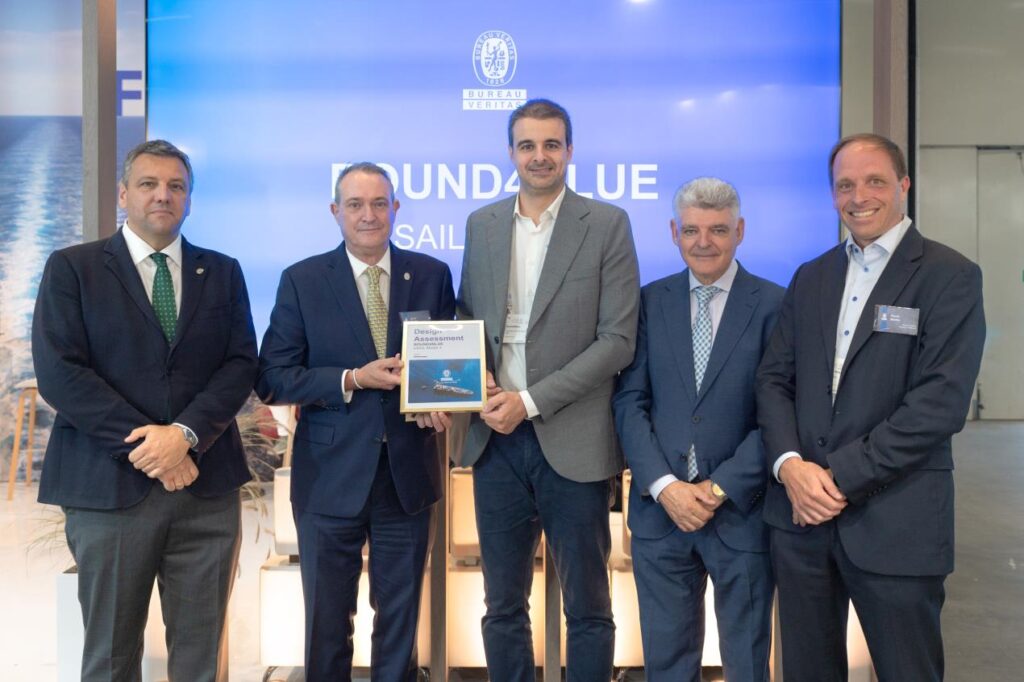
Spanish clean-tech company bound4blue has achieved a key milestone for its wind propulsion technology after receiving a Design Assessment from Bureau Veritas Marine & Offshore for its Model 3-24 eSAIL® system. The certification, presented during a ceremony at SMM 2026 in Hamburg, confirms the design meets the classification society’s technical requirements for safe and efficient operation.
The Model 3-24 eSAIL®, the first commercial installation of bound4blue’s latest range, was fitted earlier this year on Klaveness Combination Carriers’ newbuild vessel MV Baltazar. The 24-metre-tall sail features an optimised aerodynamic profile and expanded surface area, enabling larger ships to harness wind power for fuel savings and emissions reductions.
Validation for scalable wind propulsion: wind propulsion technology
The technology uses boundary layer suction to generate propulsive force up to seven times greater than conventional rigid sails of the same size. This efficiency translates into lower fuel consumption and reduced CO₂ emissions, while also supporting compliance with environmental regulations such as FuelEU Maritime, the EU Emissions Trading System (EU ETS), and the Carbon Intensity Indicator (CII).
A.P. Møller-Maersk
José Miguel Bermúdez, CEO and co-founder of bound4blue, highlighted the importance of independent validation in building market confidence. “As wind propulsion becomes a mainstream investment, independent assessments help differentiate proven solutions,” he said. “This recognition from Bureau Veritas reinforces our commitment to delivering reliable, high-performance technology that meets the industry’s decarbonisation goals.”
With over 50 units ordered and installations completed on 13 vessels, bound4blue’s eSAIL® technology has gained traction across multiple shipping segments. The company’s order book includes contracts with major operators such as Maersk Tankers, Eastern Pacific Shipping, and Louis Dreyfus Company.
Growing industry adoption
David Barrow, Senior Vice President for Western Europe and Americas at Bureau Veritas Marine & Offshore, emphasised the role of independent assessments in advancing safe innovation. “Wind propulsion is a critical component of the maritime industry’s decarbonisation strategy,” he said. “This Design Assessment supports bound4blue in delivering a technology that meets robust technical standards while helping shipowners reduce emissions.”
The Model 3-24 builds on bound4blue’s earlier Model 2 platform, maintaining the company’s focus on simplicity for installation and autonomous operation. As regulatory pressures and fuel costs drive demand for sustainable solutions, wind-assisted propulsion is emerging as a key tool for the maritime sector’s transition to lower-carbon operations.


Sign up free to ask CAMAL AI for a summary, the key points or anything else about this story.
Related stories
CAMAL AI
 Financial Ports Newsletter
The maritime economy, every morning
Ports, shipping and freight markets in one short email. Free.
Financial Ports Newsletter
The maritime economy, every morning
Ports, shipping and freight markets in one short email. Free.