

$140m Tankers Force Owners to Rethink Retrofits
A 15-year-old VLCC now commands $140 million, collapsing the case against upgrading older vessels.
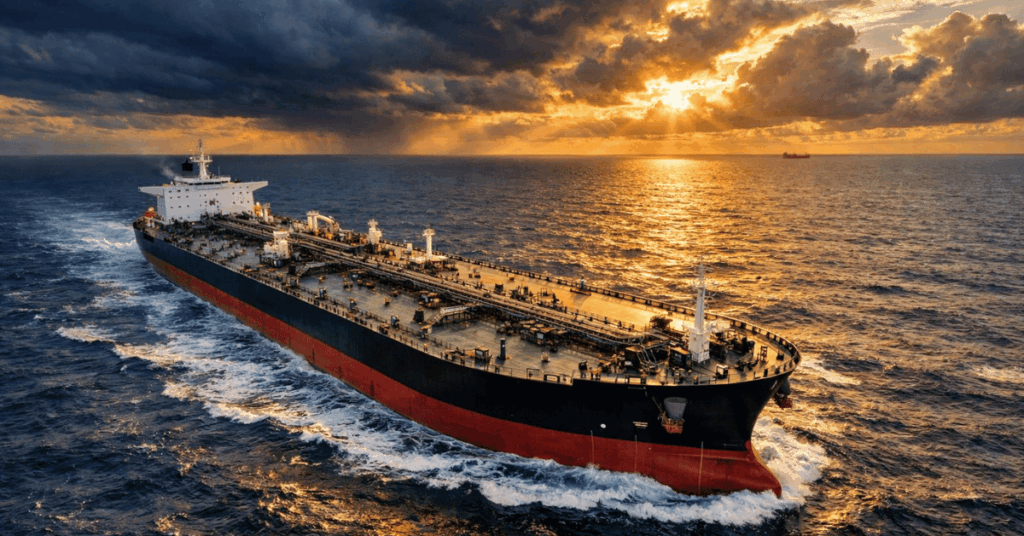
The long-standing argument that older vessels are too inexpensive to justify upgrades has collapsed under record-high tanker valuations. A 15-year-old very large crude carrier (VLCC) now commands prices comparable to newbuilds, removing a key financial barrier to retrofitting.
Shipbroker Poten & Partners reports that a VLCC available for immediate delivery is valued at approximately $235 million, while a new tanker ordered today won’t be delivered until 2029 at a cost of around $130 million. Even a 15-year-old VLCC fetches roughly $140 million in the current market, according to the same data.
John Cooper, CEO of BAR Technologies, highlighted the contradiction in the industry’s logic. “Owners have always claimed retrofitting wasn’t worth the investment for ships nearing the end of their lifespan,” he said. “But when the market assigns a $140 million value to a 15-year-old tanker, that argument no longer holds. You can’t price a vessel that high and then insist it’s not worth improving.”
Soaring Tanker Values Force Rethink on Retrofitting Older Ships: Owners
The case for retrofitting gains further strength from wind-assisted propulsion systems like BAR Technologies’ WindWings. These installations can reduce annual fuel consumption by around 2,670 tonnes for a VLCC on a typical U.S.-to-Japan route, translating to $2.27 million in savings at current fuel prices. The payback period, based solely on fuel savings, is estimated at four years.
Cooper emphasized the broader advantages: “On deep-sea routes, wind is the only propulsion energy that comes at no cost. Extending a ship’s operational life means more years of fuel expenses, unless those costs can be offset by technologies like WindWings.”
Wind Propulsion Offers Cost and Compliance Benefits
Regulatory pressures are also driving adoption. The International Maritime Organization’s Carbon Intensity Indicator (CII) rating is becoming a critical factor in chartering decisions. Vessels that fail to meet efficiency standards risk losing commercial viability. Wind propulsion can improve a ship’s CII rating, helping owners comply with tightening environmental rules while cutting operational costs.
Real-world performance data supports the technology’s potential. Independent verification by DNV recorded a 32% reduction in main engine energy use on the bulk carrier Pyxis Ocean under favorable conditions. Other vessels, including the Berge Olympus and three LR2 tankers operated by Union Maritime, have already been retrofitted with WindWings, with two more installations planned for 2027.
Cooper criticized the industry’s historical focus on newbuilds for decarbonization. “For a decade, shipping has acted as if emissions reductions would only come from future vessels,” he said. “But with the order book full until 2029, the ships that need to cut fuel consumption this decade are the ones already at sea. If owners are willing to pay $140 million for a 15-year-old tanker, they should ask themselves why they wouldn’t invest a fraction of that to make it more efficient.”


Sign up free to ask CAMAL AI for a summary, the key points or anything else about this story.
Related stories
CAMAL AI
 Financial Ports Newsletter
The maritime economy, every morning
Ports, shipping and freight markets in one short email. Free.



