

Sanctioned Russian tankers defy US law with 924,000-barrel diesel shipment
Three vessels, including two under EU and US sanctions, sail for US Atlantic coast under Trump-Putin deal
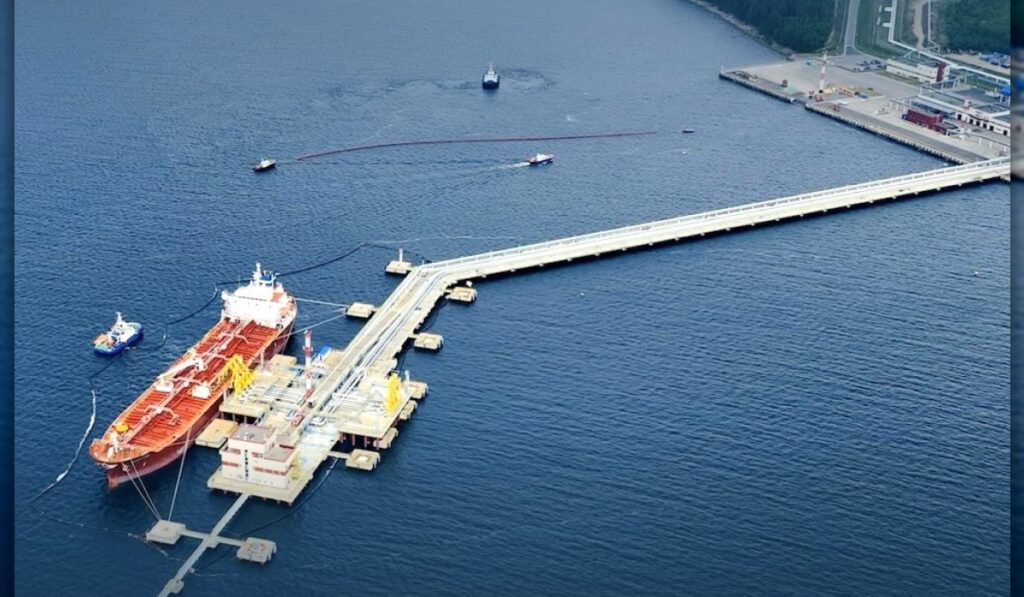
Three tankers carrying a combined 924,000 barrels of diesel are sailing toward the US Atlantic coast, defying international sanctions and US law under a contentious agreement between Presidents Donald Trump and Vladimir Putin. Two of the vessels, Talisman and Leruo, are subject to US, EU, and UK sanctions, yet their cargoes have been greenlit by a six-month exemption issued by the Trump administration.
The trio of tankers, Talisman, Leruo, and Agioi Fanendes, departed Russia’s Baltic port of Primorsk between October 16 and 22. According to vessel-tracking data from Kpler, they are expected to reach the US between November 7 and 11, though their declared destinations remain subject to change. The Malta-flagged Agioi Fanendes, managed by Greek interests, loaded approximately 40,000 tonnes of ultra-low sulphur diesel at Primorsk on October 22.
Talisman is sanctioned by both the US and EU, while Leruo appears on the UK, EU, and Canadian sanctions lists. The Hong Kong-owned, Sierra Leone-flagged Leruo has been accused of violating the G7 price cap on Russian oil cargoes, as well as disabling its location transponders and conducting ship-to-ship transfers to evade detection. European authorities sanctioned the vessel in omitir año over these practices, yet it remains operational under the current US exemption.
The shipments mark the first US imports of Russian petroleum products since Congress enacted a ban in 2022, following Moscow’s invasion of Ukraine. The Trump administration’s six-month exemption, issued earlier this month, allows transactions involving Russian-origin diesel until April 7, ostensibly to ease soaring US fuel prices. However, the move has ignited a bipartisan backlash in Washington, with lawmakers arguing that the exemption contravenes existing legislation.
Vessels and cargo: the sanctioned fleet: Russian
Russian Deputy Prime Minister Alexander Novak framed the shipments as a demonstration of Moscow and Washington’s commitment to their agreement, stating:
«The shipments demonstrate that Moscow and Washington are implementing their agreement despite political opposition.»
Alexander Novak·Russian Deputy Prime Minister
Yet the exemption has drawn sharp criticism from European allies. Germany rejected the easing of restrictions, insisting that pressure on Moscow should be intensified, not relaxed. Ukrainian President Volodymyr Zelenskyy warned that lifting sanctions without enforceable Russian de-escalation would signal weakness, while Czech President Petr Pavel argued that the decision undermines Western leverage and complicates ceasefire efforts. Pavel stated:
Legal and political fallout: a sanctions showdown
«The diesel decision weakened Western leverage over Russia and made a ceasefire harder to achieve.»
Petr Pavel·Czech President
The legal confrontation extends to US financial institutions and ports. A bipartisan group of lawmakers has cautioned banks, energy companies, and port authorities against handling the cargoes, contending that the Treasury’s exemption cannot override the 2022 ban. The first of the three tankers is expected to arrive in the US Atlantic coast on November 7, just days after the US midterm elections, adding a layer of political urgency to the dispute.
The Trump administration has defended the exemption as a necessary measure to stabilise fuel markets, citing disruptions caused by the Iran conflict and global refining bottlenecks. However, critics argue that the move risks emboldening Moscow while undermining the West’s unified stance on sanctions. The exemption’s April 7 expiration date looms as a critical deadline, with lawmakers already signalling plans to challenge its renewal.
For now, the three tankers continue their voyage, carrying a cargo that symbolises the fragile balance between economic pragmatism and geopolitical principle. Their arrival on the US Atlantic coast will test the resilience of sanctions regimes and the limits of diplomatic agreements in an era of escalating energy conflicts.


Sign up free to ask CAMAL AI for a summary, the key points or anything else about this story.
Related stories
CAMAL AI
 Financial Ports Newsletter
The maritime economy, every morning
Ports, shipping and freight markets in one short email. Free.



