

Norway’s 5 MW nuclear ship engine to test in 2027: will it sail by 2032?
Norway’s MarNuPS project secures $2 m to build a full-scale test facility at Stette by 2027.
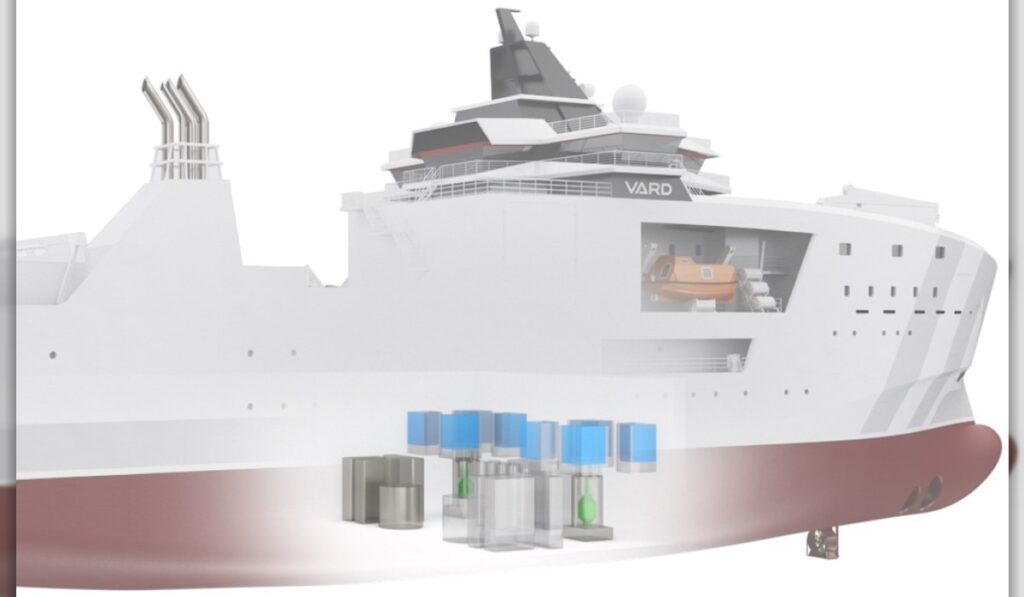
A Norwegian-led consortium has secured NOK 20 million ($2 million) in public funding to build and test a full-scale nuclear propulsion system for offshore vessels, with the first integrated test facility set to open in 2027.
The MarNuPS initiative brings together shipbuilder Vard Group, offshore vessel owner Island Offshore, and research institutions including the Norwegian University of Science and Technology (NTNU) of Science and Technology (NTNU) and Imperial College London.
How the system will be tested: Norway
The first phase of testing, scheduled for 2027 at a facility in Stette near Ålesund, will use electric heating to simulate reactor operation. This approach allows engineers to evaluate the system’s performance under realistic vessel conditions without introducing nuclear fuel. Tests will cover normal operation, rapid power demand changes, system stress, emergency responses, and crew interaction, ensuring the technology meets the rigorous demands of maritime environments.
Norwegian Cruise Line
It’s only the beginning of a longer development and qualification process, but it demonstrates that maritime nuclear propulsion is now being pursued as a serious industrial project.".
The technology behind the project
Gem microreactor microreactor, developed by Emerald Nuclear Norway, is a compact 5 MW electric system designed for maritime applications.
The MarNuPS project builds on the NTNU-led NuProShip research programme, which has been exploring the feasibility of integrating advanced nuclear reactors into commercial shipping. Earlier this year, Vard presented a concept for a nuclear-powered offshore construction vessel, examining reactor integration, operational requirements, and safety considerations. The latest initiative represents a significant step forward, moving from theoretical studies to physical testing and integration.
The initial development stage of MarNuPS is estimated to cost NOK 150 million ($15.6 million), including contributions from project partners. Juliebø noted:
“This award is evidence of validation and momentum rather than the scale of the ambition. This support gives the program additional backing as we move from design and analysis towards building and testing a complete integrated system.".
Despite the progress, actual vessel deployment will depend on completing technical qualification and obtaining the necessary regulatory approvals. The maritime industry is heavily regulated, and nuclear propulsion introduces additional layers of complexity, particularly around safety, security, and environmental impact. The consortium will need to demonstrate that the system meets international standards for nuclear and maritime operations before commercial deployment can proceed.
For the shipping industry, nuclear propulsion offers a potential solution to the challenge of decarbonisation. Traditional maritime fuels, such as heavy fuel oil, are major contributors to greenhouse gas emissions, and the sector is under increasing pressure to adopt cleaner alternatives. Nuclear power provides a zero-emission energy source with high energy density, making it particularly attractive for long-haul and high-power applications such as offshore vessels.
The MarNuPS project is part of a broader trend of innovation in maritime energy. Other initiatives, such as ammonia and hydrogen fuel cells, are also being explored as potential solutions for decarbonising shipping. However, nuclear propulsion offers unique advantages, including long refuelling intervals and high power output, which could make it a game-changer for certain segments of the industry.
As the project moves forward, the consortium will focus on addressing the technical and regulatory challenges ahead. The 2027 test facility in Stette will be a critical milestone, providing the first opportunity to evaluate the integrated system under realistic conditions. If successful, the project could pave the way for a new era of nuclear-powered commercial shipping, with Norway leading the charge.
For industry stakeholders, the MarNuPS project represents a bold step toward a more sustainable future. While challenges remain, the initiative demonstrates that nuclear propulsion is no longer a distant dream but a tangible possibility for the maritime sector. The next few years will be crucial in determining whether this technology can deliver on its promise and reshape the future of shipping.


Sign up free to ask CAMAL AI for a summary, the key points or anything else about this story.
Related stories
CAMAL AI
 Financial Ports Newsletter
The maritime economy, every morning
Ports, shipping and freight markets in one short email. Free.



