

Germany Halts COSCO’s 80% Stake in Key German Freight Firm
Berlin vetoes Chinese state-owned COSCO’s bid for Konrad Zippel.
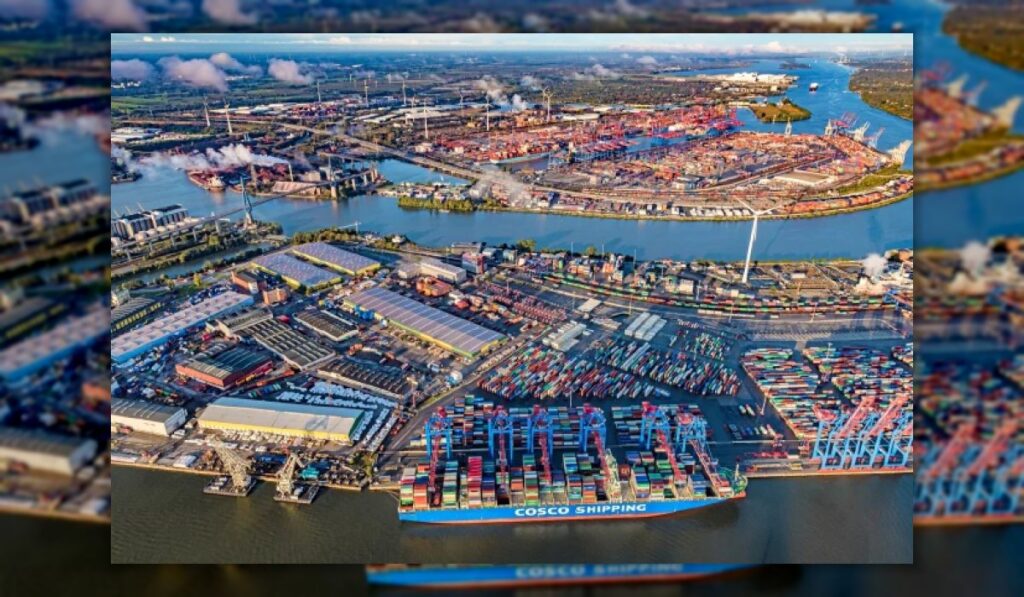
Germany’s federal government has blocked COSCO Group’s planned acquisition of an 80% stake in Konrad Zippel Spedition, a Hamburg-based logistics firm pivotal to the country’s inland freight network. The decision, announced on 7 October, underscores Berlin’s growing scrutiny of Chinese investments in critical infrastructure amid concerns over supply chain dependencies and national security.
The move follows months of escalating opposition from Germany’s intelligence and defence ministries, which warned that the deal could deepen economic vulnerabilities. The company also provides logistical support to NATO and the German Armed Forces, further raising the stakes of the proposed takeover.
The company’s strategic importance was a key factor in the government’s decision to intervene.
COSCO Shipping Holdings
Why Germany Said No to COSCO’s Bid
The Federal Cartel Office initially cleared the deal in February 2026, ruling that it posed no competition risks. However, the Federal Office for the Protection of the Constitution, Germany’s domestic intelligence agency, later flagged broader security concerns. By September, the Ministry for Economic Affairs, Foreign Office, and Ministry of Defense had all voiced reservations, arguing that the acquisition could compromise Germany’s strategic autonomy.
The Bundestag formally rejected the sale on 7 October, with the Ministry for Economic Affairs stating that the deal would “deepen dependencies and jeopardize the resilience of supply chains in Germany and the EU.” The decision aligns with Berlin’s increasingly assertive stance under Chancellor Friedrich Merz, who has prioritised reducing reliance on Chinese imports since taking office in May 2025. Germany’s struggles with Chinese embargoes on rare earth minerals, which disrupted car manufacturing, have further fuelled this shift.
The Foreign Trade and Payments Act, which governs foreign investments in Germany, explicitly allows the government to block deals that threaten public order or national security. While the Federal Cartel Office evaluates competition risks, the final decision rests with the federal government, which can override approvals on strategic grounds.
Axel Plaß, Zippel’s managing director, expressed disappointment but sought to reassure stakeholders. “I was disappointed by the decision but that it would not immediately affect customers or employees,” he told media outlets. Plaß, who was set to retain a 20% stake in the company, confirmed that operations would continue as usual for now.
The Broader Crackdown on Chinese Investments
Germany’s rejection of the COSCO-Zippel deal is part of a wider trend. The country reviews over 300 foreign investment cases annually but has blocked only eight, this being the latest. The decision echoes a similar controversy in 2022, when COSCO sought a 35% stake in Tollerport, a Hamburg container terminal operator. After intense debate, Berlin permitted COSCO to acquire just 25%, limiting its influence over port operations.
The Foreign Trade and Payments Act empowers Germany to block foreign investments that threaten public order or national security. While the Federal Cartel Office assesses competition risks, the final decision rests with the government, which can override approvals on broader strategic grounds.
In this case, economic security concerns outweighed competition considerations, marking a departure from past practices. This shift reflects a growing recognition within the EU that critical infrastructure, particularly in logistics, energy, and technology, must remain under domestic or allied control to safeguard strategic autonomy.
The Ministry for Economic Affairs, led by Vice-Vice-Chancellor Robert Habeck, has been vocal about the need to reduce dependencies on non-European suppliers. This stance gained traction after Russia’s invasion of Ukraine exposed vulnerabilities in Europe’s energy supply chains.
While China’s role in global trade is far more entrenched than Russia’s, Berlin’s approach signals a willingness to pre-emptively address potential risks, even if it means forgoing short-term economic benefits. The ministry’s concerns are shared by other EU member states, which are increasingly coordinating their foreign investment screening mechanisms to present a united front.
For businesses operating in Germany, the decision sends a clear signal: investments in critical infrastructure will face heightened scrutiny, particularly if they involve state-controlled entities from countries deemed geopolitical rivals. The Bundestag’s vote on 7 October was not merely a rejection of one deal but a statement of intent.
Companies in sectors such as logistics, telecommunications, and energy should expect longer review periods and more rigorous assessments of potential security risks. This could deter some foreign investors, particularly those from China, which has been a major source of capital for European infrastructure projects in recent years.
Neither COSCO nor the Chinese Embassy has commented on the decision, leaving the future of the deal uncertain. For now, Zippel remains under German ownership, but the episode signals a new era of caution in Berlin’s approach to Chinese investments. Industry analysts warn that further restrictions could disrupt trade flows, particularly in sectors reliant on Chinese capital. However, the German government appears willing to accept these trade-offs in exchange for greater control over its strategic assets.
For the logistics sector, the implications are far-reaching. Zippel’s customers, including manufacturers, retailers, and military contractors, rely on its network to transport goods efficiently across Germany and into Central and Eastern Europe. While operations continue uninterrupted for now, the long-term stability of the company’s ownership could influence investment decisions in infrastructure upgrades and expansion. Competitors may also reassess their exposure to foreign takeovers, potentially leading to a wave of consolidation within the industry.
The decision also has broader implications for Europe’s freight industry. Germany’s stance could embolden other EU member states to adopt similar measures, particularly in countries with major ports or logistics hubs. The European Commission has already proposed a framework for screening foreign investments, but national governments retain significant discretion in how they implement these rules. As a result, companies operating across multiple EU markets may face a patchwork of regulations, complicating cross-border investments and operations.
Looking ahead, Germany is expected to review its foreign investment screening mechanisms in 2027. The review could lead to stricter rules, particularly for investments in sectors deemed critical to national security. The Ministry for Economic Affairs has indicated that it may expand the list of sensitive sectors to include emerging technologies, such as artificial intelligence and quantum computing, which are increasingly seen as strategic priorities.
For companies like Zippel, which operates at the intersection of logistics and national security, the regulatory environment is likely to become even more challenging.
In the meantime, stakeholders can monitor updates on the government’s foreign investment policies through official channels, including the Federal Ministry for Economic Affairs website and the Bundestag’s legislative tracker. For businesses seeking clarity on potential investments, engaging with industry associations such as the German Logistics Association (BVL) or the Federation of German Industries (BDI) may provide additional guidance.
These organisations often serve as intermediaries between the private sector and policymakers, offering insights into regulatory trends and advocacy opportunities.
For now, Zippel’s customers and partners can expect business as usual, but the episode serves as a reminder of the growing intersection between economics and geopolitics. As Germany and the EU navigate an increasingly complex global landscape, the balance between openness to foreign investment and protection of strategic interests will remain a defining challenge. The COSCO-Zippel case is unlikely to be the last of its kind, but it may well be remembered as a turning point in Europe’s approach to safeguarding its critical infrastructure.


Sign up free to ask CAMAL AI for a summary, the key points or anything else about this story.
Related stories
CAMAL AI
 Financial Ports Newsletter
The maritime economy, every morning
Ports, shipping and freight markets in one short email. Free.
Financial Ports Newsletter
The maritime economy, every morning
Ports, shipping and freight markets in one short email. Free.



