

Germany slashes offshore wind auctions after zero bids in €10bn flop
Berlin cuts 2026 tender capacity to 2.5–5 GW after August auction failed to attract a single bid for 10.1 GW sites.
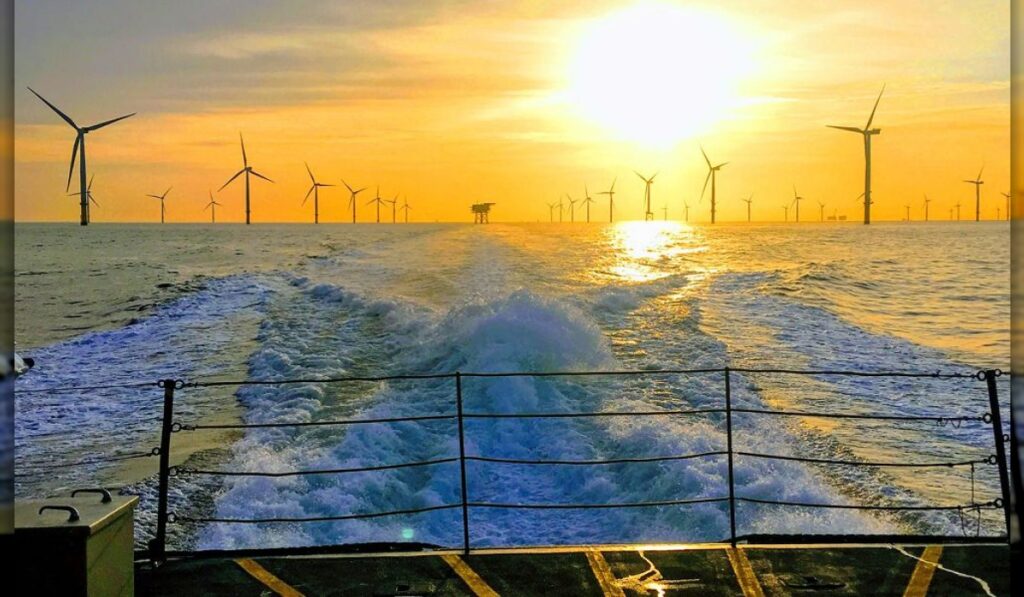
The federal cabinet approved sweeping reforms on September 2, including two-sided contracts for difference and a decade-long extension of project lifespans, as Berlin scrambles to revive investor confidence.
Developers cited rising costs, supply chain bottlenecks, and the absence of subsidies as key deterrents.
Why Germany’s offshore wind sector is stalling
The reforms mark a dramatic shift in Germany’s approach to offshore wind, which currently leads the EU with 10.8 GW of installed capacity. However, another 17.5 GW of awarded projects remain stuck in limbo, awaiting final investment decisions.
Its managing director, Stefan Thimm, has repeatedly emphasised that policy uncertainty risks undermining Germany’s position as a leader in offshore wind.
The new legislation attempts to address these concerns by introducing two-sided contracts for difference (CfDs). Under the system, developers receive protection if electricity prices fall below an agreed strike price, while excess revenues are clawed back if prices spike. The framework also extends the standard operating life of projects from 25 to 35 years, improving long-term revenue certainty.
What the reforms mean for investors and the energy transition
The Wind Energy at Sea Act amendment, approved by Germany’s cabinet on September 2, represents the first major legislative overhaul of the country’s offshore wind framework in years. The reforms aim to balance affordability with investment security, addressing concerns that previous auction designs favoured low-cost bids over long-term project viability. By introducing CfDs, the government seeks to shield developers from market volatility while ensuring consumers benefit from stable energy prices.
Germany’s Economy Ministry has acknowledged the “difficult market environment” but remains committed to the 2030 target of more than tripling offshore wind capacity.
The EU’s Net-Zero Industry Act, which the reforms reference, sets binding targets for domestic clean energy manufacturing and deployment. Germany’s inclusion of resilience and cybersecurity criteria reflects growing concerns about supply chain vulnerabilities, particularly in relation to third-country dependencies. The act also encourages member states to align their auction designs with broader decarbonisation goals, a principle Berlin is now embedding in its offshore wind strategy.
Despite the reforms, Germany’s 2030 target remains in jeopardy. The Economy Ministry acknowledged the sector is facing a “difficult market environment“, citing “tight” supply chains and cost pressures. In response, Parliament approved a reduced 2026 tender capacity of just 2.5 to 5 GW, down from an earlier plan of 5 GW. The decision reflects a pragmatic recognition of current market conditions but has drawn criticism from industry stakeholders who argue it may not be enough to spur investment.
The first seabed areas will be tendered on February 1, with additional rounds scheduled for June and August. However, a parallel consultation on auction redesign means substantive changes won’t take effect until 2027. Social Democrat lawmaker Nina Scheer called the decision to proceed with 2026 auctions a “gamble“, urging a more fundamental overhaul of the sector’s framework conditions. Scheer, a key figure in Germany’s energy policy debates, has argued that the government’s incremental approach risks further delays in meeting climate targets.
The reforms also incorporate resilience and cybersecurity criteria under the EU’s Net-Zero Industry Act, aiming to reduce dependence on single third-country suppliers. Grid planning will be streamlined to better align generation and transmission capacity, while permitting processes for projects and power infrastructure will be accelerated. These measures are designed to address long-standing bottlenecks that have slowed project development, particularly in the North Sea.
For investors, the message is clear: Germany’s offshore wind sector is at a crossroads. The government’s willingness to abandon its previous auction model signals a recognition of market realities, but whether the new measures will be enough to unlock the 17.5 GW of stalled projects remains an open question.
With the 2030 deadline looming, Berlin’s next moves will be critical in determining whether Germany can reclaim its leadership in Europe’s energy transition. Industry observers will be watching the February tender closely for signs of renewed interest, as its outcome could set the tone for the sector’s recovery, or further decline.
The stakes extend beyond Germany’s borders. As the EU’s largest economy and its leading offshore wind market, Germany’s success, or failure, will have ripple effects across the continent. Neighbouring countries, including the Netherlands and Denmark, are also grappling with auction design challenges, and Berlin’s reforms could serve as a blueprint, or a cautionary tale. For now, the focus remains on ensuring the 2026 auctions deliver tangible results, as Germany seeks to balance its climate ambitions with the economic realities of the energy transition.
For businesses and policymakers, the reforms underscore the need for adaptive strategies. The offshore wind sector’s evolution will require continued collaboration between government, industry, and grid operators to ensure that projects are not only financially viable but also aligned with broader energy security and resilience goals. As Germany navigates this critical phase, the lessons learned will shape the future of renewable energy in Europe for decades to come.


Sign up free to ask CAMAL AI for a summary, the key points or anything else about this story.
Related stories
CAMAL AI
 Financial Ports Newsletter
The maritime economy, every morning
Ports, shipping and freight markets in one short email. Free.
Financial Ports Newsletter
The maritime economy, every morning
Ports, shipping and freight markets in one short email. Free.