

Reshoring Boom: Why Factories Are Fleeing Low-Cost Havens for North America
Manufacturers now prioritise resilience over cost, delaying irreversible bets.
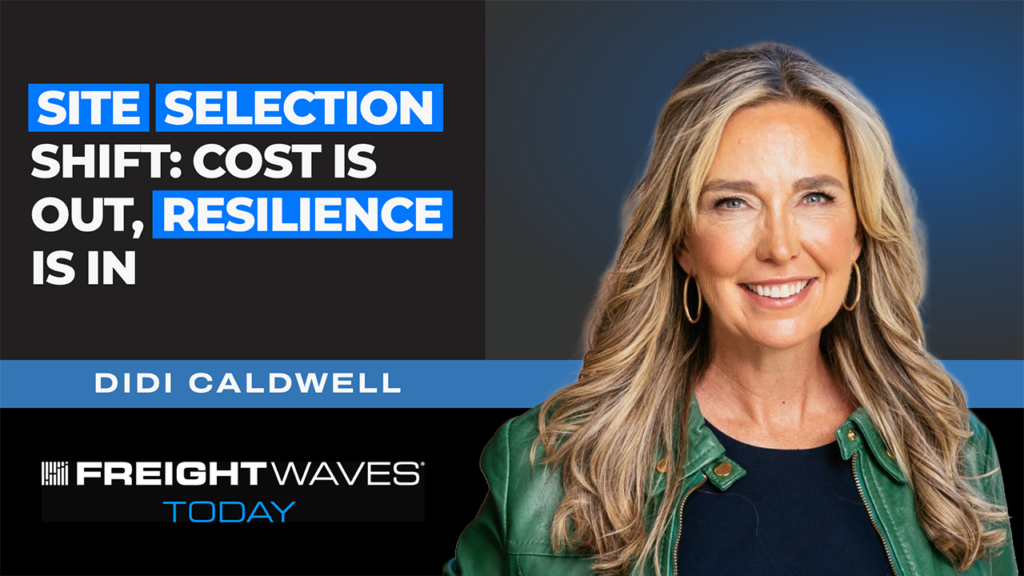
Manufacturers are abandoning decades-old strategies that prioritised low-cost locations, instead choosing sites that can withstand geopolitical shocks, energy volatility, and community resistance. The shift, driven by tariffs, border risks, and the need for flexibility, is reshaping global supply chains, with North America emerging as a preferred hub for resilience.
DiDi Caldwell, CEO of Global Location Strategies, a firm specialising in site selection for industrial projects, says the change is structural. Companies are no longer optimising for a single set of conditions but are instead stress-testing locations across multiple scenarios, tariff regimes, energy prices, and labour market fluctuations, to ensure economic feasibility under pressure.
The recalibration is most visible at the Canadian border, long treated as a seamless extension of U.S. trade. “We’ve spent 60 years or so treating the Canadian border as if it were more or less like a state border, and now all of a sudden it is a place where there’s real risk associated with that,” Caldwell said. The shift is pushing firms to delay irreversible investments, opting instead for mid-market projects that support previously announced mega-facilities.
Why North America Is Winning the Reshoring Race
North America’s edge in the new site-selection landscape is rooted in three factors: energy, logistics, and market scale. The U.S. transition from a net energy importer to the world’s largest net exporter, fuelled by the shale revolution, has made energy a critical differentiator. With 40% of heavy industry costs tied to energy, manufacturers are prioritising regions with stable, affordable supply. Caldwell notes that advances in AI and automation are further increasing energy demands, making reliability non-negotiable.
Logistics infrastructure and workforce readiness are equally decisive. While labour constraints remain a hurdle, North America’s consumer market scale, combined with its energy advantage, makes the reshoring math compelling. “Labour, energy, and logistics are the three primary cost drivers for manufacturing operations,” Caldwell said. “North America checks the boxes on two of the three, and workforce development or automation can bridge the gap.”
NIMBYism: The Unexpected Roadblock to Reshoring
Even as manufacturers rush to reshore, community pushback is derailing high-profile projects. NIMBY (Not In My Backyard) movements are emerging as one of the most concrete obstacles to industrial expansion. Caldwell cited an aluminum smelter project in northeastern Oklahoma that is now under a community moratorium extended to April of next year.
“Economic developers are being advised to engage communities long before projects arrive,” Caldwell said. Site selectors are increasingly disclosing company identities earlier in the process to build support, a departure from the secrecy that once characterised major industrial deals. The trend reflects a broader realisation: resilience now extends beyond supply chains to include social license to operate.
Caldwell’s career trajectory mirrors the industry’s shift. “I joke and say that I’ve been doing this for about 30 years. I spent the first half of my career moving companies outside of the United States, and I’ve spent the second half of my career moving them back in,” she said.
The new playbook prioritises resilience, flexibility, and the ability to weather storms, both literal and geopolitical. As firms recalibrate, the winners will be those who can balance economic efficiency with the realities of a world where borders, energy, and public opinion carry more weight than ever.


Sign up free to ask CAMAL AI for a summary, the key points or anything else about this story.
Related stories
CAMAL AI
 Financial Ports Newsletter
The maritime economy, every morning
Ports, shipping and freight markets in one short email. Free.
Financial Ports Newsletter
The maritime economy, every morning
Ports, shipping and freight markets in one short email. Free.